LifeTime Learning

Lifetime Learning Institute course registration has opened on Wednesday, August 13, 2025 at NOON.

Register soon to give yourself the best chance of getting the LLI courses you want for the Fall semester.

The process is simple. Just make a list of the course numbers you’d like to take. Have your credit card or Pay Pal information at hand. Then, go to lliaustin.org and click the “Register” button on any page to link to Eventbrite. The link won’t be active until noon precisely, so if you get online before that, remember to reload your page at noon to access Eventbrite.

Unless LLI has sent you a promo code, you can ignore the Promo code box.

Please take care when entering your email address; many instructors/TAs use email to contact students about important class information.

Please note: Some classes sell out very quickly.

Please see Tips for Successful Registration at the bottom of the Courses page for more information: https://www.lliaustin.org/courses

We look forward to seeing you in class starting the week of September 15.

– Mary King

Ask a Spiritual Companion

Date: Sundays, August 24, August 31
Time: Immediately following service
Location: Howson Hall

Join us after church to Ask a Spiritual Companion—a relaxed, informative Q&A session with commissioned Spiritual Companion and church member Kathleen Ellis.

A table will be set up in Howson Hall for one-on-one or small group conversations. She facilitates three groups–Spiritual Direction on Zoom (1st Tuesdays at 6), Spiritual Direction in person (2nd Mondays at 1), and an online Poetry Group (3rd Fridays) at 2:30p.m. She also meets with individuals off site; first session is complimentary!

For more about Kathleen, feel free to visit her website: https://www.heartblessings.org/

There is More…

Listen to the sermon by clicking the play button above.

Rev. Chris Jimmerson
August 10, 2025
First UU Church of Austin
4700 Grover Ave., Austin, TX 78756
www.austinuu.org

Our world can feel challenging, if not downright scary, these days. Add to that the challenges and losses in life we will all encounter, and it can feel as if renewal, hope, and change for the better are no longer possible. And yet history and human resilience have shown us over and over again that there is a wellspring of love that makes hope, peace, and joy always still available to us.


Chalice Lighting

This is the flame we hold in our hearts as we strive for justice for everyone. This is the light we shine upon systems of oppression until they are no more. This is the warmth that we share with one another as our struggle becomes our salvation.

Call to Worship

– Reverend Dr. Howard Thurman
A prominent American theologian of the early 20th century grandson of slaves.

“It was my conviction and determination that the church would be a resource for activists, a mission mentally perceived. To me, it was important that individuals who were in the thick of the struggle for social change would be able to find renewal and fresh courage in the spiritual resources of the Church.”

Affirming Our Mission

Together we nourish souls, transform lives, and do justice to build the Beloved Community.

Reading

– Ellen Bass
A contemporary American poet and author

“The thing is to love life, to love it even when you have no stomach for it. And Everything you’ve held dear crumbles like burnt paper in your hands, your throat filled with the silt of it…Then you hold life like a face between your palms, a plain face, no charming smile, no violet eyes, and you say, Yes, I will take you. I will love you again.”

Sermon

NOTE: This is an edited ai generated transcript.
Please forgive any omissions or errors.

To begin this morning, I invite you to remain seated as we sing together verse 1 of hymn number 95 from the gray hymnal. That’s verse 1 only. There is more love.

♪ There is more love somewhere
There is more love somewhere
I’m gonna keep on
’til I find it
There is more love somewhere

There is more love somewhere. There is more love everywhere. There is a fierce love that surrounds us and dwells within us. Reverend Dr. Martin Luther King Jr. said that God is love. For many of us, fierce love is God.

In these times though, when it can seem that the forces of anti-love have gained the control of the levers of power in so many places around the world, I know it can feel as if love is hard to access sometimes, hard to find.

It can especially feel hard to find that fierce love for those with whom we disagree, who seem to be doing their damn level best to work against the very tenets of love and beloved community.

Here’s a little hint from someone with beloved family members with whom he often adamantly disagrees. It’s entirely possible to love someone even during times when we may not be liking them very much at all.

Anyway, given the challenges we face in our world right now, as well as the challenges, losses, and sorrows we all face just as a part of life, we need that fierce divine love because it is our wellspring of joy.

It’s what sustains us and keeps us working for a better world even during times when peace and hope and joy can seem so far away.

Perhaps it was prescient then that last year our denomination as a whole centered our faith in love – made that fierce divine love, the very core of what it means for us to be Unitarian Universalist.

As Reverend Dr. Howard Thurman said in our call to worship, our Unitarian Universalist churches can then become the wellsprings of our spirituality, the sustaining resources for our efforts to bring more of that fierce love into our world to realize the dream of beloved community.

My beloveds, that fierce love is there and we can always find it.

Last year around this time when Wayne my spouse of 33 years died I wondered if I would ever know love again.

As I moved through the grief though I discovered that his love for me and my love for him were still there, all around me, that my love for doing ministry, for this church, for this faith, for hiking in nature, for reading, for writing, for music, for theater, for arts, and so, so much more for life was still there somewhere, and I could find it again.

Eventually, I even found romantic love again with someone incredibly loving and extraordinarily lovable.

And the amazing thing is, in all of those loves, my love with Wayne lives on.

There is more love somewhere. There is more love everywhere. We’re going to keep on, keep on finding it.

Now let’s remain seated as we sing together verse number two of hymn number 95 There is more Hope.

♪ There is more hope somewhere
There is more hope somewhere
I’m gonna keep on
’til I find it
There is more hope somewhere

Prior to a losing bid to become vice president of the United States, a certain ex-governor of Alaska and precursor to the current aspiring dictator in the Oval Office once asked about the Obama administration, “How’s that hopey-changey stuff working out for ya?”

How’s that short-lived, dead-end political career working out for you?

I can love her and not like her.

One of the things that wannabe authoritarians do and that we’re seeing so vividly from our current administration is they try to take our hope away to make us feel that resistance is hopeless.

And one of the ways that they do that is to try to make it seem that change against what they are doing is impossible. They do that because they know. They know that as human beings in order to have hope we have to believe that change is possible.

And yet, yet, here is where they fail. From within the wellspring of fierce love for one another and for life itself, human history has seen us rise up in hope again and again to seek and create change, even when it seemed impossibly difficult, even up against totalitarianism, famine, oppression, disease, enslavement, and so many other forces that would subvert hope.

We must always remember that change, renewal, rebirth, are always possible. And even when we in our lifetime aren’t able to bring about all of the change of which we dream, there is still hope to be found simply in the struggling for it – in our love for life, for freedom, for one another, and this beautiful world we have been given.

The chiché “Hope springs eternal” is true, and it it bubbles forth from that wellspring of fierce love that is the center of our faith and that some of us call God.

Now the thing is Authoritarians also know that fear is like kryptonite for hope, so they try to keep us in fear.

And sometimes when that’s happening, we can unintentionally direct our attention away from the larger things that we really, really want to change and instead direct it in ways that may not be so effective or appropriate that could even cause unnecessary fighting with one another. We do that because, because the larger fight for the change we really want can seem so big, so scary.

So sometimes, much like the little tree in our story, we have to let go of our littler fears so that larger hope can grow.

It can even happen in churches.

On a recent Sunday here at this church, stickers suddenly appeared on some of our toilets, expressing someone’s thoughts on proper etiquette for flushing conservation.

Now, water conservation is an issue and is a part of an even larger issue of the global climate crisis of which we cannot lose sight. And there are so many big issues right now, fighting a police state from being established in our country, protecting basic human rights, saving democracy.

So, having around 500 church members post whatever concerns them wherever they might like in the church at any time, that could prove to be a bit of a distraction from pursuing our larger mission.

So one of the ways that we as a religious community can help keep hope alive is to channel our very legitimate fears toward the actual sources of those fears, to work together in the spirit of love to bring about the change that is still possible in our lives and in our world, even given our current admittedly scary social and political environment.

There is more hope somewhere. It is out of fierce divine love that hope springs eternal.

Now let us sing number 95, verse 3, “There is more Peace.”

♪ There is more peace somewhere
There is more peace somewhere
I’m gonna keep on
’til I find it
There is more peace somewhere

On-going war in Ukraine. What can now only be called ethnic cleansing and genocide in Gaza. So many more conflicts we don’t hear about as much, almost 100 countries involved in warfare and state-sanctioned violence across the world according to the nonprofit vision for humanity.

It can seem as if peace in our world is so far away that We may never find it somewhere.

The stressors of daily life, economic uncertainty and turmoil, conflict and rancor across our society, racism, bigotry, injustice, oppression, still omnipresent and currently endorsed, supported, and institutionalized by far too many folks in the halls of our government at all levels.

It can seem as if personal inner peace is so far away that we may never find it somewhere.

And yet there are literally hundreds of organizations throughout the world dedicated to the firm belief that peace is still possible, working toward finding that peace.

There are multitudes of movements alive and well within these United States, heaven bent on justice, equality, restitution, and reconciliation.

And we can be a part of those movements. We can immerse ourselves in the struggle for peace and justice in our world and thereby find peace in our own lives.

And there is this synchronicity in the fact that to work for peace in our world to sustain that work on an ongoing basis We have to find peace within ourselves. As Reverend Dr. Martin Luther King, Jr. and so many others have noted, we will never end violence with more violence, whether physical, emotional, or verbal.

And so our work for peace in our world must begin from a place of calm and peace within.

So how do we find that personal peace amidst all that chaos?

Well, it turns out there is a multitude of research on this. Here are just a few of the ways for us to keep on until we find peace:

To start, since we’re here at a church, we’ll begin with spiritual practices. Meditation, mindfulness, prayer, and poetry, writing, music, art, walking in nature.

Going to church. Any practice that gives you a sense of being a part of something larger than yourself, that sense of our vast interconnectedness.

Practicing gratitude, that’s another spiritual practice yet one so powerful that it deserves to be listed on its own.

And finally, we come back to that wellspring of fierce divine love.

Remembering to actively express love for others and importantly to allow ourselves to receive their expressions of love openly gives us that sense of inner peace. When we make love a verb in our lives not just something we feel but something We do.

Some interesting research found that if two people love one another and one is at peace but the other is experiencing stress, if the one at peace simply places their hand on the other person with consent and appropriately, if they do that, their own brainwaves, their own heart rate and the like begin to sink with and to help regulate and calm the same physiology in their loved one, bringing their loved one greater internal peace.

Now though it feels like a Unitarian Universalist sacrilege to quote Huey Lewis and the news from the pulpit. “That’s the power of love.”

Now let us sing together verse 4 of hymn 95, “There is more joy.”

♪ There is more joy somewhere
There is more joy somewhere
I’m gonna keep on
’til I find it
There is more joy somewhere

Experiencing joy is a part of how we find meaning and purpose in life.

And there’s this paradox that during the really challenging and really difficult times that’s when it can be the hardest for us to find joy, and yet those are the times when we need the most joy. We need more joy to maintain our sense of meaning and purpose.

The Museum of Jewish Heritage examined the writings of Viktor Frankl, as well as others who wrote about how they found joy and meaning even while enduring the concentration camps of the Holocaust.

They identified the following sources of joy, even in such harsh realities.

  • engaging in acts of resistance, no matter how small.
  • finding beauty wherever you may experience it, even if it is again in small ways, such as just the sight of something out of nature like a bird that flutters past your window.
  • finding humor, even in the difficult, even in the absurd, or perhaps especially in the absurd.
  • engaging in small acts of kindness and building friendships and community.
  • which brings us finally, once again, back to love, to relationships, fiercely holding on to love even for those whom we have lost or from whom we are separated.


The sum of their experiences was that we already know what brings us joy and we can summon it. We can find it And we can engage in it within almost any environment.

Well, I’d like to wrap all of this up by letting you hear from someone who can most certainly preach perseverance better than I can.


[VIDEO]


My husband asked for a divorce after 46 years of marriage. I thought I was done. I was completely broken. And I thought there’s nothing more to live for because we had done so much together, had six kids and all this stuff. And then he asked for a divorce. And I felt like I was just in limbo.

How do you move forward?

Oh, I was totally broken and I didn’t want to be broken. About a year later. I was able to write my ex-husband a letter and say “Thank you for giving me my freedom.” Because all of a sudden I was not Bill and Gladys, like I had always been during our marriage. I was Dr. Gladys. So all of a sudden I had a new identity and I could use it. The hard times come, but they go too.

Why do we laugh so little when we get older?

We forget. We start carrying the baggage, it’s better to let it go. But if you take it in and you say, “Oh, well, it doesn’t matter.” and you let it go. It’s gone. You don’t even remember it. I’m really content with where I am. I don’t have much you know here, but I’ve got the whole world.

We’ve got the whole world We’ve got this whole still beautiful world that fierce love gives us – a fierce divine love that surrounds us and dwells within us.

There is more love.

Now let’s rise in body or spirit and sing that through one last time. Hymn number 95 verse 1

♪ There is more love somewhere
There is more love somewhere
I’m gonna keep on
’til I find it
There is more love somewhere


Extinguishing the Chalice

We extinguish this flame, but not the light of truth, the warmth of community, or the fire of commitment. These we hold in our hearts until we are together again.

Benediction

– Reverend Dr Howard Thurman

“Don’t ask yourself what the world needs. Ask yourself what makes you come alive and then go do that. Because what the world needs is people who have come alive.”

May the congregation say Amen and blessed be. Go in peace.


SERMON INDEX

Most sermons during the past 25 years are available online through this website. Click on the index link above to find tables of all sermons for each year listed by date (newest to oldest) with topic and speaker. Click on a topic to go to that sermon.

PODCASTS

Podcasts of this and other sermons are also available for free on iTunes. You can find them by clicking on the podcast link above or copying and pasting this link. https://itunes.apple.com/podcast/first-unitarian-universalist/id372427776


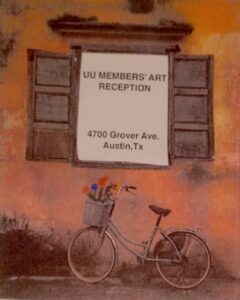
Annual First UU Members Art Show

The Sharon and Brian Moore Gallery will be hosting an art show celebrating the church’s focus on personal expression. Members are invited to submit no more than 2 pieces of their artwork that display ways First UU shows its creativity to the world.

Please submit applications to the Gallery Committee: gallery@austinuu.org, and follow us on @moorealternativespacegallery on Instagram, and www.facebook.com/alternative space gallery on Facebook.

Taking Submissions: Sunday, August 31st, from 1:00 to 3:00 p.m.
Submissions should be brought to the table just inside Howson Hall from the Gallery.
Artists, please be sure to talk to a member of the Gallery Committee when dropping off your work.

Opening Reception: Saturday, September 6th, 6-8 PM
Artists are encouraged to take questions about their art during the Opening Reception.

Take Down: Sunday, November 2nd
Artists should pick up their pieces after church on Sunday, November 2nd.
We cannot store any art after this date!

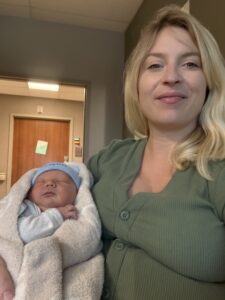
Caley Stempowski’s Baby Announcement!

 
It is with great honor and gratitude that I announce the birth of my healthy bouncing boy, Haelen Finn
Stempowski born to me, Caley Stempowski, a single mom by design and my loving family and friends, including those at First UU who have lovingly offered their help, love and encouragement throughout the beautiful baby growing journey I had for the past 10 months!!
 
I love him and cannot wait for everyone to meet him! 
 
He was 9 pounds, 7 ounces and we are back at home, healthy, happy, resting and recovering.


The Transforming Power of Pride

Listen to the sermon by clicking the play button above.

Rev. Carrie Holley-Hurt
August 3, 2025
First UU Church of Austin
4700 Grover Ave., Austin, TX 78756
www.austinuu.org

Pride was a riot ….and pride was a party. Pride is also liberation, self-actualization, and so, so much more. Let’s celebrate Pride in community as members of our congregation share the ways they experience pride in their own lives.


Chalice Lighting

This is the flame we hold in our hearts as we strive for justice for everyone. This is the light we shine upon systems of oppression until they are no more. This is the warmth that we share with one another as our struggle becomes our salvation.

NOTE: This is an edited ai generated transcript.
Please forgive any omissions or errors.

Call to Worship

MY FIRST PRIDE
Bis Thornton

The crisp desert sun is shining on us out of an infinite sky, and it’s my first pride because we didn’t have that where I grew up.

I’m sitting on a trailer being pulled by my friend’s truck. The trailer isn’t decorated or I should say it’s decorated by us and nothing else. It’s a simple thing made of old wood and black metal and we’re shouting and waving flags and holding each other. If we weren’t all wearing boots we would have splinters. I see my friend hanging one arm out of her big white pickup and all is right in the world.

We go down this big street in the middle of town and pass by all my favorite restaurants, and I’m holding all my favorite people, and it’s one million degrees, and I don’t care.

What I do care about is the way we’re starting to become surrounded by people with yellow signs who start shouting at us. They tell us we don’t have to submit to the bondage of sin. We could be free of the lifestyle that has trapped us. They say worse things than that.

A lot of them are smiling and I find it unsettling, but I feel safe in the rickety trailer because all of my friends are here. Finally someone starts shouting Bible verses at us I remember feeling surprised that it took so long, but I can’t remember which ones they were saying.

What I remember is the way one of my friends climbed on top of the white pickup They stand defiantly the wind in their eyelashes their heart as big as the sky which frames them in impossible bright blue.

The miracle, in the miracle way of trans voices, they shout and they sound like a golden trumpet, like the cry of the wind itself. In Christ there is no male or female. I had never heard anything like it.

When I remember that day, I hear the whipping of pride flags in the wind, the creaking of dry wood beneath our stomping feet and the proclamation ringing out from my friend on top of the pickup truck. I see the sky carrying it to our ancestors and our descendants. I feel defiance and triumph and love. This was my first pride.

Affirming Our Mission

Together we nourish souls, transform lives, and do justice to build the Beloved Community.

Reading

PRIDE IS A BECOMING
E Ciszek

So I’ll share a little bit of my thoughts here as I stand in front of you in my late 30s and reflect on what Pride is for me at this juncture in my life.

Pride is a becoming. It is a journey and a destination. It is aspirational.

Sometimes, pride is a ‘Fake It Till You Make It’ kind of strategy. It’s the bricks I try to lay on the road ahead.

Pride is showing up to work. It’s standing at the podium of my classroom, and feeling the impact my visibility has on hundreds of students. I’m a professor.

Pride is remembering the teachers that showed up for me as a young person.

Pride is also wearing my unapologetically queer t-shirt to the gym.

Pride is volunteering in my children’s class and fielding questions From my son’s kindergarten classmates like: Are you a boy or a girl?

Pride is unlearning the miseducation of sex that is baked into heteronormativity and white supremacy culture.

Pride is learning and accepting that identity and desire and passion and attraction are fluid and relational – not static.

Pride is something I’m trying to embed in my anatomy.

Pride is something I carry in my bones.

Sermon

Rev. Carrie Holley-Hurt

So today we are in it for a real treat because I’m not going to be preaching. We’re going to have two wonderful members of our community, L.B. and Tomas, preach for us.

They’re going to share what pride means to them. L.B.

L.B. Lomeli

Good morning, all of you beautiful flowers. My name is L.B. Lomeli. I would like to start with a question I was asked at a pride event some years ago here in Austin.

What does pride mean to you? Feel free to chime in with your own beautiful responses? Freedom. Pride. Respect for yourself and others, that one’s beautiful. – Pride. – Yeah. Belonging, also beautiful.

My personal answer is honoring your inner monologue. A quote I read in Nikita Gill’s book The Girl and the Goddess Stories and Poems of Divine Wisdom in regards to the narrators bisexuality. “There is a secret sapling in me that I refuse to water and still it persists,” And still, it persists.

I have known my whole life I was queer, not necessarily in words that I understood how to express, but in that spirit of a sapling inside of me. And despite some denials I may have come along the way, I saw how everyone in my life had known. I saw this by how I was constantly questioned in ways that I had grown to resent, questioned about the letters in my name, questioned about the clothing that I put on my body, questioned about the makeup I choose to decorate my face, questioned about the choices I make regarding the hair given to this humanly body. I grew to resent that these questions needed to define my queerness when I know my queerness is simply just my existence.

Now though, I have been learning to let that little sapling grow. Come to find out when I stopped pruning it I got to see the flowers that could come with it. I got to see the strength it could stand with and with every flower and every leaf I like grow within me. I learned to care for myself when I learned to listen to myself that inner self, that inner monologue, I learned to grow for myself. I learned to honor myself.

I don’t need to explain those choices anymore. I know now everything I do is queer because I am queer. And I’m so thankful because with all this growth came an ecosystem, a community, a community I feed into, a community that feeds into me. I’m notorious for crying so please don’t be concerned. A community that is bright and colorful and strong, it stands so strong and resilient. I never thought this was going to be about falling in love with the intricacies of a flower. But what a wonderful way to be.

I leave you with the words of 1950s sapphic cabaret dancer Francis Fay. Gay, gay, is there another way?

Tomas Medina

Good morning My name is Tomas Medina and You know what I’ve never introduced myself up here. So I feel a little nervous about this part and I was hoping I’ll be wouldn’t so that I wouldn’t feel the need to do it but I am a middle-aged Latin man with a shaved or bald head and I’m wearing a too tight t-shirt that says resist in the colors of the trans flag and I’m going to speak on the transforming power of pride.

When I think of the power of pride The first image that comes to mind is the trans women of color who took part in the Stonewall Riots, one of their earliest though not the first queer resistance movements. I feel like I owe my very existence as a gay man to these early brave resistors. I’m not only filled with gratitude to these ancestors, I’m filled with pride to be part of their legacy, part of their family,

But, I wasn’t always proud. I was raised Catholic, and when I was a kid, I very much wanted to grow up to be a saint. Every day, I prayed that God would give me stigmata. I wanted to wake up with bloody palms from the nails of the cross. But as I got older, instead of bloody palms, I became attracted to other boys. So I changed my prayers. I prayed that if I couldn’t be a saint, maybe, just maybe, I could be not gay. I thought who I was was a sin and that I was broken.

But then when I was 17, I went to my first gay disco and life began to change for the better. I came out to my best friend, who then came out to me. I met other gay, lesbian, and trans folks. I joined a support group at my college. I began slowly to feel more comfortable in my own skin. When I came out to my parents that same year, they sent me to a therapist.

That therapist, truly useless, told me that to deal with my homosexuality, I should have avoid looking at other young men wearing shorts on my college campus. And I was 17. I mean, come on.

After a few sessions, I’d had enough and I quit. I told my parents if they had a problem with my being gay, they should see a therapist.

As I began to take pride in who I was, something else shifted. I started celebrating and making space for others who live out their full authentic selves. And not just members of the queer community, but anyone who says loudly and vulnerably, “I am who I am. And if you don’t like it, you can just eff off.”

I’ll admit sometimes I envy those people, but more than envy. I feel off. I’m moved. I’m inspired by their willingness to show up fully, proudly and sometimes imperfectly their pride fuels my pride. Over time I’ve come to realize that pride isn’t just about pride in ourselves. It’s also about pride in our communities.

When I was 24, my parents took me and my niece, who had just turned 15, to Spain. It was all of our first time in Europe. What most impressed me during that trip was our visit to the Prado Museum in Madrid. We saw masterpieces of the Spanish Renaissance, Valesquez, Goya, El Greco. I remember thinking, “Why have I never heard of these artists before?”

In that moment, something shifted in me. For the first time, I felt pride in my Latino heritage. Up to that point, I often wished I’d come from a family like the ones I saw on TV – white, suburban, upper middle class.

But, standing in that museum surrounded by brilliance and beauty from my own culture, I began to feel something new. I belonged to something worth celebrating. And now I take pride in being part of the Latino community and in being part of many communities, the queer community, the greater UU community, and this church.

Having pride in myself and others and my community is a lifelong journey. Every day, some part of me still wonders if I’m doing this “being human” thing all wrong. Am I working the wrong job, living in the wrong city, being a bad friend, the list goes on. But I know I’m not alone. I know there are others who carry these same doubts, maybe even some of the same people who inspire me. And yet, we go on.

Even with our doubts, we keep showing up. We live our most authentic lives the best we can. For me, pride isn’t about having it all figured out. It’s about choosing to live out-loud anyway.

And all of this, this journey, this defiance, this celebration feels especially urgent today. It’s a time when queer and trans lives are under renewed attack. When books are banned, rights are rolled back, and identities are politicized.

Living out-loud isn’t just personal. It’s political. It’s resistance. It’s our pride, our Part one, deeply rooted pride that gives us strength to resist, to keep going even when the world would rather we shrink or disappear.

Now more than ever, pride means choosing to be visible, choosing to be vulnerable, and choosing to show up for ourselves and for each other. That, to me, is the transforming power of pride.

Rev. Carrie Holley-Hurt

I feel super blessed. Thank you, thank you. Which is a good thing because I’m going to give you all a blessing now. Actually, Sol and I are going to give you a blessing.

Today is our glitter blessing, and today is the day that we remember as Reverend Chris wrote, “Pride is not just about rainbows and parades, though those things are wonderful. It is an unapologetic declaration that not only is who I am not sinful or unnatural or any of the many other claims that would deny my very soul, who I am is a beautiful expression of God’s creativity and love that refuses to be defiled or denied.” And so, we offer this glitter blessing, a recognition of the sacred beauty inherent in every single person in this room and online.

Glitter is resilient and tenacious, if you’ve ever found it in your carpet. Glitter shines bright when it sits by the sun, and it can pierce the dreariest of spaces.

This glitter that we share with each other today is a reminder of each of us, the beauty of our sacred imperfection, our ever-changing selves, and our glorious plurality.

As the music plays, I’d like you to come up. Sol and I will be on either side of the stage here, and you can tell us where you like your glitter.

Extinguishing the Chalice

We extinguish this flame, but not the light of truth, the warmth of community, or the fire of commitment. These we hold in our hearts until we are together again.

Benediction

Our benediction today in part comes from our congregant Sparkle.

Pride means an opportunity to live my life to the fullest. Pride means an opportunity for others to live their life to the fullest. Pride means an opportunity to squeeze that last ounce of joy out of this relatively short time that we are blessed to live on this planet. May we all queer or straight endeavor to squeeze that last ounce of joy out of this life.

Amen and Blessed be.


SERMON INDEX

Most sermons during the past 25 years are available online through this website. Click on the index link above to find tables of all sermons for each year listed by date (newest to oldest) with topic and speaker. Click on a topic to go to that sermon.

PODCASTS

Podcasts of this and other sermons are also available for free on iTunes. You can find them by clicking on the podcast link above or copying and pasting this link. https://itunes.apple.com/podcast/first-unitarian-universalist/id372427776

Austin Sierra Club Climate Meeting and First UU Climate Committee Meeting

Bill McKibben will publish a new book in two weeks: Here Comes the Sun: A Last Chance for the Climate and a Fresh Chance for Civilization. Solar energy is now cheaper than natural gas or wind energy. In our market economy, that means clean solar energy will replace burning dirty fossil fuels sooner or later. This may be our “Last Chance” before tipping points start to spiral global warming out of control. Oil and gas still have a lot of money and power to protect their profits and will fiercely work to delay the inevitable. We must have a people movement to counter them. We must educate people, most of whom who still think solar energy is expensive, that it is, indeed, the cheapest form of energy. Our meeting Tuesday night will be an early step towards that.

Tuesday night, August 5, at 6:30 pm in Howson Hall, we will meet and hear more details on the cost of solar vs. other energy and of a national day to celebrate and educate around solar energy, Sun Day 2025, on and around September 21. We will set people up in teams to make this happen.
 
6:30pm – Pot luck begins
7:00pm – Announcements
7:15pm – Presentation on “Solar is Cheap, Solar is Clean”
7:45pm – Brainstorm
8:00pm – Sign up for Sun Day working teams

Vegan Potluck Dinner

 
Saturday, August 9th, 6:30 PM – 8:30 PM, food check-in begins at 6:00 PM. Join us for a joint potluck with the Veganistas, a First UU group, and the Austin Vegan Association.
 
Email info@veganistas.org to RSVP or for more information.
 
 
What to Bring:
  • A VEGAN* dish to serve 10.
  • Be prepared to mark whether your food contains any allergens like nuts or gluten.
  • Bring your recipe if you want to share it.
  • Serving utensil for your dish.
  • A plate for yourself and utensils for eating. (makes fewer dishes for Aubrey to wash) 🙂
 
Whether you’re vegan, vegetarian, or just veg-curious, you’re welcome to join us. This event is free and open to all.
 
*We ask that food be free of all animal products, including meat, fish, eggs, dairy (milk, cheese, yogurt, butter), animal broth, gelatin, and honey.

The Blessings of Small Group Ministries

Listen to the sermon by clicking the play button above.

Rev. Chris Jimmerson
and Small Group Ministry Participants
July 27, 2025
First UU Church of Austin
4700 Grover Ave., Austin, TX 78756
www.austinuu.org

One of our church’s most transformative ways of deeply connecting with fellow church members and experiencing profound spiritual growth is by participating in a Chalice Circle or Wellspring ministry group. Join us and hear four participants share their experiences and the real differences they make possible.


Chalice Lighting

This is the flame we hold in our hearts as we strive for justice for everyone. This is the light we shine upon systems of oppression until they are no more. This is the warmth that we share with one another as our struggle becomes our salvation.

Call to Worship

May we be reminded here of our highest aspirations and inspired to bring our gifts of love and service to the altar of humanity. May we know once again that we are not isolated beings but connected in a mystery and miracle to the universe, to this community and to each other.

Affirming Our Mission

Together we nourish souls, transform lives, and do justice to build the Beloved Community.

Reading

from THE HEALING WISDOM OF AFRICA
by Maladoma Somé

Whether they are raised in indigenous or modern culture, there are two things that people crave. The full realization of their innate gifts and to have these gifts approved, acknowledged and confirmed. There are countless people in the West whose efforts are sadly wasted because they have no means of expressing their unique genius. In the psyches of such people, there is an inner power and authority that fails to shine because the world around them cannot perceive it.

Sermon

NOTE: This is an edited ai generated transcript.
Please forgive any omissions or errors.

Chris:
There are two things that people crave the full realization of their innate gifts and to have these gifts approved acknowledged and confirmed.

I love that statement from our reading earlier and given our current societal and political situation. I don’t know about you all but for me it can feel like as the author pointed out those innate gifts are being stifled.

Anyone besides me feel like living under the threat of rising fascism can be challenging to our psychological well-being and spiritual development? Well today we have some terrific folks who are going to testify about how participating in or even leading one of the small group ministries our church offers can provide a sense of connection and belonging. These groups provide a space where folks can talk honestly and vulnerably about some of the most vital and meaningful aspects of life, where folks can perceive, and then approve, acknowledge, and confirm one another’s unique inner power and authority.

I am delighted to invite these folks to share with you their experiences with our Chalice Circle and Wellspring small group ministries.


Hi, I’m Signe. Wellspring was my first introduction to small group ministry in 2021 as a participant. After that, I signed up for Chalice Circle and recently co-led a group, and I see some of my members out here, so that’s kind of fun.

Some of you may have seen me sitting over there near the candles in natural light. I’ve smiled and waved and shook the hands of many fellow UUers during the beginning of the service. Thus my smaller UU community started, the ones that like to sit in the same place.

Yes, we sat, sang, and stood together, but that was not the deeper connection I desired. It was during a homily someone else spoke about being in a chalice circle and how that impacted them and their UU faith. That sounded like something I needed to hear at the time, thus starting my UU spiritual journey.

So I signed up for Wellspring. This group explores in depth UU’s spirituality practices within safe structured group format as designed by Parker Palmer. Learning by doing, deep listening, and spiritual reflection within the group process requires dedication. Practices shared were drafting a group covenant, learning to craft a personal prayer, and how art, music, and movement are essential to a spiritual practice.

My inner Catholic contemplative mystic found this type of soul work familiar, now fueled with UU spiritual practices and like-minded people.

My journey of self-transcendence continues with a spiritual director, also called companion, from resources provided by Wellspring. Well, Wellspring requires a commitment of self-discipline and time for deep reflection and spiritual practice. The following year, I needed something lighter and signed up for Chalice Circle, which directly relates to the monthly topics of the church.

Chalice Circle continues to use safe group practices while reflecting and sharing about the church’s monthly themes. Each year, the themes change based on practices of our faith, values, and principles, like practicing resistance and cultivating compassion. Complete materials are provided via packets that are 10 to 15 pages long. The contents are carefully curated spiritual questions, exercises, poems, videos, playlists to expand on the Church’s theme. I found them worth saving for self-reflection, thus building my online spiritual library.

One of the past spiritual questions from the Path of Belonging Packet in 2022 was, “When was the first time you thought to yourself, Now I belong?” And because of Wellspring and Chalice Circle, I believe now I belong here. Thank you.


I’m Peggy Morton and I’m honored to have time to talk to you a little bit about my wellspring experience, the wellspring love at the center experience.

So I’ve been a part of this First-UU community for 29 years and have attended two chalice circles over the years, organized several social justice activities, and I’m not sure why it took me so long to finally sign up last spring for a wellspring class, but I’m truly glad I did. And I must say, it’s been the most enlightening experience I’ve had in this community.

I need to admit, I was not excited when our national denomination decided to go with this Article two. Because I thought I was very grounded in UU theology from our eight principles. But embracing this wellspring Love at the Center class, where we met twice a month for six months, opened my eyes and heart more deeply to UU theology, both historically and into today, and I now understand Article two better, and I like it.

Both the Reverend Carrie Holly-Hurt and a relatively new UU Melanie Caulfield guided us through this work in a way that I learned more about myself, six other attendees, and our facilitators in community together.

After each meeting, the next day, we would be emailed the readings that we were supposed to read and journal about and prepare for our next meeting. Obviously, we had two weeks to do this, which gave me a lot of time to read and think.

But at the next gathering, I would always hear a variety of perspectives about the lessons. And I have to admit, sometimes I would think, Did I misunderstand what we were supposed to do? But in reality, what it was, I eventually realized that we as individuals were gathered in community and embracing pluralism, a new term to me from Article II. And we shared from all of our different experiences, our different backgrounds and perspectives, coexisting quite like that interdependent web of existence that we learned about long ago when my spouse Fred and I first came to this church together and we only had seven principles at that time.

So I had known personally that having taken a sabbatical from teaching to live in Ecuador for a have in return to continue teaching high school journalism and to eventually add or start specializing in teaching English as a second language for the last eight years of my teaching career that I had lived experiences working with people from different backgrounds.

After retirement I stepped into voluntarily teaching adults English as a second language and eventually into advocating for human rights first in solidarity with unhoused people, then immigrants, then formerly incarcerated people. And I knew that I had learned from them about coexisting and embracing the lessons they had taught me in our interdependent web.

Yet through our wellspring group I saw better that Even when so many of us in this sanctuary today may seem like we’re all the same, we too have equally different backgrounds as we seek understanding from each and every individual who we meet. We’re bringing to life that spark of the divine that you used to say we were all born with. And I’m grateful, the many lessons I’ve learned and those that I still have to learn. And I appreciate each of you for listening to me today. I hope several of you will find or be able to make happen the time to explore and join a wellspring class.


Hello, I’m Doug Gower. Thank you, Reverend Chris, for asking me to speak about chalice circles. They say Unitarian Universalism is a process theology, not a belief one. Thus a chalice circle emphasizes not inculcating religious beliefs, but discovering and practicing our own.

What is that focus? To me, it’s the beloved community in the form of getting to better to know a small subset of our church congregants. A chalice circle is an intentional gathering for spiritual reflection. It is covenanted. That means anything discussed in the group stays confidential in the group.

Each session starts with lighting the chalice. In our case, that was a 99 cent plastic battery candle that one of our two wonderful leaders would switch on with a laugh.

A chalice circle is not a debate club. Neither is it a therapy group. Although being human, we always make some time for bitching and complaining. It’s real human beings sitting across from each other. Above all, it’s personal. It’s not performance. It’s not social media. It’s often said that people underneath are surprisingly alike, But we’re also surprisingly, amazingly different.

I met someone in our group who had traveled the world for years. Every continent, with little money, often sleeping outside in fields or under orchard trees on cold ground. I found that amazing. The only way you’d get me to sleep on an air mattress is if it were inflated on top of a king-size bed in a nice hotel with a bar.

In a chalice circle, we discover that we are alike and unique. Everyone has good days and bad days. You are privileged over the monthly meetings to witness these human ebbs and flows.

In the chalice circle, after some deep breaths, we take refuge. On the good days, we laugh a lot, out loud, gales of it. We learn to better know some of our fellow UUers. As much to the point, we get to know ourselves.

There’s a chalice workbook. Its exercises change monthly. I’m 74 years old. The last time I did a workbook was the third grade. Was I ready for this?

Each month has a cover illustration. One was Joy. It pictured a guy in a wheat field wearing a hipster hat playing a saxophone. I had a little trouble with that one. For one thing, I don’t play a sax. For another, my beard really doesn’t grow a good soul patch. So maybe extravagant jubilation under exotic conditions isn’t the whole point.

Some workbook questions were subtle. Others, honestly, a bit simplistic. But the group’s discussions never were. Joy I learned could be many things, working in a garden. Or just stop stopping, taking a moment, in the middle of a hot parking lot, on a tough day with troubles of your own to look up and see sunlight shifting through trees.

In chalice circles, we are not alone with our thoughts. In our chalice circle, the closest thing to an electronic device is the 99 cent battery calendar candle. In those 90 minutes, its scrawny, flicker, makes for not just a safe space, but a sacred one.

Americans are quick to focus on individual desires rather than the needs of the community, says Scott Hayes, a clinical psychologist. Looking around, I see people from my chalice circle right now, especially if I wasn’t wearing my reading glasses. (audience laughs) When I spot you in the pews or in the hallways, we often say hello, or stop and chat. But seeing you, I always think, “There’s people I know. There’s my community.”

The Chalice Circle is a UU program that helps make more real the beloved community. Thank you.


Good morning. My name is Nancy, and as many of you know, I am in the long process of preparing to go before the ministerial fellowshipping committee, a committee that will ultimately determine whether or not I’m fit to serve as a Unitarian Universalist Minister.

Now the majority of people who choose this route also choose to attend one of the two Unitarian Universalist Seminaries, Star King or Meadville Lombard, and most can anticipate leaving these seminaries with a strong sense of what it means to be a Unitarian.

But unfortunately, I did not have that luxury. As a mom of three, I am unwilling to relocate and my budget is tight. I know there are educational opportunities online, but trying to find privacy in a house of five is a near impossible task. So instead, I opted to attend Austin Presbyterian Theological Seminary, which is a Christian Seminary here in town.

At Austin Seminary, I was constantly making note of the differences between their faith and ours, and so I left feeling like I had a pretty good grounding in UU theology.

But then I began to worry. As you can imagine, there is much speculation about what candidates will be asked by the Ministerial Fellowship Committee. And my fellow seminarians and I soon began to suspect that we’d be expected to prove our grounding in UU theology, specifically because we had attended a Christian seminary.

And so, to cover my bases, I decided that I’d better take as many adult R .E. classes as possible. And soon, I found myself co-facilitating the Wellspring Sources Group with another one of my fellow UU Seminarians, Zach Havenwood.

Now, I thought I had a good understanding of my UU identity, but sources made me realize the depth and breadth of our theology. The Wellspring Sources Group explores each source in detail, complete with readings, essays, music, and of course, small group discussions. The class significantly deepened my appreciation of this faith, and it actually strengthened my commitment to this congregation, which is truly a statement I never anticipated saying.

I’ve always been very suspicious of organized religion in general, And I’ve always bristled about being told what to do and what to believe. Indeed, for as long as I can remember, I’ve always believed in the subjectivity of truth, which in most religious traditions is problematic. But our sources support this belief and celebrates the many different ways that people make sense of the universe.

For me, our sources go far in explaining who we are as a religious body. In fact, I often rely on our sources when I give people my elevator pitch for being a UU. I guess it makes sense then that sources is the foundational wellspring group. It is a prerequisite for most of the other courses.

In addition to exploring each source, I learned so much about myself and about my fellow group members throughout the entire class. It made me realize and appreciate the diversity of beliefs within this congregation. And it allowed me to form friendships with fellow congregants, something that can be challenging when you’re in a church as big as ours.

I enjoy the Wellspring Sources group so much that I went on to co-facilitate spiritual practices with fellow church member John Scott in the newest wellspring offering Love at the Center with Zach once again as my co-facilitator. And I’ve left each of these experiences with new friends a better understanding of my biases and a deep understanding of just how rich our faith really is.

As an added bonus, I started seeing a spiritual director, namely the Reverend Kathleen Ellis who is also a member of this church. The Wellspring groups encourage participants to take part in spiritual direction and I can honestly say that spiritual direction has been life changing for me. It has taught me much about the importance of presence and deep listening. I can’t say enough about the great experiences that the groups offer.

So instead, I’ll simply invite you to experience it yourself first-hand. This fall, I invite you to deepen your UU identity, to make new self-discoveries, and to get to know the members of this church a little bit better. All this and more awaits you. Thanks.


Chris:
Thank you so much to each of you for sharing those moving and informative experiences this morning. And if after hearing these folks you might be interested in getting involved in a small group ministry a special email announcement will be coming out later this afternoon or you can go to www.austinuu.org and get more information on how to get involved in a chalice circle or wellspring small group.

From our universalist heritage, we draw that sense that a river of divine love flows through our universe and through each of us. Small group ministries are one way in which we can help each other find channels for the expression of that divine love in our world, not in the abstract, but in the here and now, in this world as we find it.

Our small groups are a way that together we can combine those rivers into oceans of fierce love for our times.

Extinguishing the Chalice

We extinguish this flame, but not the light of truth, the warmth of community, or the fire of commitment. These we hold in our hearts until we are together again.

Benediction

As we go back out into our world today, may we carry with us the love of this, our beloved religious community. May we center our lives in love just as we center our faith in love. May the melody flowing through our souls be a river of love that carries us forward. Until next we gather our spirits again.

May the congregation say amen and blessed be.

Go in peace.


SERMON INDEX

Most sermons during the past 25 years are available online through this website. Click on the index link above to find tables of all sermons for each year listed by date (newest to oldest) with topic and speaker. Click on a topic to go to that sermon.

PODCASTS

Podcasts of this and other sermons are also available for free on iTunes. You can find them by clicking on the podcast link above or copying and pasting this link. https://itunes.apple.com/podcast/first-unitarian-universalist/id372427776
Monthly Service Offering for August – Planned Parenthood

 
Planned Parenthood has been serving patients across Texas for 90 years. Planned Parenthood provides quality, compassionate healthcare from expert clinicians, medically accurate, inclusive sex education from professional educators, and a fierce commitment to a world in which everyone can access quality healthcare and information to live their lives fully, without judgment. Planned Parenthood’s four Austin health centers offer annual exams, the full range of birth control methods (including IUDs and implants), testing and treatment for sexually transmitted infections (STIs), screenings for breast and cervical cancer, HPV (human papillomavirus) and flu vaccines, PrEP and PEP HIV prevention medication, UTI and infection treatment, gender-affirming hormone therapy, and more.
 
Two-thirds of Planned Parenthood patients are under-insured or uninsured. For the 20% of Travis County residents ages 18-65 who do not have health insurance, PPGT is a vital sexual and reproductive health resource. Here in Austin, and across the country, lack of access to health insurance overwhelmingly affects our Black and Latine neighbors. Your generosity provides our patients with access to healthcare. In 2024, we served more than 12,000 patients in the Austin area. Despite operating in a hostile political environment and under an extreme abortion ban, our Austin health centers are delivering more care than ever because Texans are counting on us. 
 
To expand access to healthcare appointments for patients juggling work, school, and childcare, at least one of Planned Parenthood’s four Austin health centers are open 7 days a week. For Austinites seeking time-sensitive birth control, or STI appointments, we’re proud to be here to provide care every day of the week. Planned Parenthood is a trusted resource for young people seeking health information. Our Teen Advocacy Board (TAB) empowers high school teens to be a knowledgeable resource for their peers about sexual health. TAB members bring essential information about contraception, STI prevention, healthy relationships, and more to their peers in Austin.

Revolution Began/Begins with a Dream

Listen to the sermon by clicking the play button above.

Rev. Chris Jimmerson
Rev. Dr. Nicole Kirk
July 20, 2025
First UU Church of Austin
4700 Grover Ave., Austin, TX 78756
www.austinuu.org

For this very special service, we will stream Rev. Dr. Nicole Kirk’s sermon from our recent annual Unitarian Universalist General Assembly, which examines how our ancestry, heritage, and religious values have prepared us for the challenges and opportunities of our time.


Introit

REQUIEM
Eliza Gilkyson
The First UU Adult Vocal Ensemble & Band; Brent Baldwin, director
Dedicated to the victims of the Hill Country floods

[MUSIC]
♪ Mother mary, full of grace, awaken
All our homes are gone, our loved ones taken
Taken by the sea
Mother mary, calm our fears, have mercy
Drowning in a sea of tears, have mercy
Hear our mournful plea
Our world has been shaken
We wander our homelands forsaken

♪ In the dark night of the soul
Bring some comfort to us all
Oh mother mary come and carry us in your embrace
That our sorrows may be faced

♪ Mary, fill the glass to overflowing
Illuminate the path where we are going
Have mercy on us all
In funeral fires burning
Each flame to your mystery returning

♪ In the dark night of the soul
Your shattered dreamers, make them whole
Oh mother mary find us where we’ve fallen out of grace
Lead us to a higher place

♪ In the dark night of the soul
Our broken hearts you can make whole
Oh mother mary come and carry us in your embrace
Let us see your gentle face, mary ♪

Chalice Lighting

This is the flame we hold in our hearts as we strive for justice for everyone. This is the light we shine upon systems of oppression until they are no more. This is the warmth that we share with one another as our struggle becomes our salvation.

Affirming Our Mission

Together we nourish souls, transform lives, and do justice to build the Beloved Community.

Anthem

LET IT BE
Paul Mccartney / John Lennon
The First UU Adult Vocal Ensemble & Band; Bethany Ammon, voice; Brent Baldwin, guitar/direction; Rob Chase, bass; Jill Csekitz, drums; Mauricio Starosta, piano

[MUSIC]
♪ When I find myself in times of trouble,
Mother Mary comes to me
Speaking words of wisdom, let it be
And in my hour of darkness she is standing right in front of me
Speaking words of wisdom, let it be
Let it be, let it be, let it be, let it be
Whisper words of wisdom, let it be
And when the broken hearted people living in the world agree
There will be an answer, let it be
For though they may be parted, there is still a chance that they will see
There will be an answer, let it be
Let it be, let it be, let it be, let it be
There will be an answer, let it be
Let it be, let it be, let it be, let it be
Whisper words of wisdom, let it be
Let it be, let it be, let it be, let it be
Whisper words of wisdom, let it be, be
And when the night is cloudy there is still a light that shines on me
Shinin’ until tomorrow, let it be
I wake up to the sound of music,
Mother Mary comes to me
Speaking words of wisdom, let it be
And let it be, let it be, let it be, let it be
Whisper words of wisdom, let it be
And let it be, let it be, let it be, let it be
Whisper words of wisdom, let it be

Sermon

NOTE: This is an edited ai generated transcript.
Please forgive any omissions or errors.

Volitile markets, a trade war, controversy over citizenship, Foreign interventions, businesses closing, economic turmoil, global uncertainty. 1815 was a pivotal year for the United States.

It was also an important time for the birth of American Unitarianism. The War of 1812 had ended in February of that year, a war between the youthful United States and Great Britain over trade, commerce, maritime rights, and the meaning of U.S. citizenship and territorial expansion.

With the ending of the war, William Ellory Channing, a liberal congregationalist and minister of the prominent Federal Street Church in Boston, Massachusetts, and his colleagues anticipated a better if not calmer year. They were wrong.

A different kind of fight was gaining momentum. A fight not wage with cannon fire, and bayonets, but with convictions and ideas that would revolutionize American religious life forever and give a name to a growing body of religious liberals.

What had become known as the Unitarian Controversy had erupted in 1805 with the election of Henry Ware Sr. as the Halless Professor of Divinity at Harvard College, where and a growing number of congregational ministers were challenging core Calvinist doctrines, including original sin, the nature of salvation, the interpretation of the Bible, and the trinity, and many of their parishioners were embracing this emerging, a liberal theology. It was a quiet revolution that was never meant to be a revolution at all.

By 1807, the liberals held the majority of the faculty positions and the presidency of Harvard College and the conservative wing of the congregationalists, the ones who called themselves orthodox, meaning right thinking, responded forcefully. They issued critical pamphlets, launched periodicals, shunned liberal colleagues, and established their own theological school Andover Newton.

The Orthodox began calling the liberals Unitarian as an insult. This theological feud would ebb and flow until 1815, and that’s when Orthodox minister Jedidai Morse, spearheaded renewed attacks on liberal ministers.

He wanted to expose these ministers and their liberalism, separate them from their Orthodox colleagues and their congregations. In a calculated move. Orthodox ministers refused to exchange pulpits with their liberal colleagues. Jededia Morse also wrote a book entitled American Unitarianism. A book was an attempt to brand the liberals as heretics.

By associating them with an English form of Unitarianism, The intention of these efforts was to isolate the Liberals, and instead it consolidated their resistance. And so from his pulpit at Federal Street Church in Boston, we now know as Arlington Street Church. There you are. William Ellory Channing began answering these attacks publicly, emerging is a spokesperson of the liberal movement.

And let’s be clear, let’s be clear, he did not do this alone. He had lots of colleagues and family members and people in his life supporting him, including women, people of color, who often get left out of the story.

Then, in this very city of Baltimore, on May 5th, 1819, Channing delivered the ordination sermon of Jared Sparks at the newly gathered First Independent Church of Baltimore. The sermon that became known as Unitarian Christianity, embraced the label Unitarianism, and interpreted it as the understanding of the unity of God, not a trinity. And Jesus’s role is an important teacher that was subordinate to God. And in that sermon he laid out the basic tenets of what he called a pure Christianity, a pure and rational Christianity. It was a theological declaration of independence.

Even after the Baltimore sermon and embracing the label Unitarian and redefining it, even after Channing helped gather a church in New York City, even after the court decision in 1820 when that church property was awarded to many of the liberal leaders and congregations, the Unitarians resisted creating a new association, Or at least it seems like that.

Many of the liberals were not ready to fully separate themselves from the congregationalist body. It would take six more years before the liberals formally organized themselves into an association.

And yet, the liberals were organizing all along. They had created periodicals like the Monthly Anthology and the Christian Monitor. They had established clubs and ministerial organizations and associations like the Evangelical Missionary Society. A circle of Boston liberal ministers had joined together to hire ministers at large, including Joseph Tuckerman to serve the poor and those in need. That is community ministry, my friend.

And in May of 1820 Channing invited liberal ministers to meet at his church to develop an organization for mutual support. They called it the Berry Street Conference. We know it today is the Berry Street Essay.

Could you hear me? The younger generation of liberals still sought stronger connections. At the meeting of Anonymous Association, that was really the name, the Anonymous Association, an organization of liberal Boston ministers, young Unitarian ministers like Ezra Giles Gannett and Channing’s assistant minister, by the way, and also Henry Ware Jr., his father senior was the one back at the Unitarian Controversy time, they and others decided that they could not wait any longer, and they took it upon themselves to design an organization to support Unitarianism in New England and beyond.

And so in May of 1825, at the Berry Street Conference The American Unitarian Association was born. A constitution was adopted and a purpose that wanted to diffuse the knowledge and promote the interests of the liberal tradition of Unitarianism. They did not seek to hide Unitarianism. They sought to share and expand this practical and life-saving tradition. With this act, the separation between the Orthodox and the liberal strands of congregationalism was institutionalized. It was an act of hope. They were lovers of life. They were builders of institutions. They were seekers of truth and keepers of faith. They are our ancestors and we are their hope.

[MUSIC]
♪ Which now that all the morning star rises
And sings and sings who we are
Which now that all the morning star rises
And sings to the universe who we are
We are our grandmother’s wares
And we are our grandfather’s dreamers.

♪ We are the breath of our ancestors.
We are the spirit of God.
We are wonders of our mission.
We are wonders of time.
We are wonders of dust.

♪ We are wonders
Of great visions, of sisters, of mercies
And mothers of love, we are fathers of life
We are builders of nations, we are builders of truth
We are builders of faith, we are makers of peace
And wisdom of ages ♪

♪ We are
Our grandmothers’ prayers and we are
Our grandmothers’ dreams
We are the bread of our ancestors
We are the spirit of God
We are mothers of our witches and mothers of time
We are daughters of dust
And the sons of great vision, the sisters of mercy, the brothers of love.
We are lovers of life, and the builders of nations, the sisters of truth.
We are mothers of faith,
and the makers of peace,
and the wisdom of ages.

♪ We are
Our grandmothers’ prayers and we are
Our grandmothers’ dreams
We are the bread of our ancestors
We are the spirit of God
And each child that’s born
Sons of Christ and saints
Who we are
We are the bread of our ancestors

♪ Who we are ♪

We are the ancestors We are our grandparents prayers, and we are our grandparents dreams. We are the breath of our ancestors and we carry the spark of the divine within us. We carry the weight of unfinished promises and unrealized dreams. We are the ancestors of tomorrow.

And what kind of ancestors will we choose to be?

We gather in this moment of profound challenge when many of us feel worn out, frightened, angry, fragmented, heartbroken. What we hold dear, what we hold dear, freedom, justice, diversity, pluralism, equity, inclusion, reason, peace and love are facing alarming attacks. As individuals, as communities, as a nation, the weight of uncertainty and the erosion of freedom weighs heavily. And we carry other burdens with us. Family strife, a layoff, a break up, a bad diagnosis, a denial or erasure of who we are, friendships broken, loss and separation. And in this moment, volatile markets, a trade war, controversy over citizenship, foreign interventions, businesses closing, economic turmoil, and global uncertainty.

And we too face a rigid orthodoxy, and it’s called White Christian Nationalism, An orthodoxy that seeks to establish what our founders rejected, a theocracy that would silence the very freedom they fought to protect and couldn’t even fully imagine the impact of what they were saying. That foundation, the foundation what this nation was started from and this religious tradition is under attack. They’re trying to silence us.

We live in the times that Quaker activist Parker Palmer calls the tragic gap. The space where between the hard realities around us and what we know is possible. We can imagine what Martin Luther King Jr. called the Beloved Community. We can envision what writer James Baldwin demanded, a more humane, connected, and just world.

Our ancestors had dreams, and so do we.

Historian Barbara Ransby instructs us that change is possible. Change is possible, and transformation begins in our individual and collective imaginations where we look out, where we can already see and do the impossible, imagine something we have not yet seen. She tells us, Barbara Ransby tells us that revolution begins with a dream. And at the end, we must fight for it. We know the possibilities exist because we have experienced them in moments of profound connection and acts of justice that bends the arc towards love, although right now it feels like someone’s trying to pull it the other way, in communities that held space for the full humanity of every person.

And yet we also know the gaps. We know the gaps in our history and ourselves. As my beloved colleague Abhija Yamamachi reminds us we practice an aspirational faith that frequently, if not routinely, has not lived up to the fullness of what it preaches.

We are dreamers – awakening, it’s taking a long time to get fully awake. We are dreamers awakening to the hard work of making dreams real.

Bear with me for this next part. I think I could get through this.

This year has taught me something profound about the relationship between dreams and loss. Between what we inherit and what we leave behind. Six months ago, my husband, Frederick, died after 13 months of living with terminal cancer. Now, we had time before he died, time to speak of the past, time to reckon with the regrets and mistakes, time to recall the shared joy, time to dream of a future that would not include his physical presence, but we would continue to be shaped by his love and dreams. We dreamt that together. (He knew about this moment, by the way.)

I have been reflecting what it means to be alive in this moment, to survive the loss of a partner, to be more than 25 years in my Unitarian Universalist service as a minister, 13 years at Meadville Lombard Theological School, and more recently having the opportunity to serve my local congregation, All Souls Unitarian in Tulsa.

I’ve been thinking about how to reckon with this moment in my life and also what’s happening to us in this nation and how Unitarian Universalism is caught there in between.

How do we live into this moment when there is disappointment and broken dreams? How? How do we be a part of this movement that’s more than just surviving as a Unitarian Universalist.

My conversation with Frederick, I learned that grief and hope are not opposites. They are partners in the sacred work of remembering and imagining. When we grieve, we grieve because we have loved. When we dream, we dream because we have hope for the future.

What does it mean to be the people who inherit our ancestors’ legacies, both the legacies we know of and the legacies that have been silenced? What does it mean that they were both flawed and full of promise? And how do we carry these legacies forward when we ourselves are flawed and full of promise?

Our bicentennial for one part of our tradition, Unitarianism, calls us to reflect on the past. ALL of it. The celebrations, the leadership, the breakthroughs, and the mistakes, the failures, the places where the injustice prevailed. We must never forget where we have failed. We must never forget so that we can hold space to honor the grief, the loss, the missed opportunities, and to do something about it. We also hold tighter inheritance of this life-giving, saving, loving faith tradition, and even as we reflect on the mistakes, we still honor the leadership, the creativity, the adaptability, the imaginations, the possibilities of so many who came before us, otherwise we wouldn’t be here.

Let me know you’re here. Let me know you’re here. Yeah.

200 years from now, let alone 50 years from now at General Assembly, perhaps at Baltimore or the moon, or wherever it may be, what will they say about how we showed up in this moment? Because we will be the ancestors I hope they sing of.

The American Revolution did not fully liberate all Americans, but it did create the possibility of a future liberation movement. The Unitarian Revolution did not create a perfect faith, but it created the possibility of a faith that could evolve towards greater inclusion theologically, economically, socially, bodily.

Freedom isn’t the absence of restraint, it is the presence of love. It’s the courage, it’s the courage to remain open-hearted even after the loss, even after the brokenness, even after the shattered dreams, it’s the willingness to keep on dreaming even when we have lost what seems like our hopes. When we gather like this, bearing witness to life’s fragility, and it is fragile, life’s fragility and magnificence.

Freedom is never finished. We will be the ancestors that are going to be spoken of. Will we then be the ancestors who refuse to let democracy die on our watch? Will we be the ancestors who insisted that no single religion dictates the truth? The work of liberation is never done but each generation must take up the torch and carry it forward.

Remember, yes, remember in these tough times where rights are being denied and where the clouds of war are on the horizon, where fundamentalism is on the rise and your health and your loved one’s well-being is at risk.

Unitarian universalism must be both a rallying cry and a refuge. We offer sanctuary for the soul and summons to live our values of love and justice out in the world. But you know, we know, it in order to do this we have to have depth. We have to have the spirit. We have to have our humanness in connection with one another. We are a faith that doesn’t just believe in justice or talk about justice. We offer a moral framework and organized spirituality.

We have a courageous history, a history of engagement that’s so courageous and we must not neglect to remember to offer space for spiritual healing and growth. And if you don’t have that in your community right now and you recognize that, then you are part of what is going to be the people gathering to make that happen.

We need these spiritual roots or however you translate that word, those spiritual roots through our music, our poetry, our words, our meditations, our prayers, sermons and songs that feed us, feed our sparks of the divine, feed the spirit in our communities so that we can not only transform ourselves but then go out and transform the world.

We need that fuel, Yes, that fuel of healing, that fuel for growth. We need this because bell hooks reminds us that we need each other when she told us:

“Rarely, if ever, are any of us healed in isolation. None of us do this alone.”


Looking back, looking back at what happened 200 years ago when Jedidia Morris tried to brand the Liberals as heretics and isolate them, something remarkable happened. Instead of scattering a fear like leaves before the storm, they planted seeds that would grow into strong sequoias. They did not retreat, they advanced and they consolidated their resistance. They organized. Channing’s Baltimore sermon became their battle cry:

“Speak your truth boldly, prove all things and hold fast, that which is good.”


They created periodicals to carry their new theology across the land. They established clubs where like-minded individuals could meet and create caring communities. They sent ministers at large into the city streets to serve the forgotten and the forsaken. They formed the Berry Street Conference, creating sanctuary for souls under siege.

They did not wait for permission.

They did not wait for permission, they decided they could not wait any longer and they took it upon themselves to create the American Unitarian Association. And when they accomplished this, when they accomplished this, they went from defense to offense, reaction to creation.

This pattern is written in our spiritual DNA. Feel it, know it, act on it, live live out of it. When they tried to, the orthodox, when they tried to silence our ancestors, they organized. When they tried to isolate us, they built bridges. When they attack your legitimacy, nurture your institutions that recognize your infinite worth. Communities where you can bring your entire beautiful self.

The same fire that burned in their hearts burns in ours today. They are all around us. We called them in this room this morning and online. The same courage that moved them to action calls to us now. We are not here by accident. We are the living legacy of those who refuse to be silent refused to be diminished, refused to surrender their liberation and the liberation of others.

The future is calling us now. We are the hope of the ancestors, the ones who came to Baltimore more than 200 years ago, the ones before them, the ones who came after. So many who have been there and helped us expand and understand how big our love is, how grand and large our freedom is.

In this moment, friends, don’t be afraid. Don’t stop organizing. Don’t stop dreaming. Don’t stop loving, friends. This faith matters. Your congregations, your communities matter. Your dreams matter, and the things we choose to do and say in the months and years ahead, matter.

Our ancestors, the spirit of life and freedom and most of all, I think, you know the word – LOVE. Let’s just say that together LOVE is holding us – is carrying us – is inspiring us – is putting our hope in us. Love is all around my friends – let’s not forget it. Can you feel it? Love is all around.

[MUSIC]
♪ All around, all around, everywhere I look your love is all around.
All around, all around, everywhere I look your love is all around.
Now you sing,
all around,
all around me,
all around you.
And where I look your love is all around.
It’s all around, all around,
All around,
all around.
Everywhere I look your love is all around.
Yes, I look your love is all around.

♪ If I look to the north and the south and the east and the west –
It’s all around,
it’s in you, it’s in me –
Let the nation sing,
let the nation sing –
Let the people shout,
let ’em tell,
let ’em hear you.

♪ Praise, praise, praise,
let your kingdom come
Oh, just hear it out,
Pour it out today,
the day to manifest,
Manifest your love
Let it grow and manifest,
Manifest your love
All around me,
all around you, all around us

♪ That’s My love, your love is all around
Let me hear you sing, yeah
All around
My love, your love is all around
Let’s sing, let the people shout
Let me hear you shout, yeah
Little
And the kingdom come for your spirit out
Pour it out, pour it out, pour it out, pour it out
And manifest
Manifest your love
In the beautiful day two
Manifest
Manifest
Manifest
Manifest your love
All around
All around, all around, all around, all around,
everywhere I look, your love is all around. ♪

Extinguishing the Chalice

We extinguish this flame, but not the light of truth, the warmth of community, or the fire of commitment. These we hold in our hearts until we are together again.

Benediction

As we return into our daily lives, let us remember that love is all around. Let us manifest that love all around.

May the congregation say amen and blessed be. Go in peace.


SERMON INDEX

Most sermons during the past 25 years are available online through this website. Click on the index link above to find tables of all sermons for each year listed by date (newest to oldest) with topic and speaker. Click on a topic to go to that sermon.

PODCASTS

Podcasts of this and other sermons are also available for free on iTunes. You can find them by clicking on the podcast link above or copying and pasting this link. https://itunes.apple.com/podcast/first-unitarian-universalist/id372427776

Faithful Sanctuary

Listen to the sermon by clicking the play button above.

Rev. Chris Jimmerson
July 13, 2025
First UU Church of Austin
4700 Grover Ave., Austin, TX 78756
www.austinuu.org

Over the past decade, First UU Church of Austin has twice offered immigration sanctuary to immigrants fearing unjust detention and deportation. What might being a sanctuary church look like, given the racist, police state tactics we are currently witnessing under the intentionally deceptive guise of national security and immigration enforcement?


Chalice Lighting

This is the flame we hold in our hearts as we strive for justice for everyone. This is the light we shine upon systems of oppression until they are no more. This is the warmth that we share with one another as our struggle becomes our salvation.

Call to Worship

“Do not neglect to show hospitality to strangers, for thereby some have entertained angels unawares.”

– Hebrews 13:2

Affirming Our Mission

Together we nourish souls, transform lives, and do justice to build the Beloved Community.

Reading

WHAT DO RELIGIONS TEACH ABOUT IMMIGRANTS
by Alonzo Gaskill

The majority of religious traditions teach their adherents the importance of respecting life. Many, such as the dharmic faiths, have a central teaching, the need to practice ahimsa, or non-violence in actions, but also in words and thoughts. Thus, most major faith traditions will take the position that if someone from another country or community visits your own, you have a duty to treat them with love, respect, dignity, and honor.

…the command to embrace love and even help those who immigrate or visit is consistent. Indeed, most religions teach that there are spiritual or salvific consequences for negating this sacred commandment.

Sermon

Valerie Kaur’s Movie Clip:

She clung to a jacaranda tree. When I was little, my father said to me, “If you ever get lost in the woods, hug a tree.” That’s what they teach us when we are children, that the trees will calm us, protect us, love us when we are scared and alone.

She clung to a jacaranda tree. They took her anyway, pried her fingers from the silver trunk, dragged her into an unmarked van. Bystanders shouted and cursed and cried for them to stop, but they did not stop. Masked men threw tear gas canisters behind them as they drove away, disappearing into a cloud of gas like villains in a poorly written movie script.

I can’t get the images out of my head. The masked men, the bystanders, the cloud of gas, the young woman, and the tree.

Who do I want to be in the story? Who do you want to be in the story? I want to be the jacaranda. I want to make myself so strong, so steady, so rooted that my neighbors can hold on to me, the neighbors I know, and the ones I do not know. I want to find the courage inside of me to transfigure myself, to be braver with my love than I ever have before.

You might say, “What’s the use? They took her anyway.” Here’s what I see. One jacaranda is not enough. We need hundreds of jacarandas, millions of jacarandas, so that no matter how hard they pry her away, another one of us is right there ready for her to take hold. We must all become jacarandas.

This is not pretty poetry. This is a life-and-death call to risk ourselves for others, to become that strong, that rooted, that powerful, that beautiful, to become jacarandas.

In May of 2015, First Unitarian Universalist Church of Austin offered immigration sanctuary to Sulma Franco, whose life would be endangered if Immigration and Customs Enforcement or ICE were to deport her to her home country of Guatemala.

If you don’t know Sulma or her story, we will be celebrating her here at the church on this coming Saturday evening, July 19.

In the summer of 2017, we again offered immigration sanctuary to a young man named Alirio, whose life would also be at threat if ICE were to deport him to El Salvador.

Back then, providing church immigration sanctuary involved setting up a private, apartment-like area of the church in which Sulma and then later Alirio could live.

At the time, ICE had an internal memorandum dictating that their agents would not enter a church building to detain an immigrant and place them into the deportation process.

Because Sulma and then Alirio might have been at risk if they left the church grounds, church members also provided for meals, groceries, laundry and the like.

Along with a number of other churches and organizations, some of which have joined together to become the Austin Sanctuary Network, we also worked with Sulma and, again, then Alirio, to conduct a public advocacy campaign.

The campaign was designed to gain their freedom from the threat of detainment and deportation, as well as to shed light on a broken immigration system.

Sulma’s status is now such that she no longer requires church sanctuary.

Alirio remains in a kind of extended sanctuary, wherein he is able to spend more time with family and loved ones, while still accessing whatever safe haven the church can still provide, which I will talk more about shortly.

We have remained a part of the Austin Sanctuary Network and still consider ourselves a sanctuary church.

But then came the second Trump administration, and they rescinded that ICE memorandum about not entering, not desecrating, church spaces.

Then came the second Trump administration and the implementation of the extremist, White Christian Nationalist plan called Project 2025, and suddenly – suddenly, we find ourselves in a new and far more threatening environment in which our government is using immigrants and other vulnerable folks as targets to test how far we will allow them go toward establishing an authoritarian police state.

And if we are tempted think this is an exaggeration, we need only study the history of authoritarian states to understand that this is the playbook aspiring despots have so often used.

We need only look out how the administration co-opted the California national guard and sent them along with marines into the streets of Los Angeles on trumped up claims of riots that were in fact mostly peaceful protests in reaction to ICE raids destroying so many lives in that city.

We need only look at these photos posted by my friend, Lawrence Ingalls in Santa Ana, CA, several miles from where the supposed riots in Los Angeles were supposedly occurring.

Lawrence and his husband, my friend and colleague, Rev. Dr. Jason Cook, live just one mile from where these military personnel were deployed, fingers on the triggers of their automatic weapons, no explanation provided for their presence on the streets of an American city.

Under the false guise of national security and law enforcement, they are denying due process, violating humanitarian norms, separating families, including children from their parents, kidnapping people and flying them off to countries where they have never been and that are known internationally as the most egregious violators of human rights and dignity.

In those countries and now here in the U.S. in facilities such as the recently opened, so called “Alligator Alcatraz” in Florida, the Trump administration is placing people into what can only truthfully be called concentration camps.

Trump and his supporters, including some in our government, have even made jokes literally celebrating alligators eating people who might try to escape that facility in Florida, one of them posting “Alligator Lives Matter”.

And this language is no accident. This is a racist throwback to the early 1900s when black people, especially black babies were often referred to as “alligator bait.”

The language is on purpose. It is a blatant racist appeal.

And because our government and ICE are doing all of this under the cover of lies and secrecy, behind the cowardice of wearing facial masks like the KKK of old, racists vigilantes across the country are adding to the terrorism and victimization by posing as ICE agents themselves.

Here is just one extremely disturbing example, though this fool didn’t even bother with a mask.

ICE impersonator video

So, given this racist, government sanctioned environment, what do we do?

How do we as a church continue to provide faithful sanctuary?

And make no mistake, we must continue to do this.

At the very least, we must continue to do it to halt the authoritarians from expanding their reign of terror upon even more folks.

More vitally though, we continue to do it because our values centering us in love demand this of us – because that mission we say together every Sunday demands this of us – because our humanity – the preservation of our very own souls demand this of us.

We cannot know and be a part of the divine love that flows through our universe and allow this to go on.

So, how do we continue to do it?

What does faithful church sanctuary look like in this age in which we find ourselves?

Well, I’m not sure we know all for the answers to that yet. I know I don’t. We’re still learning even as we resist the new evils being perpetrated. I began with the video from Valarie Kaur though because I think that metaphor of us all becoming jacaranda trees is so powerful and so useful.

We must all become those trees, and, as a church, we will also be called to provide more branches for more folks to hang onto.

So, for instance, there may be circumstance in which we are still called to provide a literal, physical place for someone to stay within the church.

But even when physical sanctuary is not a viable solution, we will be called to try to metaphorically shelter those whose legal and human rights, indeed their very life and wellbeing are at risk by joining in pubic advocacy campaigns – we are called to let our rogue government know we are watching and resisting – called to protest – called to demand information on the whereabouts of folks taken into ICE custody and due process for them, such as the 49 people in our community that ICE “disappeared” recently – and, yes, some of us may be called to civil disobedience and personal risk.

We are called to demand local law enforcement disengage with ICE and provide proper due process, access to legal representation, including for immigrants.

We will be called to accompany folks to court and immigration visits – leveraging our own privilege to take sanctuary into the places where ICE abuses are regularly happening.

Faithful church sanctuary may also involve detention visits when and if possible, supporting legal expenses, assisting with day to day errands of life so that folks have less exposure risk, supporting know your rights and legal presentations, and helping to set up safe havens and care for children separated from parents.

And I believe, because these gross violations of human rights are being committed within a grotesque ideology of White Christian Nationalism, we must be willing to publicly counter this by loudly proclaiming this is not religious – this is not Christian.

We have to be willing to know and use scripture from the world’s religions, especially the Christian bible, that demands the just and compassionate treatment of immigrants.

These are just a few examples. We will learn more as we go. We are fortunate to have Peggy from our Inside Amigos church immigration justice group and Austin Sanctuary Network.

Please talk with Peggy to find out how you can get involved and what you can do to help your church be that faithful sanctuary to which we are called.

My Beloveds, for me, this is personal, and it is spiritual. It is a religious calling from the very core of our Unitarian Universalist faith.

I return to where I started this sermon.

Over the years, I have gotten to know Sulma and Alirio and have come to love them both.

I love Sulma’s fieriness and her humor and compassion – her willingness to be that jacaranda tree for others even as she herself was at great personal risk.

I love Alirio’s gentle kindness and the steely strength he harbors within – his willingness to be that jacaranda tree for others even as he himself was at great personal risk.

I cannot truthfully and faithfully live out my own story without recognizing that it is inextricably interwoven with their stories and those of so many others.

And so I must try to live their example and do my best to become that jacaranda tree too – to declare in the name of that fierce love that I call God – “I will not remain silent. I will not hide away within my own privilege. I will do whatever I can to join with my beloveds and replace the injury to God that is being perpetrated by an ideology of spiritual and religious deceit with a faithful sanctuary within which all are loved, welcomed, and supported in their fullest flourishing.

That is the true fulfillment of the divine in our world.

We will close with Valarie Kaur’s closing words:

“We must all become jacarandas.
This is not pretty poetry.
This is a life and death call to risk ourselves for others.
To become that strong.
That rooted.
That powerful.
That beautiful.
To become jacarandas.”


Extinguishing the Chalice

We extinguish this flame, but not the light of truth, the warmth of community, or the fire of commitment. These we hold in our hearts until we are together again.

Benediction

Leviticus 19:33-34

“If a foreigner stays with you in your land, do not do them wrong. Rather, treat the foreigner staying with you like the native born among you. You are to love them as yourself.”

May the congregation say amen and blessed be. Go in peace.


SERMON INDEX

Most sermons during the past 25 years are available online through this website. Click on the index link above to find tables of all sermons for each year listed by date (newest to oldest) with topic and speaker. Click on a topic to go to that sermon.

PODCASTS

Podcasts of this and other sermons are also available for free on iTunes. You can find them by clicking on the podcast link above or copying and pasting this link. https://itunes.apple.com/podcast/first-unitarian-universalist/id372427776
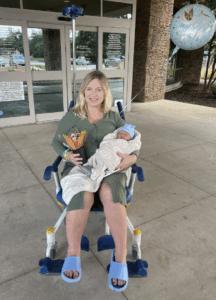
Texas Food Relief

First UU Austin will be a collection site for The Eco-conscious Music Alliance’s (EMA) supply drive to support flood relief in Central Texas.  

All donations may be brought to Howson Hall in the donation hours listed below or during your church ministry meeting.

Donation Hours:

  • Monday – Friday 9:00 am to 3:00 pm
  • Closed Saturday
  • Sunday 10:00 am to 2:00 pm


Needed Supplies:

  • Boxes/bins
  • Drinking water – gallons as well as individual sized bottles – cases appreciated
  • Ready to eat non-perishable meals
  • Non-perishable, non-expired food (canned, pantry staples, nuts, beans, grains, etc)
  • Snacks, bars, quick protein sources
  • First Aid supplies and bandages
  • Hydration electrolyte supplements & drinks  
  • Cleaning and Sanitizing supplies
  • New socks & underwear 
  • Work gloves
  • Toiletries, including travel sized containers, toothbrushes, soap etc. 
  • Larger soap & hand sanitization containers
  • Pet food
  • Clean clothing, all sizes
  • Menstrual products
  • Baby supplies (food, formula, diapers, wipes)


Interested in Volunteering?

We need church members to volunteer to help sort donations. 

If you are interested in delivering supplies, please complete EMA’s volunteer form


The Eco-conscious Music Alliance (EMA) https://www.ema.earth/ is mobilizing supply drives, events and projects to support  flood relief in Central Texas. EMA brings people together through the change-making power of music and helps grow community sustainability projects, which includes weather event response. EMA is based in Austin and is assisting multiple sites in Central Texas, such as Kerrville, Georgetown,  Leander and Sandy Creek.  Their specialization in relief work is cross-section collaboration, support for underserved people and organizations, and working with the music community in direct response efforts and fundraising concerts. EMA’s Partners and collaborators for flood relief include: Wheatsville Food Co-op, Kerrville Folk Festival, Austin Resilience Network, Austin Mutual Aid, Good Work Austin, Cajun Navy, Salvation Army, Sustainable Living Guide, Green Mesquite BBQ, and many others.

Standing by our UU Values: The Case for Palestine

Listen to the sermon by clicking the play button above.

AJ Juraska
July 6, 2025
First UU Church of Austin
4700 Grover Ave., Austin, TX 78756
www.austinuu.org

At the 2024 General Assembly, UUs adopted an Action of Immediate Witness titled “Solidarity with Palestinians,” yet many UUs have remained relatively quiet on the subject of Palestine. What do our values tell us about what is happening in Palestine? Join AJ Juraska as they explore how our UU values help us move past silence into solidarity.


Chalice Lighting

This is the flame we hold in our hearts as we strive for justice for everyone. This is the light we shine upon systems of oppression until they are no more. This is the warmth that we share with one another as our struggle becomes our salvation.

Call to Worship

THIS FAITH
By Heide Cottam

Let us be a faith that gathers, reaching for one another
through the walls of hate others build,
through the cages of ignorance and arrogance,
and through the fear that burns city streets.
Let us be a faith that sees a vision of a better world:
More compassionate, more just, more holy,
And with more love.
There is a faith that binds up the broken,
cauterizes battle wounds with the balm of peace,
sings longer and louder than the trumpets of war –
let us be that faith, too.
Let us be the ones who do not tread lightly in this world,
but light it up with our love,
who hold up the mirror of worth and dignity,
who are the sanctuary others seek.
But first:
Let us be a faith that worships together.
Here.
This morning.
In this space.
At this moment.
Let us be a faith.

Affirming Our Mission

Together we nourish souls, transform lives, and do justice to build the Beloved Community.

Reading

I SIDE WITH THE PEOPLE
Rev Drew Paton

If ever they ask you,
“Which side are you on?”
Tell them, plainly,
“I side with the people.”
With the precious ones, all, the integral,
the soft and the fierce, irreplaceable,
the beloved, if only
by God and trees, who were born,
who breathe and survive;
Say I side with those who keep watch,
beneath the bright screaming arc of bombs;
with those who hide in dark doorways
or who through the moonlight flee;
with those who stay and fight,
and with those kept up all night,
by hunger and grief and terror and rage,
by desperate, unruly hope;
who are good and green at the root;
who are more than the worst that they’ve done;
who do their best to love, and still pass on
the hurt in themselves that they hate.
But what
when they take sides ‘gainst each other?
The people – against even themselves?
Side with whatever is human in them,
what is fragile and feeling and flesh.
Side with the truth of our stories.
Side with the fact of our pain.
Side with defiant insistence on freedom
Side there again and again.
Side there today and tomorrow.
Side there the rest of your life.
Side there together, until we belong
each one to every other.
If ever they ask you,
“Which side are you on?”
Say, “It doesn’t work like that.”
Tell them you side with the people.
And abide where the people are at.

Sermon

I don’t know about you, but I have been told to avoid politics and religion at the dinner table.

Israel and Palestine is high on that list of things we learn not to talk about.

In middle school I did learn about the Holocaust in social studies. I had wonderful teacher who was himself Jewish. One of the things he taught us was how easy it is to create the conditions that happened in Germany leading up to the holocaust. How easy it is to be on the side of oppression.

I took a class in college on genocide, and that professor also pointed out how easy it is to fall in line when someone asks you to do something. We are trained to be people pleasers. We don’t like going against the grain.

In other words, I learned at a young age how any of us could fall prey to compromising our values and ultimately harming others. It’s one reason why I’ve tried to speak out when I see injustice – I refuse to be completely subsumed by systems of oppression like patriarchy, white supremacy, heteronormativity, ableism, etc.

Because even when it’s difficult, we need to stick to our UU values.

I learned about Judaism growing up, but I didn’t learn much about Israel and Palestine. My earliest memory of anything to do with Palestine was when I was with some Jewish friends and we saw a group of people protesting for Palestine. My friends reacted with disgust. I didn’t know what to make of it, because it was my first experience even learning about Palestine.

I didn’t think much about it until a college class was offered on Israel and Palestine, and it piqued my curiosity.

It wasn’t until that class that I heard a perspective from Palestinian people. I learned about the Nakba, which happened in 1948 and was the forcible expulsion of Palestinians from their land. 750,000 people were violently forced from their homes.

It was in hearing a balanced history – one that included both Israeli and Palestinian perspectives – that I became more concerned about the conflict. But for a long time I didn’t know what I could do, so I did nothing. When the topic came up, I occasionally shared my perspective, but I was typically not the one to initiate conversation.

To be honest, it wasn’t until October 7th that I started to think more about how I could personally do something. As soon as I heard about the attacks on Israelis, I felt terrible for those who were hurt, killed, and taken hostage. And for all Israelis and Jews who felt the impact of that attack, whether they were directly affected or not.

But I also knew that this could mean devastating things for the Palestinians in Gaza. And I feared for what was to come.

I started to learn more about the Unitarian Universalists for Justice in the Middle East, or UUJME, which has a mission that states that they work to, quote, “counter inequality and injustice in Palestine-Israel.”

UUJME has practical ways for people to get involved – some of which we’ll talk about later – and I started learning more from people locally and nationally about how I could help make a difference.

Because even when it’s difficult, we stick to our UU values.

I know we all come here today with different information. So I’m going to share some background.

Let’s start with who we are as UUs. Because we have a long history for taking a stance, even when it is difficult. During World War II the Unitarian Service Committee was committed to humanitarian efforts to help those escaping Nazi Germany. Martha and Waitstill Sharp started the Unitarian Service Committee in mid-1940, well over a year before the US entered the war. They did this difficult and dangerous thing because it was the right thing to do.

During the civil rights movement, when many white people were unwilling to participate or even speak out, many UUs got involved, putting their lives on the line because it was the right thing to do.

Because even when it is difficult, we stick to our UU values.

There’s not enough time today for a long history lesson, but what is important to know is that the Israel Palestine conflict has its roots in white supremacy, including antisemitism and Islamophobia. World powers like Great Britain and the US actively fueled this conflict from the beginning. These world powers supported Zionist efforts to establish a state in Israel because they did not want to have to accept more Jewish refugees in their own countries, a not-so-thinly-veiled form of antisemitism.

But let’s not lose focus on today. Because depending on the source, anywhere from an average of 100 to 250 Palestinians have been killed in Gaza every day since October 7th.

And the violence is not limited to Gaza. In addition to the 2.1 million Palestinians living in Gaza – which is approximately the geographic size of Austin – there are around 3.3 million Palestinians living in the West Bank.

I’m going to use the word apartheid today to describe what is happening to Palestinians. I’m going to use that word because it means segregation plus violence, which is an accurate description of what is happening on the ground. For example, in the West Bank roads are separated into those that Palestinians can drive on and those Israelis can use. Schools are segregated. Israelis have access to clean water, while Palestinians are collecting water on their roofs. Garbage collection is segregated – with East Jerusalem having no or inadequate trash collection as compared to other parts of Jerusalem. East Jerusalem is 61% Palestinian compared to other areas that are predominantly Israeli.

And beyond the segregation there is also violence against Palestinians whose livelihoods, homes, and lands are regularly attacked. Bulldozers knock down houses of Palestinians who are still living in those houses. Livestock are stolen. People are disappeared.

Settler colonialism is another term used to describe what the Israeli government is doing in Palestinian territories. Settler colonialism is not new. In fact, we Americans know it well. It’s what happened when Europeans came to Turtle Island, saw land that they wanted and took it, without regard to the fact that people were living here already.

The Zionist plan has been settler colonialism because the earth was already pretty well populated when they set about creating a Jewish state. It’s one of the reasons that people like Albert Einstein were for Jews to move to Israel but were against the creation of a Jewish state. Einstein and others knew that there were indigenous people living there already. People we now call Palestinians.

Even as I say all of this, I feel some fear because I know that I may be criticized or told that these are exaggerations, even as I know I stand on firm ground as to the truth of what I am saying. And using words like apartheid, violence, and settler colonialism is scary in part because we know that people have been targeted for using such words.

So what does it mean if we don’t talk about this issue? Does our silence make it go away?

How do we support Jews being free from persecution while at the same time advocating for Palestinians to have their human rights respected?

How do we hold that by using words like genocide and settler colonialism to describe what the Israeli government is doing in Gaza and the West Bank, some would claim antisemitism?

Is it better to be perceived to be “good” for not speaking out, or would we rather stick to our principles and speak out for those who are most marginalized? I would suggest, that when we are dealing with complicated questions, we must turn to our values for answers.

Because even when it’s difficult, we stick to our UU values.

What do our UU values say?

LOVE – we can love all our Jewish and Palestinian neighbors. It’s not a zero sum game where we can only love certain people – love exists in abundance. As Adam Serwer wrote for The Atlantic, “It’s not antisemitic to want equal rights for all in Jerusalem, in Tel Aviv, in Gaza, in Ramallah.”

Love means we see people’s worthiness and dignity. We see everyone’s right to live safely, with ready access to food, water, health care, and other things they need to survive and thrive.

Love also means that being anti-genocide is not the same as being antisemitic. Love calls us to speak out against genocide and hold our Jewish siblings in love at the same time.

JUSTICE says “We work to be diverse multicultural Beloved Communities where all thrive.” Where all thrive. We want Jews, Muslims, Christians, Atheists, Israelis, and Palestinians to thrive. What is happening right now is not thriving – for anyone involved. And it is not just.

EQUITY says “We declare that every person is inherently worthy and has the right to flourish with dignity, love, and compassion.” People are surviving despite the blockade on water and food, but it is hard to flourish under those circumstances. Apartheid is dehumanizing. We can hold people in compassion and take action to make the world a more equitable place, including when it comes to Palestine. We’ll talk more about how to do that in a moment.

PLURALISM – we honor both Jewish and Muslim people, and Judaism and Islam as religions. Apartheid breaks pluralism down; apartheid inherently separates.

We remember that there are Christian Palestinians and that no group is a monolith. We also remember that there are a plurality of viewpoints among Jews, including both Zionist and anti-Zionist beliefs, but Zionism has taken a hold in America, in part because of Christian Zionism which says that Jews must go back to Israel in order for Jesus to come back. In other words Christian Zionists see Jews as a pawn in their work to ensure Jesus comes back. Not to put too fine a point on this, but Christian Zionists believe that Jews have to die for the second coming to happen, and then, they believe, Jews would go to hell. Sounds pretty antisemitic to me.

Christian Zionism is also a component of Christian Nationalism. So the Zionism that we are seeing from Christians is tied to the efforts we’re seeing to get the Ten Commandments in classrooms and to couple church and state together.

INTERDEPENDENCE – we remember that we are interdependent with what happens around the world. Suffering continues whether we pay attention or not. The genocide in Palestine is on our hands, whether we like it or not. Also, if anyone in the audience needs another reason to care, genocide is ecocide. The land in Gaza is being destroyed. Additionally, the carbon released by the bombs being dropped is accelerating the climate crisis.

Last but not least, GENEROSITY – this says “we cultivate a spirit of gratitude and hope.” Let’s start with gratitude. For those of us in this room who have been doing this work a little longer, please have patience with and gratitude for those who are just now joining us. Hold space for those who are struggling with harmful beliefs and remember that you once may have struggled too.

Generosity talks about both gratitude and hope. Just because what is happening in Palestine feels intractable doesn’t mean we lose hope. There are ways to help. So let’s talk about what some of those things are.

Because even when it’s difficult, we stick to our UU values.

To learn more about the actions I’ll be sharing, we will have a table of information in Howson Hall after the service. I encourage you to take at least one of the following actions.

First, pay attention to what fuels the military actions and boycott those groups. There’s a group called Austin Against Apartheid that has a website that is austinagainstapartheid.com/boycott, but you don’t have to scramble to write that down because you can get more information about Austin Against Apartheid after the service in Howson. Their website will give more information about what products to boycott, including Chevron, Texaco, Coca Cola, Sodastream, McDonalds, and more. You can also sign on as an individual to commit to being apartheid-free.

Individual actions are good, but organizations boycotting is even more impactful. Consider helping us explore whether First UU could join 234 faith-based communities around the country in becoming an apartheid free zone. This would mean that First UU would commit to not supporting the businesses named in the boycott. Consider whether your business or organization might become apartheid free as well. Talk to Rev. Carrie or I if you want to get more involved in what is happening at the church.

Pay attention to what is happening. Read diverse sources of news, and not just American news sources which often soften what is really happening. Follow our own Unitarian Universalists for Justice in the Middle East, also known as UUJME for more information.

Contact your congressional representative to express your concern about the genocide and ask that the US stop sending military aid that fuels the conflict. Call on the US to play a larger role in stopping the conflict. Speak out about your concern about the blockade of all food and water aid which has been going on since March 2 and is leaving Palestinians in Gaza on the brink of famine.

Donate to American Near East Refugee Aid, United Nations Relief and Works Agency, and other charities to help get aid to Gaza.

Because even when it’s difficult, we stick to our UU values.

We learned the wrong lesson if “Never Again” after World War II was limited to certain groups.

And we do disservice to our UU values if we stay silent or do nothing out of fear. If we want to lead on social justice, this is how we do it – even when it is unpopular and we fear retribution.

It becomes safer if we do it together. The more people who speak out, the safer it is, especially for the people most impacted (immigrants, college students, Palestinians, etc.)

What would it look like if we all told the military industrial complex involved in this genocide, enough is enough. No more killing, no more land grabs, no more apartheid.

Many who were involved in ending the system of apartheid in South Africa thought that it was going to take much longer than it did. Even when it felt impossible, change was happening, and enough change made a difference.

Let’s imagine a world with peace, even when peace seems impossible. It won’t be possible unless we try.

Because even when it’s difficult, we stick to our UU values.

Extinguishing the Chalice

We extinguish this flame, but not the light of truth, the warmth of community, or the fire of commitment. These we hold in our hearts until we are together again.

Benediction

May we see a vision of a better world.
May we side with the people.
May we stick to our UU values.
And together, may we build the beloved community.
Amen and blessed be.


SERMON INDEX

Most sermons during the past 25 years are available online through this website. Click on the index link above to find tables of all sermons for each year listed by date (newest to oldest) with topic and speaker. Click on a topic to go to that sermon.

PODCASTS

Podcasts of this and other sermons are also available for free on iTunes. You can find them by clicking on the podcast link above or copying and pasting this link. https://itunes.apple.com/podcast/first-unitarian-universalist/id372427776
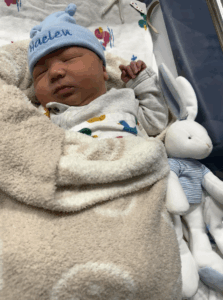
Ask A Therapist Event

Ask A Therapist

Date: Sunday, July 27, August 10, August 17
Time: Immediately following service
Location: Howson Hall

Join us after a few upcoming Sunday service for Ask a Therapist—a relaxed, informative Q&A session with licensed marriage and family therapist Brooke Becker. This is your opportunity to ask any therapy-related questions, whether you’re curious about how to start therapy, seeking relationship advice, looking for mental health resources, or wondering how to find the right therapist.

A table will be set up in Howson Hall for one-on-one or small group conversations. There will also be information available about Prepare/Enrich, a research-based approach to premarital counseling and deepening connection in relationships at any stage. You’ll also find book recommendations and Brooke’s business cards if you’d like to follow up privately or inquire about therapy services. All are welcome—no question is too small.

To learn more about Brooke and her services, please visit her website at www.bbtherapypllc.com.