Green Sanctuary Report

Hi Earth, Air, Water, living Things Champions,

Below are few specific easy ways you can pitch in to save our breathable planet home. A positive excerpt from our just published FUUCA Congregant Study and more. 

1. Thank you for your generous books and money support to our books recycling and people’s minds rehabilitating Inside Books Project (IBP). You can bring your gently used book treasures to the gray IBP book bin under the table in the Welcoming Center. Or drop them off at Inside Books Project (IBP), 3106 E. 14 1/2 Street (white church on the NW corner of 14 1/2 and Airport Streets, (Book Donation Bin on East side of building). Austin, Texas 78702  https://insidebooksproject.org/donate


2. Our church membership Report on the 2023-24 Congregational Survey mentions specific areas where we could focus our energy to make more progress. I’ve excerpted text on two areas Congregants say we could do more. The whole survey is worth your time. 

‘Church leadership could do more to focus more energy and investment in dismantling a culture of white supremacy and caring for our earth. Both areas because of their high importance and middling progress. I believe that includes stopping and cleaning up the toxic waste dumped into our earth, air and water by oppressively needlessly burning fossil fuels. An example of this is replacing and rehabilitating our coal burning Fayette Power Plant/site. Austin owns a third of this poisoning plant that a recent Harvard and UT, Austin study says the poison waste is sickening and killing Texans. Check out these links: 


Our Church, Green Sanctuary Ministry, is part of a community wide team fighting to close, clean up and replace this dirty killer site with renewables and storage. These two Texas Tribune articles will tell you more:


The Texas Tribune:
 

 When asked why Congregants give to our church, 92% said they are motivated by their values. Of these, almost half, (47%) mentioned the importance of making a difference in their world. An additional 49% mentioned the value of the church community to their lives and wanting to do their part to support this community and collaborate with the greater UUA community.


3. Right now here are ways to ‘make a difference, change our world, improve our church Community Energy’ and save money: 

Financial Incentives for Energy Investments at Houses of Worship”  also free;  www.energy.gov/congregations


3.a. We are part of a Community Clean Energy Campaign to support the Community Energy Generation and Climate Protection Plan: 


read all about this smart no fossil fuel community plan with these two attachments (Proposed Resource Plan & Cover Letter) share with your family and friends. Hold your  Council actions ’till September for our city wide organized support effort. We will grow the campaign over this Summer.


3.b. Learn about the UUA proposal for a National Climate Revival to save our climate from increased overheating, increased floods, droughts and more from greedy oppressive fossil fuel co’s.


4. For Good Climate news and the real story, this free 5 star newsletter: talkingclimatenewsletter@outlook.com


Next Climate Crises/Solutions Meeting: Tuesday, July 2nd in Howson Hall. The meeting potluck will start at 6:30 p.m. and the meeting will begin at 7 p.m. There will be no June meeting.

Please contact Robert at  roberthhendricks@aol.com if you have any questions.

Beki & Richard Halpin, Green Sanctuary Ministry, green@austinuu.org, 512-658-2599 or 512-917-6018


Searching for Asherah

Listen to the sermon by clicking the play button above.

Rev. Michelle LaGrave
May 12, 2024
First UU Church of Austin
4700 Grover Ave., Austin, TX 78756
www.austinuu.org

Did you know that God had a “wife”? Her name was Asherah and stories of this old Hebrew Goddess remain in the Bibles of today. On this Mother’s Day, let us reclaim the story of the Queen of Heaven.


Chalice Lighting

Blessed is the dark, in which our dreams stir and are revealed.
Blessed is the dark of earth, where seeds come to life.
Blessed are the depths of the ocean where no light shimmers:
the womb of all earthly life.
Blessed is the light into which we awake,
the light that sparkles on the waters: that calls the tree forth from the seed, and calls the shadow forth from the tree.
Blessed are we as we move through darkness and through light.

Call to Worship

THERE IS ROOM FOR YOU HERE
Mary Edes

If God is your strength and companion
and prayer the means of centering your thoughts,
There is room for you here.
If the teachings of the Buddha give you clarity and calm in the midst of human striving,
There is room for you here
If Gaia’s seasonal rhythms lead you best through the myriad steps of Life’s great dance.
There is room for you here.
If the still mysterious capacity and power of the Mind, stirs your imagination and quickens your pulse,
There is room for you here.
Rest now, beside that spring, wherever it is for you
And let your attention go to the small places inside or out in the great wide world –
places or people in need of healing or for which your heart is filled with thanksgiving,
And in that spirit, let us be silent together for a time.

Affirming Our Mission

Together we nourish souls, transform lives, and do justice to build the Beloved Community.

Reading

REMEMBER
(excerpt) by Joy Harjo

Remember your birth, how your mother struggled
to give you form and breath. You are evidence of
her life, and her mother’s, and hers.
Remember your father. He is your life, also.
Remember the earth whose skin you are:
red earth, black earth, yellow earth, white earth
brown earth, we are earth.

Centering

by the Rev. Victoria Safford

What if there were a universe, a cosmos, which began in shining blackness, out of nothing, out of fire, out of a single, silent breath, and into it came billions and billions of stars, stars beyond imagining, and near one of them a world, a blue-green world so beautiful that learned clergymen could not even speak about it cogently, and brilliant scientists, with their physics, their mathematics, their empirical, impressionistic musing, in trying to describe it, would begin to sound like poets?

What if there were a universe in which a world was born out of a smallish star, and into that world (at some point) flew red-winged blackbirds, and into it swam sperm whales, and into it bloomed crocuses, and into it blew wind to lift the tiniest hairs on naked arms in spring, and into it at some point grew onions, out of soil, and in went Mt. Everest and also the coyote we’ve spotted in the woods about a mile from here, just after sunrise on these mornings when the moon is full? (The very scent of him makes his brother, our dog, insane with fear and joy and ancient inbred memory.) Into that world came animals and elements and plants, and imagination, the mind and the mind’s eye. If such a universe existed and you noticed it, what would you do? What song would come out of your mouth, what prayer, what praises, what sacred offering, what whirling dance, what religion and what reverential gesture would you make to greet that world, every single day that you were in it?

We begin our candlelighting time with a communal ritual, honoring our most ancient of human ancestors and milestones …

  • Ardi 4.4 mya – Ardipithecus Ramidus (most complete early hominid skeleton, about 110 pounds, 3’11”, likely bipedal on ground, quadrupedal in trees, diet of fruit and nuts)
  • Lucy 3.2 million years ago – Australopithecus Afarensis
  • Over 2 million years ago – genus Homo emerges, the earliest hominins, use of stone tools begins (homo habilis)
  • Control of fire by humans, 1.5 million years ago (homo erectus)
  • Earliest evidence of homo sapiens outside of Africa, 210,000 years ago (Greece)
  • Mitochondrial Eve, 150,000 years ago
  • Earliest evidence for agriculture, now at 23,000 years ago (Sea of Galilee); certainly by 12,000 years ago
  • Biblical Eve: mythic story of leaving the Garden of Eden (out of Africa); transition to agriculture; transition to hidden menses and monogamy
  • Miriam 1200ish years ago
  • Our individual mothers: I am Michelle, the daughter of Nancy, who is the daughter of Eleanor, who is the daughter of Henrietta, who is the daughter of Eleanor, who is the daughter of Martha and I light this candle for all the mothers of my line.
I now invite you to light candles honoring your own lines of descent, or whatever it is you need to honor during this time.


Sermon

Once, early on a drizzly Saturday morning, I went to see the Dali Llama, the spiritual leader of Tibetan Buddhism. As I sat in this gigantic outdoor football stadium, he said: Think about this:

Everyone of us here, some ten thousand of us, has a mother. And he paused for a moment, allowing that knowledge to sink into our very beings. A hush fell over the stadium, so that in the silence, I could almost hear the thoughts of others, and I certainly felt the sense of amazement, as we took in this knowledge – that we are all connected to each other in such a fundamental way. It’s such a simple fact, isn’t it? We were all, each and everyone of us, born of a woman. And, I’d guess, it’s a fact most of us take for granted.

It wasn’t always so; this taking for granted of new life. Disconnection from our bodies and disconnection from nature is a rather modern phenomenon. Today, in this country, most of us were born in a hospital- in a sterile environment; with quick and easy access to life-saving drugs, equipment, and procedures; with quick and easy access to the miracle of medical technology.

For the millennia before the advent of modern medicine, we were born, that is our human ancestors were born – in the grasses of the savannah, within the confines of caves, under the protection of thatched roofs. Our survival, and the survival of our mothers, was always in question. For our survival, we relied on the wisdom of the women who had gone before, on the oral traditions that had been passed down from generation to generation, on the medicinal value of plants and herbs growing nearby. And – we relied on the Goddess.

We relied on the Goddess. Throughout ancient times and ancient cultures, it was the Goddess who was revered. Archaeological evidence from Palestine of the 13th and 14th centuries BCE in the form of clay figurines, with their emphasis on the elements of human fertility and survival, tells us that our earliest religious impulse, as humans, was to worship the Goddess. This makes sense to me – for as people we were intimately tied to the cycles and rhythms of nature, of the earth. We knew life and death, we knew the seasons of the year, we knew seedtime and harvest – in a way most of us, today, cannot and do not know. And we, that is our human ancestors, made the connection between human sexuality and reproduction and the implantation of seeds in Mother Earth, for our very survival depended on both.

Today, we celebrate Mother’s Day. Mothers all over the country will be blessed with brunch, courted with cards, favored with flowers, and showered with small gifts of time and treasure. Joy and good humor abound, such as was sent in this email chain, when 2nd graders were asked questions about the relationships between mothers and God. Here is a sampling of just a few of them: Why did God make mothers? She’s the only one who knows where the scotch tape is. How did God make mothers? Magic plus superpowers plus a lot of stirring. And finally, what ingredients are mothers made of? Clouds and angel hair and everything nice in the world and one dab of mean.

Of course, Mother’s Day is not only joy, good humor, and celebration. On this day, children mourn the deaths of their mothers, mothers mourn the deaths of their children, and some children grieve the loss of the mothers they wish they had had or never knew.

When the Dali Llama spoke to that stadium full of people, reminding us of our common origin from our mothers, I do not know if he was aware of the approaching Mother’s Day holiday here in the United States or not. He taught of the importance of a mother’s touch, of a nurturing touch, in the first few months of human life; of its essential function in brain development. And he spoke of his own mother, telling stories from his childhood. He told us that his mother was a person of great kindness and compassion and he spoke of being spoiled by her. During the earliest time of his life, in the first two years, his mother carried him about on her shoulders just about everywhere she went. He said that when he wanted her to go this way, he tugged on this ear, and she went this way. And he said when he wanted her to go that way, he tugged on that ear, and she went that way. But sometimes, sometimes … she wouldn’t do as he wished, and he tugged on both of her ears like this.

Yes, this story is both funny and cute, and for that reason alone, it is one of my favorites. Without fail, I smile each time I remember him telling this story. To me, though, the wonder of this teaching is its humility; and the brilliance of this teaching is its universality. For all are not mothers, and many shall never be; but we are all children of mothers, we all were born of a woman, all- even Jesus, even Muhammed, even Buddha, even the Dali Llama. For this teaching gets at the heart of life, the cycles of life and death, or as the Dali Llama would say, birth and rebirth; for this is the universal connection of all human life.

Earlier, I spoke of the importance of the Goddess in early human religion; yet, our culture has developed in such a way that it is a male God who is most commonly worshiped. How did that happen? Where did the Goddess go? Did she simply disappear with the advent of monotheism? Almost, almost, but not quite … as we shall see, Biblical scholars and archaeologists have been busy rediscovering and reclaiming the Goddess of Ancient Israel.

In one of the most intriguing stories of the Hebrew Bible, God, who is very upset with the people of Israel, speaks to Jeremiah and says to him:

“As for you, do not pray for this people, do not raise a cry or prayer on their behalf, and do not intercede with me, for I will not hear you. Do you not see what they are doing in the towns of Judah and in the streets of Jerusalem? The children gather wood, the fathers kindle fire, and the women knead dough, to make cakes for the queen of heaven; and they pour out drink offerings to other gods, to provoke me to anger.” (Jeremiah 7: 16-18)


Later in the story, after the first Temple had been destroyed and many of the Israelites were exiled to Babylonia; Jeremiah then speaks to a crowd of refugees who had fled Jerusalem, explaining that they cannot escape the wrath of God by fleeing to Egypt.

“Then all the men who were aware that their wives had been making offerings to other gods, and all the women who stood by, a great assembly, all the people who lived in Pathros in the land of Egypt, answered Jeremiah: ‘As for the word that you have spoken to us in the name of the LORD, we are not going to listen to you. Instead, we will do everything that we have vowed, make offerings to the queen of heaven and pour out libations to her, just as we and our ancestors, our kings and our officials, used to do in the towns of Judah and in the streets of Jerusalem. We used to have plenty of food, and prospered and saw no misfortune. But from the time we stopped making offerings to the queen of heaven and pouring out libations to her, we have lacked everything and have perished by the sword and by famine.’ And the women said, ‘Indeed we will go on making offerings to the queen of heaven and pouring out libations to her; do you think that we made cakes for her, marked with her image, and poured out libations to her without our husbands’ being involved?'” (Jeremiah 44: 15-19)


There are many, many interpretations of these passages of Jeremiah. Some say that the Queen of Heaven was Ishtar or Astarte, a foreign goddess; others say she was Asherah. Some say that she was the consort of the LORD of Israel; others say that she simply represented the feminine side of God. I believe the strongest evidence supports the idea that the Queen of Heaven was Asherah, the wife of the old Hebrew God EI, whose worship flourished throughout Biblical times. William Dever, a professor of archaeology, believes that the writers of the Hebrew Bible in their monotheistic interpretation were actually battling a widespread and well-entrenched folk religion; a religion practiced not just by the women, but by the men as well; a religion which revered and worshiped the Queen of Heaven in all of her local manifestations; a religion which worshiped a Hebrew goddess, yes, a Hebrew goddess, through and through.

Eventually, as we all know, monotheism and a patriarchal God did win the battle for the religion of the people, or at least most people. Worship of the Goddess continued, albeit underground and in secret, and survived through millennia of persecution; finally re-emerging in the light of day, or perhaps, by the light of the moon, in the form of pagan and wiccan traditions practiced today by UUs and many others, the world over. Other vestiges remain as well. The goddess has survived in mystical Judaism as the Shekinah, the feminine aspect of God who dwells in this world; and the Goddess has survived in all of Judaism as the Sabbath bride. In Christianity, the Goddess has survived in the form of Mary, as the human mother of a divine God; a story long familiar to many pagan traditions.

Over the course of time, as human societies grew increasingly complex and more and more patriarchal; women lost much of their stories, much of their power, much of their access to the divine. Women lost their roles as prophets and priests. Women lost their Goddess.

As Unitarians and Universalists, we have our proud stories of reclaiming the place of women in ministry. Universalists lay claim to what was perhaps the first modern ordination of a woman to ministry; most likely, the Rev. Olympia Brown in the year 1863. Unitarians took their turn, a few years later, with the ordination of the Rev. Celia Burleigh.

Lest we be too proud of ourselves, it is also important to remember that the history of women in Unitarianism and Universalism was also sometimes problematic. Our triumphs were often more the exception than the rule. Despite our early ordination of women, many congregations rarely or never called a female minister. It wasn’t until 2017 that we elected a woman to the presidency of the Unitarian Universalist Association for the first time.

As we journey forward in our quest to regain the divine feminine, I am reminded of some old ideas about the unity of God. In Platonic, Hellenistic thought, society was organized in a hierarchy of those thought to be farthest away from God and those thought to be closest to and most like God (or the gods). Not surprisingly, slave women were on the bottom of the hierarchy. On the next rung up – slave men; on the next – free women; and on the next – free men. At the very top of the hierarchy, those thought to be most like God, were androgynous or gender-less people.

A similar line of thought continued in the writings of early Gnostic Christians found at Nag Hammadi. They believed that the end times would manifest as a return to the beginning times – to the time before humans were divided into male and female; when humans were simply one; one gender.

This yearning for unity, for the Goddess and the God, is reflected in these words by a UU minister, the Rev. Shirley Ann Ranck. She writes this as if from the perspective of Gomar, a devotee of Asherah, who is speaking to her husband Hosea, a prophet of YHWH, the LORD of Israel:

“Are our Gods so different? Must it be one or the other? Can we not dwell together in harmony? Is Asherah so different from the Gods of your ancestors, Hosea? … Were they so different? Elshaddai and Asherah? The Divinity of the Mountains and the God of the Air and Rain … Forgive me as I forgive you. Even as our Gods, the great YHWH and the great Asherah forgive us. May they live side by side. Although I know in my heart that may never be, I still pray for it …. And some day your world-transcending God will be reconciled with my world-renewing God, peace shall reign, and we shall be together again in the land.”


And so our search for Asherah continues. May we reclaim the Goddess while retaining the God. Amen and Blessed Be.

Extinguishing the Chalice

We extinguish this flame, but not the light of truth, the warmth of community, or the fire of commitment. These we hold in our hearts until we are together again.

Benediction

Our circle is open but unbroken,
May the Goddess and the God go with you,
and all the protection they provide.
All are one.
Merry meet and merry part and merry meet again.
Amen and Blessed Be.


SERMON INDEX

Most sermons during the past 24 years are available online through this website. Click on the index link above to find tables of all sermons for each year listed by date (newest to oldest) with topic and speaker. Click on a topic to go to that sermon.

PODCASTS

Podcasts of this and other sermons are also available for free on iTunes. You can find them by clicking on the podcast link above or copying and pasting this link. https://itunes.apple.com/podcast/first-unitarian-universalist/id372427776


Exponential Theology

Listen to the sermon by clicking the play button above.

Rev. Chris Jimmerson
May 5, 2024
First UU Church of Austin
4700 Grover Ave., Austin, TX 78756
www.austinuu.org

We often talk about how divided we are politically, societally, and religiously. Many a magazine article lately has even featured how so many of us are even feeling divided among the many parts within ourselves. What if we valued these differences though? What if, with loving intent, we put them into conversation with one another? Might not this pluralism help us all grow our own depth and breadth of being by many multiples?


Chalice Lighting

This is the flame we hold in our hearts as we strive for justice for everyone. This is the light we shine upon systems of oppression until they are no more. This is the warmth that we share with one another as our struggle becomes our salvation.

Call to Worship

– Walt Whitman
Do I contradict myself? Very well, then I contradict myself. I am large. I contain multitudes.

– Rumi
There are many ways to kneel and kiss the ground.

Affirming Our Mission

Together we nourish souls, transform lives, and do justice to build the Beloved Community.

Reading

THE SACRED HOOP

Then I was standing
on the highest mountain
of them all,

And round beneath me
was the whole hoop
of the world.

And while I stood there
I saw more than I can tell

And I understood
more than I saw.

For I was seeing
in the sacred manner
the shape of all things
of the spirit.

And the shapes
as they must live
together like one being.

And I saw that the sacred hoop
of my people
was one of many hoops
that make one circle,
wide as daylight and starlight,

And in the center grew one
mighty flowering tree

To shelter all the children
of one mother
and one father.

And I saw that it was holy.

– Black Elk

Sermon

Text of this sermon is not yet available.

Extinguishing the Chalice

We extinguish this flame, but not the light of truth, the warmth of community, or the fire of commitment. These we hold in our hearts until we are together again.


SERMON INDEX

Most sermons during the past 24 years are available online through this website. Click on the index link above to find tables of all sermons for each year listed by date (newest to oldest) with topic and speaker. Click on a topic to go to that sermon.

PODCASTS

Podcasts of this and other sermons are also available for free on iTunes. You can find them by clicking on the podcast link above or copying and pasting this link. https://itunes.apple.com/podcast/first-unitarian-universalist/id372427776

Green Sanctuary: UUA’s Call for Climate Action

Hi Our Home Planet Champions,

We all know that burning fossil fuels is warming our planet home. Rising temperatures, more wildfires, relentless floods, oceans rising, more droughts, millions of people homeless climate refugees, and fossil fuels toxic waste is making people sick and causing deaths. Here is the kicker: we are subsiding these toxic fuels. There is Good News!
 
GOOD NEWS:

Belgian Police Arrest 132 Climate Defenders Demanding End to Fossil Fuel Subsidies

“The fact that national governments are subsidizing fossil fuels is akin to a crime against humanity,” said one Extinction Rebellion organizer. Read the whole inspiring story.

We can and must do more to see our tax dollars go to helping all Americans not hurting them.

Our Climate needs our loving attention. A remarkable wave of good news and good action is coming our way. The Unitarian Universalist Association (UUA) has decide to call for climate action from UU churches across the Planet. This is a heads up. Between now and September more news and action calls about this global campaign will be released. A link will be available soon. There will be so many fun ways to participate. September will be the kick off. Watch this newsletter for the roll out of coming opportunities to act, united with other UU’s, to save our planet home. 

Now the UUA has produced this priner with financial resources for churches interested in “Financial Incentives for Energy Investments at Houses of Worship” (our church).  After our latest capital campaign is successfully completed. Talk to Chris and Shannon about ideas to increase energy efficiency, save money and our planet home. This primer is a resource to fund such important climate actions.

For more free good climate news click here: talkingclimatenewsletter@outlook.com  

Please note:  Our Climate Crises/solutions first Tuesday meeting will skip Tuesday, June and start again July 2,  Howson Hall, 6:30 p.m. pot luck, 7 p.m meeting. 


TXUUJM May/June Events

Time to register for June justice events! The Texas UU Justice Ministry (TXUUJM) is excited to welcome the leaders of UU Ministry for Earth and Side with Love. Then on Thursday, June 6 (*NEW DATE*), we welcome author Steve Phillips (How We Win the Civil War: Securing a Multiracial Democracy and Ending White Supremacy for Good). All events are FREE, online, and open to everyone. Register and get more info on TXUUJM events here! . TXUUJM is also your source for Texas UU the Vote efforts this election year! Sign up for TXUUJM emails to get the latest news and actions, and follow @txuujm on Facebook and Instagram.

.   


Austin Energy Update

Dear Earth Champion-Planet Protector,
 
The Austin City Council is facing an important choice about Austin’s energy future and our climate protection & Health & Safety destiny:


The Austin Energy Resource, Generation and Climate Protection Plan — a 10-year roadmap for proposing to phase out the use of fossil fuels at Austin Energy and replacing them with clean energy — is getting an update.

Alarmingly, Austin Energy’s  (AE) current proposal recommends a dangerous fossil fuel direction. Instead of replacing existing fossil fuel power, Austin Energy is asking the City Council to support adding a more polluting methane gas-burning power plant in  (probably) East Austin! 

There is an alternative Working Group Plan. This plan has no fossil fuels . AE is not cooperating with the community for a fossil fuel free future!

“Fossil fuel generation causes multiple environmental problems. Burning fossil fuels is very dangerous to vulnerable groups like the very young, the very old and those with respiratory illnesses.” “Energy and the Environment” United Women In Faith

We need your help. You can make a difference. Use this link to contact Austin City Council. This link uses Texas Public Citizen run by our own church member Adrain Shelly. It is safe and secure: 

Highlight this link, click once, click “open Link” https://act.citizen.org/page/62505/action/1?ea.url.id=2291750&forwarded=true

There is a message in the link. Please act promptly. You can make a life saving difference.

Beki & Richard Halpin, Green Sanctuary Ministry, green@austinuu.org, 512-658-2599 or 512-917-6018

May 2024 Congregational Meeting

This is your Official Notice for our Spring Congregational Meeting on Sunday, May 19 at 1:00  p.m., to be held in the Sanctuary and on Zoom (Passcode 512452). Click on the link below for materials for the meeting.

Congregational Meeting Materials

The church bylaws specify the following regarding voting eligibility: “Individuals who have been members of the church for 30 days or more and who have (as an individual or part of a family unit) made a recorded financial contribution during the last 12 months and at least 30 days prior to the meeting, have the right to vote at all official church meetings.”

The list of eligible voters may be found by clicking here

Any questions about voter eligibility, including if you feel that you were mistakenly not listed on the list of eligible voters, please contact Shannon Posern, shannon.posern@austinuu.org

We look forward to seeing you at the meeting!

Monthly Service Offering for May – Inside Books Project

Inside Books Project is an organization that sends free books to Texas prisoners. Prisoners write a letter (sometimes in Spanish) requesting books. Volunteers read the letters and send each prisoner a package of books, hopefully matching the prisoner’s request. Prisoners can request books four or five times a year.

All manner of fiction and nonfiction titles are requested and last year Inside Books sent 32,000 books to Texas prisoners. Most of the books sent are donated to Inside Books by individuals, including First UU congregants who have donated thousands of books to Inside Books over the years. Thank you! A few books are purchased, such as tradecraft books that can help prisoners gain employment upon release. Inside Books also produces and prints royalty-free pamphlets on topics like starting a business, drawing, equipment-free exercise, basic legal terminology and process, Dungeons and Dragons basic rules, COVID information from the CDC, and LGBTQ resources.

This year Inside Books also delivered numerous carloads of books to Texas Department of Corrections Central Library in Huntsville. The Central Library then sends books out to libraries at various Texas state prisons, although not every prison has a library. In addition to state prisons, Inside Books Project delivered carloads of books to 12 central Texas County Jails. Jails generally loan books more informally and let prisoners choose from book carts that circulate.

75% of Inside Book’s expenses go to pay for mailing books and for rent at the church that hosts the organization.

Inside Books gets love letters from prisoners who have received the perfect book at just the right moment in their lives. Books light up the darkness of incarceration and connect prisoners to the world of possibility. Thanks for your generous support of this organization.

If you have books to donate to Inside Books Project, you can put them in the Inside Books Project tub in our church Welcome Center or you can take them directly to Inside Books Project. Inside Books Project operates out of a church on the corner of Airport and 14 1/2 Street. The book collection bin is outside on the Airport side of the church.


Silent No More

Listen to the sermon by clicking the play button above.

Nancy Mohn Barnard
April 28, 2024
First UU Church of Austin
4700 Grover Ave., Austin, TX 78756
www.austinuu.org

Lately, bad news is omnipresent: climate change, polarized politics, and inequity abound. But Unitarian Universalism offers a message of good news; we just need the courage to share it.


Chalice Lighting

This is the flame we hold in our hearts as we strive for justice for everyone. This is the light we shine upon systems of oppression until they are no more. This is the warmth that we share with one another as our struggle becomes our salvation.

Call to Worship

YOU ARE BELOVED AND YOU ARE WELCOME HERE
Joan Javier-Duval

Voice 1: You are beloved and you are welcome here

Voice 2: Whether tears have fallen from your eyes this past week or gleeful laughter has spilled out of your smiling mouth

Voice 1: You are beloved and you are welcome here

Voice 2: Whether you are feeling brave or broken-hearted; defiant or defeated; fearsome or fearful

Voice 1: You are beloved and you are welcome here

Voice 2: Whether you have untold stories buried deep inside or stories that have been forced beyond the edges of comfort

Voice 1: You are beloved and you are welcome here

Voice 2: Whether you have made promises, broken promises, or are renewing your promises,

Voice 1: You are beloved and you are welcome here

Voice 2: Whatever is on your heart However it is with your soul in this moment

Voice 1: You are beloved and you are welcome here

Voice 2: In this space of welcome and acceptance, commitment and re-commitment, of covenant and connection,

Let us worship together.

Affirming Our Mission

Together we nourish souls, transform lives, and do justice to build the Beloved Community.

Reading

I WANT TO BE WITH PEOPLE LIKE YOU
Dana Worsnop

Often people say that they love coming to a place with so many like-minded people.

I know just what they are getting at — and I know that they aren’t getting it quite right.

I don’t want to be with a bunch of people who think just like me.

I want to be in a beloved community where I don’t have to think like everyone else to be loved, to be eligible for salvation.

I want to be with people who value compassion, justice, love and truth, though they have different thoughts and opinions about all sorts of things.

I want to be with independent-minded people of good heart.

I want to be with people who have many names and no name at all for God.

I want to be with people who see me in me goodness and dignity, who also see my failings and foibles, and who still love me.

I want to be with people who feel their inter-connection with all existence and let it guide their footfalls upon the earth.

I want to be with people who see life as a paradox and don’t always rush to resolve it.

I want to be with people who are willing to walk the tight rope that is life and who will hold my hand as I walk mine.

I want to be with people who let church call them into a different way of being in the world.

I want to be with people who support, encourage and even challenge each other to higher and more ethical living.

I want to be with people who inspire one another to follow the call of the spirit.

I want to be with people who covenant to be honest, engaged and kind, who strive to keep their promises and hold me to the promises I make.

I want to be with people who give of themselves, who share their hearts and minds and gifts.

I want to be with people who know that human community is often warm and generous, sometimes challenging and almost always a grand adventure.

In short, I want to be with people like you.

Sermon

When you hear the word evangelism, what comes to mind? For many of us the word evangelism can have negative connotations, bringing to mind religious trauma from our pasts, in which we were maybe proselytized to or pressured into being saved. Indeed, nowadays the word evangelism has come to be associated with a particular sect of Christianity and not the actual dictionary definition, which means to spread the “good news” of the gospel. Evangelism no longer represents good news, but rather, has become a negative word with which we want nothing to do.

As Unitarian Universalists, our tradition has become a haven for those who have experienced trauma from evangelism. And yet, today I’m going to make an argument for reclaiming the word evangelism, specifically for the Unitarian Universalist tradition. Though many of you may cringe — I’d like to argue that evangelism is needed in the Unitarian Universalist church. Now, I realize that the thought of an evangelical Unitarian Universalist tradition may be triggering. Indeed, for many years, anything that even hinted at evangelism triggered me. But over time, as I have recovered from my past, the negative connotation of evangelism has slowly lessened.

Evangelism first became a loaded and negative word for me back in 1992, when I first moved to Georgetown, Texas. At the age of sixteen, in the middle of my sophomore year of high school, my parents uprooted my northern California family to relocate there. The culture shock was real. Whereas back home religion was something that people kept to themselves, at school, the “What’s your name?” question was inevitably followed up with “where do you go to church?”

Even the public school had undercurrents of Christianity. For example, one day the administration called a general assembly, and we all filed into the gym, prepared for the usual pep rallies, student recognitions and school announcements. The gym, however, had been transformed into what looked like a prototype of the modern CrossFit gym. Gymnastic mats lined the gym floor; one foot stacks of plywood were dispersed throughout the set; and a variety of weights, ropes and other props filled in the remaining spaces. This assembly was obviously no ordinary school function.

The principal excitedly announced that today we had special visitors. And as he gave introductions, ten, huge, Hulk-Hogan looking men entered the gymnasium and took up positions around the floor mats. They then proceeded to put on an electrifying show that involved karate chopping through stacks of plywood along with other feats of strength. At the end of the show, the students cheered with wild abandon, and the men invited us to another show that evening-a show that promised even more amazing strength stunts.

My friend and I decided that we would absolutely attend that evening’s show. After all, what else was going on that night in our small town? Hours later we pulled up to a church on the outskirts of town, which struck us as an odd venue for a muscle show. However, it could easily be explained by the lack of suitable venues in the area. We entered, took our seats and soon, the same muscle men were entering the auditorium, flexing and showing off their muscles, but this time, Christian rock and not heavy metal blasted through the speakers.

Things only continued getting weird. The muscle men led the audience in an opening prayer. What then followed was almost two hours fined with one testimony after the next. Each of the men got a chance to tell their stories. Stories about losing one’s path, finding Jesus, and God gifting them with supernatural strength; the latter of which allowed them to put on shows, travel around the United States and testify. As audience members, we were there to witness the abilities with which the Lord had endowed these men. The primary message was that the Lord provides-and even rewards-those who are faithful and willing to proselytize in his name.

Now, I’m not fond of bait and switch situations, and although 1 wanted to see them perform more feats of strength, I couldn’t handle the evangelism that was the show}s focus. I was also annoyed by the knowledge that the school knew what this group represented, and yet, never warned the student body that the evening’s show would have a Christian focus. My friend and I decided that we were done and headed to the exits to leave. As we stepped outside the auditorium, a huge guy — who looked like a bouncer — stopped us. He began to grill us on why we were leaving, and we tried to explain that we had seen the show earlier that day. Soon the conversation changed tones, as the man began to question us about our beliefs in Jesus and the power of God. My friend and I eyed the exit door with longing, calculating whether or not we could make it to the parking lot and lose this guy who was doing his best to keep us there. But we were intimidated by this man who towered over us. And finally, we decided to give up and hopelessly slunk back into the auditorium.

When the show was finally over, I was fuming — I resented that we had been pressured to stay; I was annoyed that the man had intimidated us, and moreover, that he had intentionally done so. Instead of making me feel fired up about Jesus and God, I began to suspect that Christianity was a scam full of con artists that used scare tactics to elicit belief. Indeed, this experience had the opposite effect of what it had intended-instead of celebrating the gifts that faith can bring, it made me want to run as far away from Christianity as fast as possible.

Unfortunately, this incident was one of several evangelizing experiences that I had encountered in the first few months I spent in Georgetown. All of the experiences felt like someone was pushing views onto me — rigid views that did not invite discussion. Moreover, in several of these encounters, I was told that I was going to hell, despite the fact that — at that time –I was a Christian. Indeed, these experiences had the after effect of me leaving the Christian church for good. It took me years to recover from some of these experiences.

Fast forward to last year when I had to take a mission and evangelism class at my Presbyterian seminary. I dreaded taking the class, for despite the many years since my traumatic experiences, the word evangelism still elicited a negative reaction. However, the class surprised me. Instead of encouraging us to evangelize and find ourselves some Christian converts, it instead examined evangelism from an academic, colonialist perspective. When we were expected to read a book on evangelism and present our findings to the class, I was excited when my professor allowed me and two of my fellow Unitarian Universalists to form a group and research evangelism in our own faith tradition. The book we chose was entitled Seeking Paradise: A Unitarian Mission for Our Times, and it was written by Stephen Lingwood who is a British Unitarian.

The book focuses on Unitarian evangelism and missionaries in Britain. For example, it talks about Richard Wright, who spread the message of Universalism long before the merging of the Unitarian and Universalist churches in 1961; and Joseph Tuckerman who created a mission in London and worked on behalf of the poor. My favorite example, however, of Unitarian evangelism was Charles Dall, a Unitarian missionary who went to India to seek converts. Dall, however, ended up being the convert when he decided to join a liberal Hindu reformist movement. I find this anecdote to be particularly amusing, as Dall’s conversion is such a Unitarian Universalist move-his openness to the Hindu faith exemplifies our fourth principle, which is the free and responsible search for truth and meaning. In his attempt to spread the values of the faith, he remained open to truth and meaning and found it in Hinduism. This is all to say that the Unitarian Universalist church does have a history of evangelism, though as we have furthered ourselves from our Christian roots, we have also stopped evangelizing efforts. But today, my friends, I’d like to argue that it’s time to restart our evangelizing efforts, for in 2024, the Unitarian Universalist church has a heretofore unseen opportunity for growth.

According to the Pew Research Center, an increasing number of Americans are leaving Christianity and instead identifying as “Nones” (spelled n-o-n-e-s and not n-u-n-s). The term “nones” refers to those with “no particular religious identification,” which includes atheists and agnostics. Indeed, in 2019, the Pew Research Center showed that over the past ten years, Christianity had lost approximately 12% of their population. This Christian attrition can be seen across the northern hemisphere, although Christianity continues to grow south of the equator. Meanwhile, research tells us that 26% of people now identify as “Nones.” And although I have not conducted a formal survey, I can tell you anecdotally from my work in Religious Education both with children and adults that Unitarian Universalist Churches have a significant number of If Nones” in our congregations. Just because people are atheist or unable to identify with a mainline tradition doesn’t mean that spiritual needs do not exist. People long for communities and connections; for a space in which they can unite with others in the name of social justice. The Unitarian Universalist church can fulfill that need.

And yet, few people know about the existence of our unique and welcoming tradition. Even at seminary — where I am surrounded by people who are smart and knowledgeable about faith traditions, many people are unfamiliar with the Unitarian Universalist church. Often people simply refer to us as Unitarians, while being unaware of how important the Universalist name is to our identities. While the word Unitarian reflects our belief in one God, no matter what the name, universalism reflects our belief that everyone is elected; our faith is one of universal love-a message that is much needed in today’s isolating and lonely world. In many ways, my fellow UU students and I have inadvertently found ourselves acting as evangelists on behalf of our faith, as we try to educate others on the meaning and importance of being both a “Unitarian” and a “Universalist.” And I must say that my peers have been nothing but curious and gracious.

But if even seminarians lack a full understanding of Unitarian Universalism, imagine the population at large. Many of my friends know that I’m involved in the Unitarian Universalist church and that I’m in seminary, working towards ordination. But no matter how many times I tell them that I’m not Christian, they inevitably forget; “church” only has one meaning to them, which is Christianity. When I explain what our Unitarian Universalist church is like, they often look at me in disbelief. “What do you mean there are atheists in your church? Why would an atheist go to church?” At this point in the conversation, I often point out that just because people don’t believe in God doesn’t mean that they’re not seeking meaning, truth and knowledge. Moreover, many people are looking for a community in which their questions and beliefs — no matter how unusual — will be welcomed with open arms. The Unitarian Universalist church is the answer that many people are inadvertently seeking, as we welcome all who are welcoming and affirming; all who are willing to enter into covenant as we work towards justice and truth.

Unfortunately, few people know of our existence and what we stand for. But it’s time to correct this problem; it’s time to tell the world of our existence. More and more I’m receiving questions from people who are interested in this faith. I suspect that even with our silence, word is slowly spreading.

Now is the time for the Unitarian Universalist church to come into its own. Our faith tradition is both beautiful and unique. It is a tradition that welcomes a” inquiry; a tradition that acknowledges the validity of all sources and experiences; a tradition that cares about equity for a” humans. Though it pains me to think of myself as an evangelist, I nonetheless can no longer be shy about sharing this faith with others, for the Unitarian Universalist truth is truly the Good News that many people seek.

SO, if you have friends or family who find themselves in need of a spiritual community-particularly one that embraces all those who are welcoming – please tell them about the Unitarian Universalist church. And though I know it may feel distasteful, I encourage you to invite people to our services. Studies show that people are more likely to attend a church service when they are invited by a friend. Or don’t be afraid to wear your Unitarian Universalist shirts whenever you can. Tell people what we are about; tell people that we are affirming and believe that everyone is of the elect; spread the good news that there is a place for everyone within our walls, for we are Unitarian Universalists, and we recognize the inherent worth and dignity of every person as they engage in the free and responsible search for truth and meaning.

Extinguishing the Chalice

We extinguish this flame, but not the light of truth, the warmth of community, or the fire of commitment. These we hold in our hearts until we are together again.

Benediction

Go forth in simplicity.
Find and walk the path
that leads to compassion and wisdom,
that leads to happiness, peace and ease.
Welcome the stranger and
open your heart to a world in need of healing.
Be courageous before the forces of hate.
Hold and embody a vision of the common good that
serves the needs of all people.


SERMON INDEX

Most sermons during the past 24 years are available online through this website. Click on the index link above to find tables of all sermons for each year listed by date (newest to oldest) with topic and speaker. Click on a topic to go to that sermon.

PODCASTS

Podcasts of this and other sermons are also available for free on iTunes. You can find them by clicking on the podcast link above or copying and pasting this link. https://itunes.apple.com/podcast/first-unitarian-universalist/id372427776

First UU is Doing Justice

Listen to the sermon by clicking the play button above.

Rev. Chris Jimmerson
April 21, 2024
First UU Church of Austin
4700 Grover Ave., Austin, TX 78756
www.austinuu.org

Our church and our faith have a long history of doing justice in our world. We will explore our current efforts to build the Beloved Community and how you can get involved. Our Unitarian Universalist faith calls us to do justice, as does our church’s mission. Our spiritual practices sustain us in that work. In turn, building Beloved Community can be a vital source of our own experience of spiritual nourishment and transcendence.


Chalice Lighting

This is the flame we hold in our hearts as we strive for justice for everyone. This is the light we shine upon systems of oppression until they are no more. This is the warmth that we share with one another as our struggle becomes our salvation.

Call to Worship

BELOVED COMMUNITY

“Dr. King’s Beloved Community is a global vision, in which all people can share in the wealth of the earth. In the Beloved Community, poverty, hunger and homelessness will not be tolerated because international standards of human decency will not allow it. Racism and all forms of discrimination, bigotry and prejudice will be replaced by an all-inclusive spirit of sisterhood and brotherhood. In the Beloved Community, international disputes will be resolved by peaceful conflict resolution and reconciliation of adversaries, instead of military power. Love and trust will triumph over fear and hatred. Peace with justice will prevail over war and military conflict.”

– The Martin Luther King Jr. Center for Nonviolent Social Change (Adapted)

Affirming Our Mission

Together we nourish souls, transform lives, and do justice to build the Beloved Community.

Reading

Exerpt from MARTIN LUTHER KING JR’S WARE LECTURE to the Unitarian Universalist General Assembly in 1966

I’m sure that each of you has read that arresting little story from the pen of Washington Irving entitled Rip Van Winkle. One thing that we usually remember about the story of Rip Van Winkle is that he slept twenty years. But there is another point in that story which is almost always completely overlooked: it is the sign on the inn of the little town on the Hudson from which Rip went up into the mountains for his long sleep. When he went up, the sign had a picture of King George III of England. When he came down, the sign had a picture of George Washington, the first president of the United States.

When Rip Van Winkle looked up at the picture of George Washington he was amazed, he was completely lost. He knew not who he was. This incident reveals to us that the most striking thing about the story of Rip Van Winkle is not merely that he slept twenty years, but that he slept through a revolution.

While he was peacefully snoring up in the mountains a revolution was taking place in the world, that would alter the face of human history. Yet Rip knew nothing about it; he was asleep. One of the great misfortunes of history is that all too many individuals and institutions find themselves in a great period of change and yet fail to achieve the new attitudes and outlooks that the new situation demands. There is nothing more tragic than to sleep through a revolution.

And there can be no gainsaying of the fact that a social revolution is taking place in our world today. We see it in other nations in the demise of colonialism. We see it in our own nation, in the struggle against racial segregation and discrimination, and as we notice this struggle we are aware of the fact that a social revolution is taking place in our midst. Victor Hugo once said that there is nothing more powerful in all the world than an idea whose time has come. The idea whose time has come today is the idea of freedom and human dignity, and so allover the world we see something of freedom explosion, and this reveals to us that we are in the midst of revolutionary times. An older order is passing away and a new order is coming into being.

Sermon

Sarah Frankie Summers

I always thought of the flame in the chalice as representing the spark of the divine within each of us. I guess that I came up with that as a kid because sparks, fire, yeah it made sense. I knew the story about the Austrian artist and fighting the Nazis and just figured it made a cool origin story but didn’t think about how that affected my life in the present day.

I also figured the chalice was vague enough to be open to interpretation, since a “free and equal search for truth and meaning” is a core of our religion, so people were going to have their own interpretations of it, and that’s a good thing.

Interestingly, a pamphlet about the flaming chalice by Susan Ritchie says this about it:

When we light the chalice in worship, we illuminate a world that we feel called upon to serve with love and a sense of justice. The flame is what one of our beloved congregational hymns terms “The Fire of Commitment.”


Well, now that resonates with me too. Especially because the story I was told while interning at the Unitarian Universalist United Nations Office was that the Unitarians and the Universalists started working together at the UN before the organizations even finished merging. So I have been describing this religion as a “social justice faith” since I was nineteen.

At least from this perspective (and of course we can tell our stories from many perspectives that shed different lights depending on what we want to convey) – so at least from this perspective, the present day iteration of Unitarian Universalism is largely predicated on our work for justice and making the world a better place. But I always framed it as work the church was doing – again, not necessarily thinking beyond my own passion for recycling and ethical eating. But thinking of this flaming chalice as the Fire of Commitment also recognizes the significance of our own First UU chalice lighting, particularly the part that goes: “As our struggle becomes our salvation.” and here is where I was finally moved to action.

I admit when I first came to this church, two things stuck out to me that I wasn’t too sure about. I don’t know that they rubbed me the wrong way per se, but they were new and therefore uncomfortable. They were also confusing because they seemed a little too connected to a Christian theology with which I had no connection.

The first thing was that part of the chalice lighting “as our struggle becomes our salvation.” And the second thing was this bit of the mission about Beloved Community.

I guess I’ll be completely honest. I thought something along the lines of what the heck are these people on about? Beloved Community sounded exclusive. And why was it capitalized?

I stuck around, trusting it would make sense in time. Sure enough, Meg and Chris took to explaining this idea from time to time during the Moment for Beloved Community. They would often point to the King Center for more information on Beloved Community, so I turn there now for some of Dr. King’s words.

King said that

“Agape [love] does not begin by discriminating between worthy and unworthy people…It begins by loving others for their sakes” and “makes no distinction between a friend and enemy; it is directed toward both…Agape is love seeking to preserve and create community.”


He felt that justice could not be parceled out to individuals or groups, but was the birthright of every human being in the Beloved Community. “I have fought too long and hard against segregated public accommodations to end up segregating my moral concerns,” he said. “Justice is indivisible.”

There is so much more information about Beloved Community on the King Center website – I encourage you to check it out for yourselves. This radical idea of Beloved Community makes sense to me. And it was during one of these moments for beloved community, when Meg had taken to driving home the ways white supremacy thrives on inaction – the relative comfort of a status quo that keeps the power structures stable – that the chalice lighting finally clicked.

How does our struggle become our salvation in the Unitarian Universalist faith? For me, that “struggle” is to stop turning away from the discomfort of looking in the mirror and seeing how I still carry the invisible backpack of white privilege. For me, that struggle is to overcome the inertia of inaction and to get up and do what I can to create change. For me, that struggle is meeting others whose ideas and values differ vastly from mine and listening with compassion, the work of finding common ground.

Recall the reading that Ani did a few minutes ago. This was Dr. King speaking directly to the Unitarian Universalists. Directly to us! He could tell we were inclined toward justice, but perhaps a little lazy about it. “Don’t sleep through the revolution!” he said.

Well, I’d been sleeping. I’d been resting on my UU upbringing, thinking that just being a part of this church was enough. That the church was doing the work of justice. But of course WE are the church. And we are the ones who have to do the work.

But do not despair in the overwhelm of all there is to be done. There are so many awesome ways to get involved here!

First UU has an amazing history of social action work, which I know was promised we would discuss, but in the interest of galvanizing you to take your own actions, I will tell you instead about the work that is being done at present. Our pillar leaders will be in Howson Hall after service with resources and ways to get involved, as well as microactions you can take TODAY. A microaction is a small step you can take with the potential for big impact, especially when many people take part.

Peggy Morton is our point person for Immigrant Rights. Visit the Immigrant rights table to sign-up to receive a link to sign a petition from Austin Sanctuary Network that calls for everyone in Travis County to have an attorney at their first appearance before a magistrate judge, including individuals targeted under the controversial SB-4 law.

Elizabeth Grey spearheads the team working for Reproductive Justice. Stop by the Reproductive Justice table to learn about the anti-abortion clinics posing as resources for pregnant persons and how to get the word out about these places known as crisis pregnancy centers that target vulnerable teens in particular with unscientific information.

Richard and Beki Halpin are the fearless leaders of the Environmental Justice arm, with many thriving programs aimed at addressing the climate crisis. Stop by their table for tools to reduce your carbon footprint. The time is critical and celebratory! Earth Day is tomorrow. A blessed day for many of us here to remember the interdependent web of life of which we are all a part.

Ginny Fredericks leads the Racial Justice group in tandem with Scott Bukti. Stop by their table to pick up a list of Black Owned Businesses and head over to one this week. We want this year to be First UU’s first ever Juneteenth service, so sign up if you want to lend your support to our BIPOC group who is working hard to plan this in tandem with TXUUJM.

Vanessa McDougal is our resident Voting Rights and Democracy expert. Stop by her table today to pick up a sample ballot for Austin’s upcoming election and make your plan to vote. For the first time, Travis County is electing 3 TCAD appraisers. Early voting starts tomorrow and runs through April 30th; election day is May 4th.

Leo Collas is our LGBTQIA+ Rights Pillar Leader (as well as one of our congregation’s TXUUJM reps). He has invited you all to join the Community Heart Circle today at 2pm in Room 13. They follow a format similar to Chalice Circles, so if you’d like to get a feeling for UU spiritual discussion groups, please join us and make new friends!

Each of these groups represents a pillar of social action here at First UU. We formed the current pillars after conducting a survey and analyzing the data to see where people were presently galvanized and where we already had leadership, but there is always more room for work to be done! For example, we had an awesome team of First UUers at iACT’s Hands on Housing event earlier this month. This is an interfaith action group that supports low income Austin homeowners. Any way you want to get involved and share your time, we could use your talents! I look forward to talking with you all after church at the tables in Howson about staying awake through the struggle of how you can help with the work of building the Beloved Community.


Chris Jimmerson

I’d like to start this morning with a story that I first told many years ago, I think the first time I shared this pulpit with our minister emerita, Meg Barnhouse, right after she had promoted to full-time minister with the church.

I also shared it at the installation service of a dear friend.

To offer some context, I’ll start with another quote from the Rev.

Dr. Martin Luther King, “Occasionally in life there are those moments of unutterable fulfillment which cannot be completely explained by those symbols called words. Their meanings can only be articulated by the inaudible language of the heart.”

And, of course, Dr. King also made popular the term “Beloved Community”.

I think that, especially for Unitarian Universalists, we often experience the spiritual or religious when the two meet, those experiences of unutterable fulfillment, of which Dr. King spoke and the creation of Beloved Community – the bringing of love into our larger world as justice and liberation for all.

So, back in 2013, a Texas state senator named Wendy Davis became nationally famous when she held a long filibuster against a proposed bill that at the time we thought imposed unbelievably draconian restrictions on women’s reproductive freedom in Texas.

My spouse Wayne and I joined a group of Unitarian Universalists from across the state to support a large rally held on the steps of the Texas State Capital to protest the bill, as well as other attacks on women’s rights.

We all showed up in our bright yellow Unitarian Universalist tee shirts, and folks from our church gathered around our big, bright yellow First UU Church of Austin banner.

The women’s rights groups that had organized the rally absolutely loved it, so they put us right behind the speakers for the rally.

The event drew a huge crowd, and near the end of it, we noticed that all eight of us holding up the banner at the women’s rights rally were men.

That didn’t seem so unusual for UUs, so we just shared some amusement about it.

After the rally though, as I was walking to my car, a woman I had never met touched my shoulder. I turned to her. She looked at me with tears in her eyes and said, “I just want you to know how moving it was for me to see a group of all men holding up your church banner.”

Then she looked away briefly, turned back to me and said, “You know, I don’t think of myself as religious, but I’m going to have to find out more about you folks.”

I guess we were both stunned by the movement of something sacred that was occurring between us in that moment, because neither of us said anything for a while.

I don’t remember how long we just stood there or which of us broke the silence first, but I do remember that at some point she asked where she could get one of our bright yellow Tee Shirts, so I gave her the web address for that and some information about our local churches.

I don’t even think if we exchanged our names.

I will tell you though – I still have never been happier to call myself a Unitarian Universalist than I was in that moment.

I have never been more grateful to be reminded that the religious&; can happen anywhere and at any moment and that we are called to be there for it.

“Unutterable fulfillment” and doing justice, building the beloved community are inseparably linked, and it is in this interrelationship between the two that I believe our Unitarian Universalist faith flourishes.

That event was over 10 years ago, and if anything, I have come to believe this even more now and to believe it is even more vital now that our Unitarian Universalist faith flourish like never before.

The bill which Wendy Davis filibustered eventually got passed in a special session of the Texas Legislature.

We thought it was so horrible at the time because it did things like banning abortion beyond 20 weeks and imposing stringent requirements on physicians and clinics, making it much more difficult for them to continue providing abortions services.

Little did we imagine then, how much worse it would get by now. And of course, it’s not only reproductive justice that is at risk these days.

Which is why we so critically need all of the social action pillars you heard about earlier:

  • Reproductive Justice
  • Racial Justice
  • Environmental Justice
  • LGBTQ Plus Rights
  • Immigration Rights

Our very democracy itself are all under seige. 


I’ve got some news for the forces of bigotry and oppression though Wendy Davis’s filibuster has never really ended. More and more of us have just picked it up and are expressing it in a multitude of ways.

It is not over.

This is not over.

You have awakened the sleeping giant. There is a great rumbling across the land. We are seeing it in elections and voting and public action over and over agaIn.

We are coming for justice and liberation. And we will not be sleeping though this revolution – a revolution that will once again alter the face of human history – a revolution that has already begun.

This is our moment for unutterable fulfillment. We shall overcome. We shall all be free. We shall live in peace.

That dream of Beloved Community lies just upon our horizon.

And love – love will guide us there.

Amen.

Extinguishing the Chalice

We extinguish this flame, but not the light of truth, the warmth of community, or the fire of commitment. These we hold in our hearts until we are together again.

Benediction

As we go out into our world today, may we know the spiritual fulfillment of working together to do justice.
May we find solidarity beyond these church walls with the many, many folks in our community and our world, who like us, are striving to build the Beloved Community.
Guided by love, may we remain ever awakened to the revolution.
And in doing so, nourish souls and transform lives, including our own.
May the congregation say, “amen” and “blessed be”.
Go in peace.


SERMON INDEX

Most sermons during the past 24 years are available online through this website. Click on the index link above to find tables of all sermons for each year listed by date (newest to oldest) with topic and speaker. Click on a topic to go to that sermon.

PODCASTS

Podcasts of this and other sermons are also available for free on iTunes. You can find them by clicking on the podcast link above or copying and pasting this link. https://itunes.apple.com/podcast/first-unitarian-universalist/id372427776

2024 Spring Silent Auction

2024 Spring Silent Austin

First UU Austin’s Spring Silent Auction is back and will run from Thursday, May 9th to Sunday, June 2nd. Our silent auction is a different kind of auction as it features experiences and services. Of course, our primary goal is to raise money, but our silent auction also allows an opportunity to connect with others in your community through shared experiences. Examples of an experience or service might include a games night, a French picnic or having someone detail your car. View the Auction Catalog to see what is currently up for auction.

We need you to donate your experience or service. There will be a sign up sheet located in the kitchen before and after services on Sunday beginning Sunday, April 28th and will remain in the kitchen every Sunday until May 28th.

Please refer to Aubrey for questions and to offer up your experience and/or service. She can also be reached at kitchen@austinuu.org or you can call the church office at 512-452-6168.

Global Climate Progress

Hi All Earth Friends   

Our planet home is in danger. We can help.

YOU’RE INVITED  Join our Climate Crises/Solutions Meeting on Tuesday, May 7th 6:30 p.m. Pot Luck, Meeting begins at 7 p.m. in Howson Hall

EARTH DAY ATX 2024 RESCHEDULED to Saturday, April 27th at Huston-Tillotson University

earthdayaustin.com Lots of free KIDS & Adult stuff to do and see.

11:45 a.m. Opening Ceremony with Susana Almanza & Daniel Llanes, Congressman Lloyd Doggett, The Texas Wanglers, Riders Against The Storm, Pow Wows, Energy and Sustainability Displays, Food, Drink, Dancing and MUCH MORE…

More  Sustainability News from Climate Scientist Katharine Hayhoe:  talkingclimatenewsletter@outlook.com

“Global climate progress, global coral bleaching, and the 25,000 conversation challenge

Monday was Earth Day (Austin will celebrating this Saturday, April 27th!) but really – isn’t every day? Half the oxygen we breathe comes from phytoplankton and seaweed in the ocean, and the other half comes from plants and trees. All our food, all our water, and all the materials we use come from this Earth. The Earth doesn’t need us: we’re the ones who need it. In fact, we can’t survive without it!

That’s why, given our near-total dependence on its resources, I feel every day should be an opportunity to celebrate and be good stewards of the only home we’ve ever known.

I often hear from people discouraged about the slow pace of climate action. “We’ve tried so hard to tackle climate change and nothing changed,” they say. “Why even bother anymore?”

While it may feel subtle or almost imperceptible at times, a lot has changed over the last decade. Just 10 years ago, 0.7% of cars sold around the world were electric vehicles. Today, 20% are. In 2015, experts were speculating that solar might become cheaper than natural gas one day. That future is already here today. Onshore wind and solar are cheaper to build than new fossil fuel plants.

Before the Paris Agreement, the world was forecast to warm by up to 5 degrees C (9F). Now, as this article explains, that number has been dialed back to 2.7 degrees thanks to already enacted government policies around the world.”

MORE at climate newsletter…

Ministerial Search Committee – 2024-25 Nominees

Ministerial Search Committee – 2024-25
Nominees

Nominees: John Archibald, Nancy Mohn Barnard, Leo Collas, Jim Houchins, Michael Kersey, Jenny Loehlin, Melanie Walter-Mahoney, Joe Milam-Kast, Jim Schmidt, Toni Wegner

Composition

The second Ministerial Search Committee will be composed of seven members from the ten shown on this ballot. Five of the members will be selected by the congregation and two will be selected by the board to ensure a balance of perspectives on the committee.  

Election Date and Time

The Search Committee Election will take place by secret ballot at the Congregational Meeting on Sunday, May 19, 2024, at 1:00 pm.

Eligibility to Vote

To vote in the election, an individual must be a member* of the church. Members must be present at the Congregational Meeting, either in-person or virtually, to vote in this election.

*Definition of a member – – The church by-laws state that “Individuals who have been members of the church for 30 days or more and who have (as an individual or part of a family unit) made a recorded financial contribution during the last 12 months and at least 30 days prior to the meeting, have the right to vote at all official church meetings.” To verify if you are on the membership rolls, please contact Shannon Posern, Executive Director at shannon.posern@austinuu.org.

Search Process Schedule – Overview

The committee will begin its work in June. The elements of the search process are well-defined in guidance from the UUA. The process is lengthy and thorough and includes a period of discernment of the congregation’s needs, preparation of materials for potential candidates and review of potential candidates.

After the Search Committee has done its discernment and identified a ministerial candidate, the congregation will vote on that candidate in the spring of 2025. Our bylaws require that a candidate get an affirmative vote of 90 percent of the members. Additional information on the search process will be provided as the process unfolds.

For More Information

For additional information on the search process or election, please contact a member of the Board Transitions Committee – Donna Carpenter carpenterdonna@yahoo.com, Kelly Raley rkellyraley@gmail.com or Russell Holley-Hurt russell.holleyhurt@gmail.com.


Nominations for the Ballot for the Second Ministerial Committee

The Board is pleased to announce the ballot for the second Ministerial Search Committee. Over 25
people were nominated by congregants and the board identified ten individuals for the ballot from
among those with the most nominations. The candidates are:

• John Archibald
• Nancy Mohn Barnard
• Leo Collas
• Jim Houchins
• Michael Kersey
• Jenny Loehlin
• Melanie Walter-Mahoney
• Joe Milam-Kast
• Jim Schmidt
• Toni Wegner

The second Ministerial Search Committee will be composed of seven members from the ten shown
on this ballot. Five of the members will be selected by the congregation and two will be selected by
the board. We believe this is a strong slate of candidates and that any of those selected will bring
integrity and commitment to the process of selecting a ministerial candidate to present to the
congregation. We thank the nominees for their willingness to serve.

The Search Committee Election will take place by secret ballot at the Congregational Meeting on
Sunday, May 19, 2024, at 1:00 pm. To vote in the election, an individual must have been a
member* of the church. Members must be present, either in-person or virtually, to vote in this
election. Additional information on the procedures for the vote will be disseminated prior to the
Congregational Meeting. The results will be announced following the vote.

The committee will begin its work in June. After the Search Committee has done its discernment
and identified a ministerial candidate, the congregation will vote on that candidate in the spring of
2025. Our bylaws require that a candidate get an affirmative vote of 90 percent of the members.
Additional information on the search process will be provided as the process unfolds.

For additional information on the search process or election, please contact a member of the Board
Transitions Committee – Donna Carpenter carpenterdonna@yahoo.com, Kelly Raley
rkellyraley@gmail.com or Russell Holley-Hurt russell.holleyhurt@gmail.com.

*Definition of a member – – Individuals who have been members of the church for 30 days or more
and who have (as an individual or part of a family unit) made a recorded financial contribution
during the last 12 months and at least 30 days prior to the meeting, have the right to vote at all
official church meetings. To verify if you are on the membership rolls, please contact Shannon
Posern, Executive Director at shannon.posern@austinuu.org.


Candidates for the Second Ministerial Search Committee


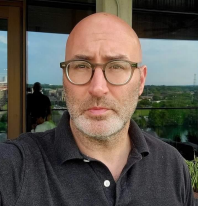
John Archibald (he/him) grew up in New England serving many a detention while attending  Catholic elementary and high school. As a teen he was a staunch atheist who thought he knew  it all but times have changed. Since before he was born his late father had a sign company,  A&S Signs, and John spent much of his formative years at “the shop” where he developed his  handyman skills. 

He has always had a passion for film and stories especially those taking place a long time ago  in a galaxy far, far away. 

Over a decade ago he moved to Austin, TX from Bridgeport, CT via a 3 month detour through  South America. Upon arriving in Austin and searching for “something” he googled churches,  found First UU Austin and was struck by the knowledge and charisma of Rev. Meg and the  welcoming warmth of the congregation. 

He has worked in hospitality for years with a passion for “taking care of the guest” which  translated well in helping to organize and execute the Opening Night Galas for First UU’s  Paradox Players Theater Group. Paradox is where he initiated many lasting friendships with  church members. 

The church that is First UU Austin is more than just an award winning theatre company or  dedicated caring ministers or a rockin’ children’s choir. FUUCA is a whole that’s so much more  than the sum of its parts. It is a caring community made up of ministers, staff, the board,  committees and a loving legion of individuals all doing their part to take care of one another  and create something meaningful that is both ephemeral and lasting.John Archibald is  extremely proud and very lucky to be a tiny part of that legion.

Nancy Mohn Barnard (she/her) has a passion for storytelling, literature, event planning and  worship. After receiving an MA in Literature, Barnard taught college English, founded a  community theater, where she wrote and produced plays, and coordinated conferences and  trainings in the public sector. After unexpectedly losing her mother, Barnard found herself  called to work with the dying. She spent the next few years working as the Concert Manager  for Swan Songs, a local non-profit that provides musical last wishes for the terminally ill. In  2021, Barnard decided to attend seminary, in order to become a chaplain. She will graduate  from seminary in May 2024, and will begin a chaplaincy residency at Seton Ascension in  September. Barnard is a candidate for ordination with the UUA.

Leo Collas (he/him/his) became a member of First UU in 2003. He has worked as a financial  advisor, corporate controller, and as a systems security analyst. Leo serves on the TXUUJM  Advisory Council, has served on the boards of several Austin non-profits, and co-moderates  the monthly LGBTQ & Allies Community Heart Circle here at First UU. Leo was raised in his  family’s restaurant business in Colorado, and later grew up in Honolulu. He moved to Austin in  1993.

James (Jim) O. Houchins (he/Him) has been practicing law continuously in Austin since his  admission to the State Bar of Texas in 1974. Jim received a Plan II Honors B.A. Degree from  The University of Texas at Austin in 1971 and a J.D. from the University of Texas School of  Law in 1974. Jim received an LLM, cum laude, in International and Comparative Law, from the  University of Brussels in 1977. 

Jim is a former Senior Legal Examiner at the Railroad Commission of Texas and an assistant  professor (teaching law) at Southwestern University and at Texas State University. He is a  former volunteer mediator and arbitrator with the Travis County Alternative Dispute Resolution  Center and has extensive training and experience in mediation and arbitration. Jim is a  member of the State Bar of Texas, the American Bar Association, the Austin Bar Association  and the International Law Society.

Michael Kersey (he/him). I’m honored to be nominated for the search committee for a new co lead minister. My wife, Karen Cleary, and I started attending services here in 1992. It’s been  our spiritual home ever since. We were married here and raised our child with the help and  support of this community. Together, through the years, Karen and I have been active in  various ministries and programs of the church including social action, the young adult group,  the families with small children group, religious education, OWL, chalice circles, friendship,  fellowship, and more. 

As an individual, my participation with First UU has included leading Hands on Housing crews,  serving on the Bridge Builder Team that helped develop and implement the recommendations  stemming from the church’s engagement with a church consultant, the Rev. Peter Steinke;  serving on the Transitions Team for an interim minister, the Rev. Janet Newman, that worked  with the congregation to draft the first version of our church’s covenant of healthy relations. I  co-led, along with Sharon Moore, the Settled Ministerial Search Committee that presented the  Rev. Meg Barnhouse to the congregation as a candidate to be our Senior Minister. Following  that I served on the church’s Board of Trustees as both a board member and president in the  initial years following the church’s adoption of policy-based governance. After which, I served  on and led the nominating committee. In addition, I’ve completed three years of the Wellspring  small group curriculum exploring UU theology, sources, and inspiration. And I’m a graduate of  the UUA Southern District weeklong lay-leader development program, the Dwight Brown  Leadership Experience. In 2011, I started and currently continue to facilitate the Monday  Mindfulness Meditation Group. As time and the weather allows, Karen and I enjoy cultivating  our garden at the Sunshine Community Garden. 

Academically, I have an undergraduate degree in history from the University of Tulsa and a  graduate degree in organizational leadership and ethics from St. Edward’s University.  Professionally, I am a Vendor Manager in the Shared Technology Services program at the  Texas Department of Information Resources.

Jennifer (Jenny) Loehlin (she/her) began attending First UU with her mother in the 1970s  and participated in LRY (Liberal Religious Youth) in high school. After several years as a  Presbyterian, she joined the church in the early 1990s. She was a member of Voyagers (the  Very Old Young Adult Group), taught in the children’s RE program, served as co-chair of the  Fellowship Committee, and served on the Nominating Committee. Currently she is in her  second year of Wellspring and is active in the Monday night meditation group, Earthkeepers,  and Grief Support Circle. She is a retired web application developer and enjoys gardening.

Hello, 1st UU friends and family! My name is Melanie Walter-Mahoney (she/her). I have been attending 1st UU Austin since 1979. I met my husband here, both of us teaching in RE in the 80s, and we married in the very new sanctuary at the time. I have raised four daughters at 1st  UU. 

I am a happily retired Social Worker, having worked for a number of non-profits (Austin  Families, Communities in Schools, Austin Child Guidance, and Child, Inc.) over the years, as  well as brief stints with the State and County. I love music, reading, and being outdoors,  especially walking in Nature, and get joy from delivering Meals on Wheels. 

You may have seen me staffing the Bookstore in the Alternate Space Gallery currently and  over the past years; it has been a wonderful way to meet and talk with folks. I am  also teaching in the Children’s Religious Education Department again and am on the Care  Team, both of which nourish my soul. 

I have been involved with the Austin Sanctuary Network since Alirio Gamez took sanctuary in  our church back before the remodelling and the pandemic, am active with Texas Unitarian  Universalist Justice Ministries (TXUUJM) , and am on the Board of Trustees at UBarU (no  Google, I do not mean Subaru!) Camp and Retreat Center near Kerrville in the beautiful Texas  Hill Country. 

I am honored to have been nominated for this very important job and will do my very best if  elected.

Greetings and salutations! 

My name is Joe Milam-Kast (aka “Zoeysdad” – capital Z, one word; he/him). I would be  honored to continue serving this congregation by assisting in this new ministerial search  process. 

I have had the privilege of serving this community in a variety of ways since joining in 2016,  including Religious Education (RE) – both youth and adult, Spring into Action, the Fellowship  committee (and many a holiday party!), FReD dinners, ushering, the Children’s Choir,  Connections Fair, Paradox Players, and Camp UU. My daughter Zoey is growing up here at  First UU and represents her generation in our community by helping with RE, ushering, chalice  lighting and in the kitchen on occasion. 

I believe that all our voices need to be heard and considered for choosing our new Co-Lead  minister. I advocated for this in the previous search and will continue to do so in this one.  Individual voices contributing to consensus and decision play a key part in ensuring the best  and brightest future for this church and our beloved community! 

Thank you for your consideration and go in peace.

I am Jim Schmidt (he/him). Born in 1943, I grew up in Boerne, Texas, came to Austin in 1961  for college, married in 1965, served in the Peace Corps, became a registered nurse, retired  1999, and am now doing crafts & part-time work at Pioneer Farms. I first came to 1st UU of  Austin in 1964 with my wife. I have been active member since 2017 after my wife died. My  interests here are Austin Sanctuary Network, U Bar U, Men’s Breakfast Group, Earthkeepers  and Welcome Committee. If I am elected, I will do my best to represent the whole church. I  want to help select the most appropriate person for the position of 1st UU’s co-minister.

Toni Wegner (she/her) joined First UU after moving to Austin in 2016 from Winchester, MA  (Boston suburb), where she discovered Unitarian Universalism in 2001. First UU was an easy  transition and felt like the right fit from the start. Toni has participated in a variety of activities  here including chalice circles, memorial service receptions, stewardship, Wellspring, Lee  Legault’s ministerial internship committee, adult OWL, and senior outreach ministry. She  served as president of the board of trustees in 2021-22 and is currently co-chair of First UU  Cares. Toni values the people and community at First UU and is deeply committed to our  mission. 

Toni currently works at UT Austin (her alma mater) in continuing and professional education  but is retiring THIS SUMMER! She is a volunteer with Hospice Austin, loves to travel, and has  been a passionate racquetball player for over 40 years. Toni has two adult daughters and a  delightful granddaughter. She served on a ministerial search committee for her previous  congregation, which was a great experience resulting in a successful search. Toni would  consider it an honor and a privilege to be part of the team that helps First UU complete its  ministerial team.

Denominational Connections – April 2024

Here is a brief recap of news from our denomination:

  1. General Assembly is June 20 – 23, and will be completely virtual!  This will make it much easier to attend and fully participate.  More information and registration is at https://www.uua.org/ga.   Scholarships are available.

  2. UBarU summer camps are coming up!  
  • age 9-11 or rising* grades 4-6th – June 9-15, 2024
  • age 12-14 or rising grades 7-9th – June 16-22, 2024
  • age 15-18 or rising grades 10th-2024 high school graduates – June 23-29, 2024

Details and registration at https://www.ubaru.org/summer-camps

* “Rising” means the grade the camper will attend in the fall of 2024

Contact David Overton at denom@austinuu.org for more information about scholarships to GA and other questions about our denomination.