
The Power of Utopian Thinking

Listen to the sermon by clicking the play button above.

Carrie Holley-Hurt
March 17, 2024
First UU Church of Austin
4700 Grover Ave., Austin, TX 78756
www.austinuu.org

Things feel very bleak right now. There is so much violence, so much political corruption, and so much inequality that it can feel overwhelming. But our religion is not one of despair but hope and that hope is tied to our ability to imagine a more just and compassionate world for everyone. Utopian thinking is our superpower! Let’s explore our superpower and how we can tap into it even when we feel overwhelmed by the world’s pain.


Chalice Lighting

This is the flame we hold in our hearts as we strive for justice for everyone. This is the light we shine upon systems of oppression until they are no more. This is the warmth that we share with one another as our struggle becomes our salvation.

Call to Worship

HISTORY’S ROAD
by Clyde Grubbs and Marjorie Bowens-Wheatley

The road of history is long, full of both hope and disappointment. In times past, there have been wars and rumors of wars, violence and exploitation, hunger and homelessness, and destruction of this earth, your creation.

We have become a global village, with a growing realization of how fragile this earth is, and how interconnected we are to each other and to all creation.

We cannot continue to live in the old way. We must make a change, seek a new way. A way toward peace with justice and a healthy planet.

O Great Creative Spirit: You have given a vision of the good, and we yearn for a new way. But where are we to find the courage to begin this work? We know that a different tomorrow is possible, but how can we build it?

We think of the prophets, women and men, who voiced unpopular opinions, who made personal sacrifices, and sometimes lost their lives, for the sake of justice.

We think of Isaiah, who called out to let those who are held in captivity go free, to give solace to the poor and homeless. Let us be inspired by all who work to overcome misery, poverty, and exploitation.

We think of Harriet Tubman, who called out to people of good will to join her on an underground railroad, to lift a dehumanized people from the bondage of slavery to the promise of freedom, even when it meant challenging unjust laws. Let us be inspired by those who are outlaws for freedom.

We think of Gandhi, whose belief in “Soul Force” – the witness to Love’s Truth – helped to overthrow the oppression of an empire and gave witness to the way of nonviolent action. Let us be inspired to become witnesses for peace.

We think of Chief Seattle, who reminded us that we belong to the earth, not the earth to us. Let us be inspired by all those who work for the healing of creation, of Mother Earth and all her creatures.

Who are the prophets who inspire you? They may be well known, or known only to you, offering personal inspiration. courage, and hope.

May they join a great cloud of witnesses to a new way of life-the way of peace and justice, the way of justice lived according to the way of peace, the beloved community.

So may it be. Amen.

Affirming Our Mission

Together we nourish souls, transform lives, and do justice to build the Beloved Community.

Reading

V’AHAVTA
By Aurora Levins Morales

Say these words when you lie down and when you rise up,

when you go out and when you return. In times of mourning and in times of joy. Inscribe them on your doorposts, embroider them on your garments, tattoo them on your shoulders,

teach them to your children, your neighbors, your enemies, recite them in your sleep, here in the cruel shadow of empire:

Another world is possible.

Imagine winning. This is your sacred task. This is your power.

Imagine every detail of winning, the exact smell of the summer streets in which no one has been shot,

the muscles you have never unclenched from worry, gone soft as newborn skin, the sparkling taste of food when we know that no one on earth is hungry, that the beggars are fed, that the old man under the bridge and the woman wrapping herself in thin sheets in the backseat of a car,

and the children who suck on stones, nest under a flock of roofs that keep multiplying their shelter.

Lean with all your being towards that day when the poor of the world shake down a rain of good fortune out of the heavy clouds, and justice rolls down like waters.

Defend the world in which we win as if it were your child. It is your child. Defend it as if it were your lover. It is your lover.

When you inhale and when you exhale breathe the possibility of another world into the 37.2 trillion cells of your body until it shines with hope.

Then imagine more. Imagine [violence] is unimaginable. Imagine war is a scarcely credible rumor.

That the crimes of our age, the grotesque inhumanities of greed, the sheer and astounding shamelessness of it, the vast fortunes made by stealing lives, the horrible normalcy it came to have, is unimaginable to our heirs, the generations of the free. Don’t waver.

Don’t let despair sink its sharp teeth into the throat with which you sing.

Escalate your dreams. Make them burn so fiercely that you can follow them down any dark alleyway of history and not lose your way. Make them burn clear as a starry drinking gourd over the grim fog of exhaustion, and keep walking.

Hold hands. Share water.

Keep imagining. So that we, and the children of our children’s children may live.

Sermon

I went a long time sleeping-in on Sundays, not calculating annual pledges, or attending a congregational meeting. And then I became a UU

and all that changed.

And it’s good. I get to be a part of this beautiful community of like-hearted people.

I’m connected to amazing people all over the place doing good work And in this crazy mixed-up social-political landscape we have, I am way more hopeful than I was when I was on my own.

I’m so grateful,

But
But what makes us different than a social club?

I could find meaning and connection at a social club and probably sleep in on Sundays.

I want, and I think we should all expect, more from our religion than what a social club can offer

I believe that we have that

I’m a firm believer that we should allow our religion to do two things for us.

First, it should motivate us to do the important work of love. With beloved community at our core, this looks like working to get ourselves free and helping to remove barriers so others can be free too.

Secondly, our religion should hold us. Through tough and scary times, our religion should hold us. It should comfort us and renew us.

That is what our religion can do for us, but so often I think we can get out of balance. I know I often feel very motivated to act but very rarely allow this beautiful religion to comfort me.

And I need that – that comfort and that renewal – because y’all things are not great and often they are pretty overwhelming.

We have many tools in our religion that help us to feel both motivated and held, but the one I’m connecting to most right now is Utopian thinking.

But first let’s establish what that means and what I don’t mean.

I don’t mean … the utopian thinking that led to 19th-century communes. You know, those ones that pop up on the History Channel from time to time, occasionally led by Unitarians.

The ones that inevitably failed because of some scandal to do with sex or money or sex and money.

Yeah, thats not what I mean.

What I mean is the way of thinking that says “the way it is, isn’t the way it has to be.” And in fact, as Aurora Levins Morales wrote in our reading, “Another world is possible.”

A world that is more just, more compassionate, and more loving.

That world is possible. The way things are, isn’t the way things have to be.

This kind of thinking is at the very core of our religion.

And it makes sense, after all, we are a very contrarian people.

And we have been for our entire history.

Just think about it.

Early Unitarians in the 16th century said in a sea of Trinitarians, often at great risk to themselves, I don’t find that in my text.

Universalists said, I know hell is a really effective marketing tool but how could a loving god ever ….

At a time when the entire economy of the US was fueled by trafficking, imprisonment and forced labor of human beings, unitarian and universalist abolitionists said- it doesn’t have to be this way.

The fight for universal suffrage – it doesn’t have to be this way
Those fighting Jim Crow said – it doesn’t have to be this way.
Those fighting for queer rights- it doesn’t have to be this way

When we speak of the Beloved community, we tap into that core, we are practicing Utopian thinking.

The beloved community –

when no one is starving or being murdered in Gaza,
no one is getting cut up by razor wire at the border,
no trans kid is being murdered.
No boys are having to bear the cost of anti-blackness and ableism,
No one unhoused.
No one abused.
No one neglected.
No one abandoned.

That is Utopian thinking

And it is a beautiful thing that is the core of our religion.

And certainly many would tell us we are absurd or naive

but I would just say to those people ….

Try being a Unitarian Universalist in Texans

It is not naive to believe that how things are is not how it has to be.

Rutger Bregman a Dutch historian said:

“I’ve always believed in the power of utopian thinking. Every milestone of civilization – the end of slavery, (the creation of) democracy, (the attainment of) equal rights – these were all utopian fantasies once until they happened. That’s why I think that history is actually the most subversive discipline of all the social sciences because history shows us that things can be different. They don’t have to be this way. We can change them.”

“We can change them” this is heart of our religion and it does so much for us! 


It allows us a different way of looking at time, at our purpose, and our actions by placing them in the larger scheme of things.

For example. When it comes to the Beloved Community, we know that we are mostly planting seeds for a forest we will never see. But when we do that work of building the beloved community, we are bringing some of that utopia into the here and the now.

When we go down to witness what is happening at the border, When we use our sacred spaces as a sanctuary for asylum seekers

When we make our churches open and loving spaces for people who are targeted for oppression and marginalization.

When we show up to places of power and tell them “another world is possible”

We are bringing that Utopian thinking down into the lives of those being harmed in the here and now.

It is powerful stuff!

And it is core to who we are as people in a liberating faith.

But in order to utilize this beautiful, life-giving aspect of our faith, we have to make it a spiritual practice.

First, we do this by spending time in the community envisioning what is possible.

What would it actually look like if we treated everyone as if they had inherent dignity and worthiness? If we lived, worked, spoke, like everyone and everything is interconnected.

Learning from one another opens us up to the diversity of lived experience and needs, allowing us, in community, to envision a much deeper and richer future. We can envision a reality that expands past our individual needs.

Secondly, we nourish our vision so that we counteract the pervasive messages of the status quo that says “that how things are is just the nature of things.”

Bregman says

“There’s nothing inherent about our current political, economic and social realities; people made these systems and can make them anew. To envision something novel, read more history and less news. “There’s nothing as anti-utopian as the product that we call the news,”

He says that when we allow ourselves to get caught up in the “sensationalistic daily news cycle” it “can constrict your ability to see the world as anything but dangerous, violent and mean.” 


So as we nourish our vision, by being intentional about where we are placing our focus. What are we doing to combat those pervasive messages of sameness?

What art are we interacting with? Are we making?

Art opens us up to possibilities and different way of seeing and experiencing the world.

Are we reading poetry?

Are we letting Amanda Gordan, Mary Oliver, Maya Angelo mirror our humanity while inspiring us to hope.

Are we writing our own poetry.

Our we taking our pain, our hope, our vision for the future and turning it into art on the page?

What music are you allowing to flow into and out of you?

Who are we spending our time with or listening to ?

Nothing will help to pull me out of my Hobbesian notion of human nature being only nasty, brutish, and short faster than a 5-year-old asking me what my third favorite dinosaur is. Or the way high schoolers use their voices to speak up for one another and protest injustice.

Are we doom-scrolling or are we intentionally being awakened to the beauty, joy, and love in the people and creatures all around us?

We will not nurture utopian thinking by living on a constant diet of the status quo. Seeing it as a spiritual practice, means we are intentional and disciplined about what we are focusing our energy on.

And finally, we let Utopian thinking nourish us!

So often I think that we UUs feel as if we are suppose to just do it. Just go fight the good fight.

And while, yes, please do that.

We have to let it do more. We have to let it nourish us.

Because if we are only fighting the good fight without replenishing ourselves we are vulnerable to burnout.

To apathy.

We have to let it nourish us!

Let it nourish us in the ways that it anchors our hope.

Let it nourish us in the way it anchors us to the past, present, and the future.

The whole arc of the moral universe.

In this it will help us to stop seeing every election and every bill as the next apocalypse because we can see the full expanse of the work.

We can see the ways our actions are connected to the larger web that holds us all.

Extinguishing the Chalice

We extinguish this flame, but not the light of truth, the warmth of community, or the fire of commitment. These we hold in our hearts until we are together again.

Benediction

And now as we go to leave this place, may you feel the warmth of this beautiful community.

May you feel motivated, supported, and held by this beautiful religion. May you hold yourself and others with love and compassion

Just as you are held.

Let it comfort us, strengthen us, and give us energy for this beautiful work we are called to do and this precious life we are given.

May it remind us that we are a people not of despair but of hope.

May it always be so


SERMON INDEX

Most sermons during the past 24 years are available online through this website. Click on the index link above to find tables of all sermons for each year listed by date (newest to oldest) with topic and speaker. Click on a topic to go to that sermon.

PODCASTS

Podcasts of this and other sermons are also available for free on iTunes. You can find them by clicking on the podcast link above or copying and pasting this link. https://itunes.apple.com/podcast/first-unitarian-universalist/id372427776
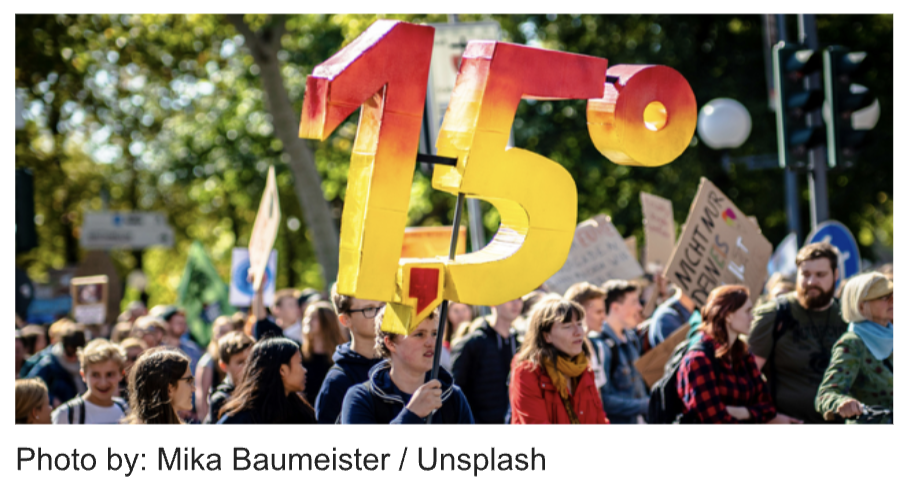
International Uranium Film Festival

Please join members of Green Sanctuary!

 
Monday, March 18th from 6 – 9:30 p.m. at AFS Cinema, 6259 Middle Fiskville Road, for the Uranium Film Festival’s first Austin event, a tour that will travel to 13 cities in two months.
 
The two award-winning films are especially relevant in Texas, where small modular nuclear reactors are now proposed and the fight to halt high-level radioactive waste dumping continues in the courts. 
 

The films are Atomic Bamboozle: The False Promise of a Nuclear Renaissance (46 min.) & Downwind (95 min.). Atomic Bamboozle debunks the idea that nuclear energy should play a role in fixing the climate crisis. Downwind, with Michael Douglas & Martin Sheen, focuses on the toxic consequences of 928 nuclear detonations on American soil. Both films highlight impacts on Indigenous communities.

Also coming up soon: Disarming Toxic Empire is a free conference at U.T. Austin, March 21 – 22, focusing on the unjust aspects of nuclear testing, production, storage, and weaponry.

Public Affairs Forum

“The Texas Observer”

Interim Editor In Chief, Gus Bova, and Executive Director, Loren Lynch

 
In 1954 when we first began our Public Affairs Forum, the first speaker was a young Ronnie Dugger, editor of the newly founded Texas Observer.  Although representatives have appeared several times in the last 70 years, they return again Sunday, March 24 from 12:30 – 1:30 p.m.
 
Topic: “The Future of Non-Profit and Print Journalism.”
 
 
Print journalism is struggling to survive all across the United States.  Join us for this discussion of the importance, issues, and future of print journalism.
 
Sunday, April 14 – Austin Mayor Kirk Watson


Wonder Woman, Fake News, Lie Detectors, and Reasons for Hope

Listen to the sermon by clicking the play button above.

Rev. Michelle LaGrave
March 10, 2024
First UU Church of Austin
4700 Grover Ave., Austin, TX 78756
www.austinuu.org

During this “Great Turning,” it can sometimes feel more like the world is turning away from truth and justice rather than toward it. How, during these often troubling times, might we sustain hope?


Chalice Lighting

This is the flame we hold in our hearts as we strive for justice for everyone. This is the light we shine upon systems of oppression until they are no more. This is the warmth that we share with one another as our struggle becomes our salvation.

Call to Worship

THE GREAT TEACHERS IN LIFE
Jason Cook

We seekers are on a quest:
A quest to discover truth and meaning.
Sometimes we think we’ve found it-
Wrapped up, glimmering with newness
Straight off the intellectual assembly line.
All the answers right here for us
And others, if they’d only listen.
But truth has a way of coming in disguise,
Sometimes wearing rags and sometimes finery,
But so often cloaked from our immediate sight.
And sometimes, that which we have rejected,
That which we have let go of
Or decided was only for others
But not us-Can be our teacher.
Let our time of worship be an acknowledgment
Of the never ending journey toward truth and meaning,
And our appreciation of those we learn from along the way.

Affirming Our Mission

Together we nourish souls, transform lives, and do justice to build the Beloved Community.

Reading

THE WEB OF LIFE
Robert T Weston

There is a living web that runs through us
To all the universe
Linking us each with each and through all life
On to the distant stars.
Each knows a little corner of the world, and lives
As if this were his all.
We no more see the farther reaches of the threads
Than we see of the future, yet they’re there.
Touch but one thread, no matter which;
The thoughtful eye may trace to distant lands
Its firm continuing strand, yet lose its filaments as they reach out,
But find at last it coming back to him from whom it led.
We move as in a fog, aware of self
But only dimly conscious of the rest
As they are close to us in sight or feeling.
New objects loom up for a time, fade in and out;
Then, sometimes, as we look on unawares, the fog lifts
And there’s the web in shimmering beauty,
Reaching past all horizons. We catch our breath;
Stretch out our eager hands, and then
In comes the fog again, and we go on,
Feeling a little foolish, doubting what we had seen.
The hands were right. The web is real.
Our folly is that we so soon forget.

Sermon

Several years ago, pre-pandemic, and with great excitement, I went to see the film Wonder Woman. The movie is about the famous comic strip superhero who has been around for generations. Without giving away the plot, just in case you haven’t seen it yet or aren’t overly familiar with the comic strip, I’ll share the story of her origins as portrayed in the movie. Wonder Woman is an Amazon; yes, those Amazons we have heard about from Greek mythology. Her mother is a Queen; they live on Paradise Island with only other women warriors; and she is the only child amongst them. Wonder Woman plays the role of hero and her male sidekick, the damsel in distress.

Though many have long thought the Amazons to be only the stuff of legend; more recently archaeologists have confirmed their existence. Or, perhaps more accurately, archaeologists have demonstrated the historical existence of the women around whom this famous mythology has arisen. They were Scythian warriors; groupings of nomadic people who lived on the steppes of Eurasia and rode horses millennia ago, perhaps as early as the Bronze Age. They lived in extended family groupings of women, men and children. About a third of the warriors were female. And their territory included one island off the coast of the Black Sea. Earlier, when the skeletons of these women warriors were first discovered, they were presumed to be men due to the “masculine” nature of the grave goods associated with them. It is only with more recent DNA testing that archaeologists realized they were, indeed, actually women warriors.

There is quite a bit of mythology associated with these women, much of which deserves what we call a “content warning” these days. They were said to have lived only with other women. They were said to have killed their men and male children or maimed or castrated the young boys. They were said to have been lesbians. They were said to have had only one breast, having cut the other off to better shoot their bows and arrows while riding atop their horses. They were also known to have been heavily tattooed and fond of using marijuana.

Much of this mythology arose with the Greeks who seemed to both fear and admire these women warriors. Some of it was based in what we would call fact. The rest of it in rumor and ill-logic that might have gone something like this … obviously, no men would ever allow their women to be warriors, therefore they must live in groups of only women; since the women did not live with any men, they must have done something to the men -like kill them. Since the women did have children and women cannot procreate with each other, they must have found other ways to get pregnant, like visiting nearby societies were men did live; furthermore, since the women did have children and their offspring would surely be both female and male, the women must have done something with their male children -like kill or maim or castrate them. And so on.

All this goes to show, that we people of the 21st century are not the first victims of “fake news.” And if you haven’t figured it out already, the only scientifically verified facts, in the midst of all this fake news, are the parts about smoking pot and getting lots of tattoos. Hmm, that kind of sounds like a prehistoric version of Austin.

Today we live in a post-truth era filled with alternative facts, disinformation, and fake news, not to mention AI chatbots pretending to be customer service reps and, even worse, deep fakes. Some of this is not all that new. Before there was fake news there were hoaxes and propaganda; some of it even published in what today we would consider more reputable publications. What is new, is the speed at which fake news travels; mostly due to social media, and the extremely high quality of deception; due to advancing technology.

Living in a post-truth era often feels somewhat surreal. This can be underscored when the practice of gaslighting is added to the dissemination of fake news. In the aftermath of the attack in Charlottesville a half dozen years ago, members of the alt-right circulated fake news stories claiming that the person who videotaped the car driving into the crowd was not there by coincidence, but “in fact” was there as a set-up from the Left to discredit the Neo-Nazis. Let me repeat that, the alt-right claimed that the person who videotaped the car driving into the crowd didn’t just happen to be there, but was intentionally planted, ahead of time, as a set-up from the Left to discredit the Neo-Nazis. It’s mind-blowing, isn’t it? And it’s intentional, but we’ll get to that in a little bit.

NPR did a news segment, a while back, on the problems science teachers are having teaching students, due to the prevalence of fake news stories that have come into circulation. For example, science teacher Nick Gurol says his students believe the earth is flat. Why? Because a basketball player named Kyrie Irving said so. No matter what the science teacher says, whether simply correcting the students or reasoning with them, they will not change their minds. They believe the earth is flat. Gurol says: “They think that I’m part of this larger conspiracy of being a round-Earther.” In other NPR segments describing what teachers are doing to effectively combat fake news, one teacher shared that a student asked the question “What is news?” Other students asked a NPR reporter if NPR traffics in fake news.

And here is the crux of the matter, the paradox – Sam Harris, a well-known atheist and neuroscientist puts it this way:

“If someone doesn’t value evidence, what evidence are you going to provide to prove that they should value it? If someone doesn’t value logic, what logical argument could you provide to show the importance of logic?”

These are questions that don’t have easy answers. 


So how did we get here? – to this place where facts are not to be believed and science is considered a conspiracy?

Well, there are people who study this stuff. Robert Proctor and David Dunning are two of the more well-known figures. And … this field of study has a name: agnotology.

AGNOTOLOGY is commonly defined as the study of culturally induced ignorance or doubt i.e. ignorance or doubt purposefully created and spread by people, typically those in power.

I say “typically” because with the advent of social media, those who are otherwise lacking in power, now also have the ability to spread ignorance and doubt. Actually, anyone can do this through the power of social media – either intentionally or as unwitting prey to more powerful interests. 


Janna Rose and Marcos Barros, two professors at the Grenoble School of Management, describe it this way:

“Agnotology is more than the study of what we don’t know; it’s also the study of why we are not supposed to know it. One of its more important aspects is revealing how people, usually powerful ones, use ignorance as a strategic tool to hide or divert attention from societal problems in which they have a vested interest.”


Examples include the tobacco industry spreading doubt about the negative health consequences of smoking as well as conservative think tanks spreading controversy about the science of climate change.

So how can agnotology help us to better understand this world we find ourselves living in? Julian Birkinshaw, of the London Business School Review cautions us that in attempting to understand our current political climate “we shouldn’t mix up cause and effect: contempt for expert advice is what created the Trump bandwagon, not vice versa.” (as well as Brexit, if you live on the other side of the pond) I’ll repeat that: contempt for expert advice causes bandwagons. Bandwagons, or their leaders, don’t cause contempt for expert advice.

Birkinshaw tells us that there are two distinct trends that are shaping our understanding of the world.

    • The first is that humans are becoming stupider if stupider is measured relative to all the world’s collective knowledge. In other words, while our IQs have indeed risen a bit, they have not kept pace with the exponential growth in humankind’s collective knowledge. He says: “The gap between what each one of us knows and what the world knows is growing rapidly.”


  • The second trend Birkinshaw sees is that business and politics are growing more and more interdependent. And the effects of one on the other can be rather unpredictable. The global economy is a complex system and he says: “It is a strange paradox of our times: the more we connect, the harder it is for us to predict.”


Over these past eight or so years, I have engaged in so many, many conversations with people about what is going on in our world. Feelings of cynicism, pessimism, hopelessness, and despair about the state of the world seem to be on the rise. People are struggling to understand how we have come to be in this place; this place where, among other things, vast numbers of people vote to put in office someone who is in direct opposition to their own self-interest. Julian Birkinshaw has the best explanation I have seen about how and why this happens so I will take the time to share an extended quote. Here goes:


“Put these two points together: as individuals, we are struggling to understand the present, and it is getting hard to predict the future. The result is a form of cognitive dissonance. As thoughtful beings, we like to be in control, but increasingly we cannot. So how do we resolve this dissonance? We fall back on belief – on our own intuition.


This is a scary point: it is human nature to jump straight to a judgment, often on the basis of the slenderest of facts and, paradoxically, the more complex and uncertain the issue, the more we tend to trust our intuition … If asked, [a complex question like] do you support leaving the European Union, the reasoning-based part of your brain goes into meltdown, and the intuitive part takes over.

While this tendency to leap to judgment has always existed, it has become a bigger problem as individuals become (relatively) ignorant and less able to see what’s coming next. Technology then exacerbates the problem, with our Facebook and Twitter feeds … [spreading news] that [is] often completely devoid of facts. And smart politicians are quick to exploit the trend, tapping into our intuition and subconscious beliefs, rather than boring us with hard evidence. Emotion beats logic in the art of persuasion – a point that the Brexiteers and the Trump campaign understood very well.”


Emotions beat logic. Our brains go into meltdown. Our intuition takes over. We fall back on belief. I’ll repeat that:

When faced with increasingly complex issues … Emotions beat logic. Our brains go into meltdown. Our intuition takes over. We fall back on belief. We are literally overwhelmed with information. And we become susceptible to fake news, alternative facts, and disinformation; which in turn, overwhelms us. Robert Proctor sums it up best: “We live in a world of radical ignorance, and the marvel is that any kind of truth cuts through the noise.”

In one of the earlier scenes of the movie Wonder Woman; our superhero discovers that her new sidekick, the first male she has ever seen, has been deceiving her. She then wonders aloud how she would know if he is deceiving her again, now. Her solution? She wraps her lasso around him and squeezes the truth right out. Unlike Wonder Woman, none of us has a Lasso of Truth, but there are things we can do to protect ourselves and our children from a vast ocean of deception among them making use of websites like Snopes, PolitiFact, and FactCheck.

Like the man on the beach tossing starfish back into the ocean, one by one by one, we face daunting odds. It would be easy for anyone of us to lose hope in this post-truth era. But like him, and the writer who joined him, we can keep hope alive by making a difference for this one: by debunking this myth, by teaching this child to think critically, by stopping the spread of this piece of fake news and by not tolerating the intolerant, by not tolerating this hate group, by not tolerating this act of intimidation, by not tolerating this symbol of racist ideology.

It is time, in this post-truth era, to live into the paradoxes of contemporary life and stop wasting energy railing against them … verbally. I don’t mean don’t do anything. I mean stop spending energy railing against what is. You can get into a lot of Buddhism here, actually … with non-attachment and attachment. When you’re attached to the idea that logic should rule and it doesn’t, you suffer … right? So, non-attachment is what I’m talking about.

And we can look for reasons to hope. We can find reasons for hope in the North where folks are helping to pay for families who are relocating from states like ours where trans kids are not safe. They’re bringing their kids to other places. They’re helping to support people and find houses and things like that. We can be symbols of hope to each other.

It is all one thing, not many separate things. It is both and not A but B. It is the individual starfish and the ocean. It’s just that we usually see each piece of the web separately, except in those precious few moments when the fog rolls away and our hands reach for the truth.

May we see truth more clearly and hold it more dearly. Amen and Blessed Be.

Closing Words

CHERISH YOUR DOUBTS
by the Rev. Dr. Michael A Schuler

Cherish your doubts, for doubt is the servant of truth. Question your convictions, for beliefs too tightly held strangle the mind and its natural wisdom.

Suspect all certitudes, for the world whirls on-nothing abides. Yet in our inner rooms full of doubt, inquiry and suspicion, let a corner be reserved for trust.

For without trust there is no space for communities to gather or for friendships to be forged.

Indeed, this is the small corner where we connect-and reconnect-with each other.

Extinguishing the Chalice

We extinguish this flame, but not the light of truth, the warmth of community, or the fire of commitment. These we hold in our hearts until we are together again.

Benediction

NOW MAY THE LOVE OF TRUTH
by Jane Mauldin

Now may the love of truth guide you, the warmth of love hold you, and the spirit of peace bless you, this day and in the days to come.


SERMON INDEX

Most sermons during the past 24 years are available online through this website. Click on the index link above to find tables of all sermons for each year listed by date (newest to oldest) with topic and speaker. Click on a topic to go to that sermon.

PODCASTS

Podcasts of this and other sermons are also available for free on iTunes. You can find them by clicking on the podcast link above or copying and pasting this link. https://itunes.apple.com/podcast/first-unitarian-universalist/id372427776
GOOD NEWS:
Your voices to the Austin City Council have made a difference. Council Members are looking seriously at the Generation and Climate Protection Plan our community has produced as an alternative to the methane/gas-potential hydrogen generation plant AE wants.

THANK YOU!  We are told Austin Energy (AE) has backed off until community voices quiet down then AE will try again. Want to keep up the pressure ?
Send Mayor Watson and the members of the Austin City Council an email to support the advisory group’s clean energy plan.

Green Sanctuary Readers, here is a snippet from Climate Scientist and Texan, Katharine Hayhoe. You can read more at her hands on free climate newsletter: talkingclimatenewsletter@outlook.com

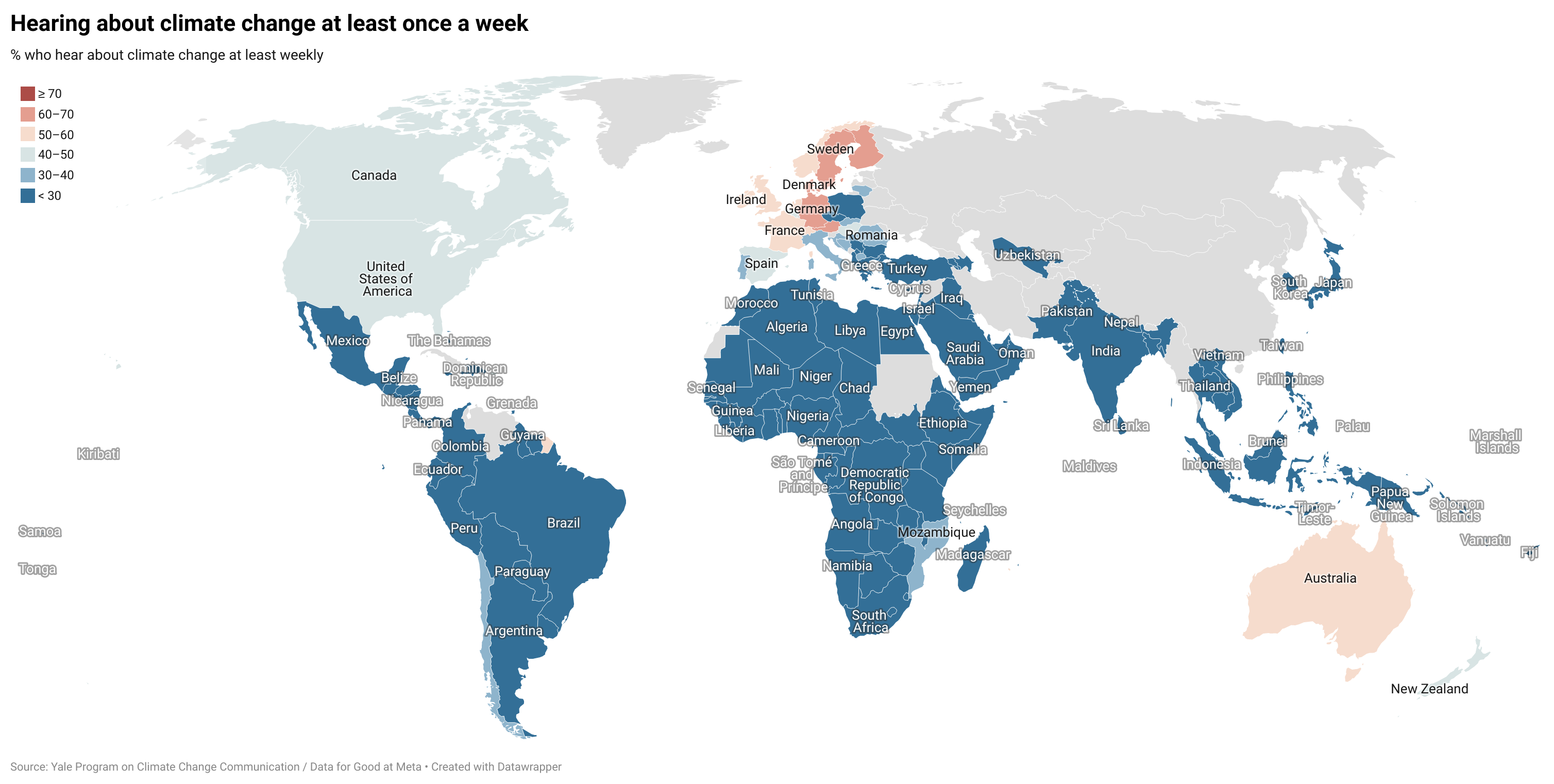
Hardly anyone cares about climate change… right? Wrong! New research shows that 86 percent agree that people in their country should try to fight global warming and 89 percent say they want more action from their governments. These results are based on a survey of more than 130,000 people in 125 countries around the world.

Here’s the even more interesting part, though: the same study found that people around the globe also underestimate how much their fellow humans support climate action. For example, 69 percent say they are willing to pay 1 percent of their monthly income to aid in the fight, but they think only 43 percent would agree with them. And I would bet a big part of that gap is because, in most countries around the world, it’s rare for people to hear about climate change. We just don’t talk about it.

Continuing Capital Campaign – Giving Tree

Continuing Capital Campaign
Giving Tree

It is spring in Central Texas, and trees and flowers are beginning to bloom. At First UU, a Giving Tree has sprouted in the Gallery with the names of donors on its leaves. Watch it continue to grow as additional names are added!

For more information about the CCC, please stop by our table on your way to Howson Hall after Sunday service.

Mary and Lou among the Cypress Trees: Stories of Transformation

Listen to the sermon by clicking the play button above.

Bis Thorton
March 3, 2024
First UU Church of Austin
4700 Grover Ave., Austin, TX 78756
www.austinuu.org

What is sacred about transformation? Does the divine change alongside us? What is our relationship to the interconnected web of all existence when we transform? Do we still have ancestors if we change? And do we ever stay the same? Join Bis Thornton in a journey through sacred stories of transformation as we imagine answers to these questions and more.


Chalice Lighting

This is the flame we hold in our hearts as we strive for justice for everyone. This is the light we shine upon systems of oppression until they are no more. This is the warmth that we share with one another as our struggle becomes our salvation.

Call to Worship

THE PROMISE AND THE PRACTICE: BENEDICTION #2
Rev. Kimberlly Quinn Johnson

Hush:
Somebody’s calling your name-
Can you hear it!
Calling you to a past not quite forgotten,
Calling us to a future not fully imagined!
Hush, hush:
Somebody’s calling our name.
What shall we do!

Affirming Our Mission

Together we nourish souls, transform lives, and do justice to build the Beloved Community.

Reading

CARRY ME INTO THE DARK
Jess Reynolds

Orion rises in the winter dark: shoulders and knees: a bell, a bow held taut before the charging bull. My father calls each star by its name, draws lines from hunter to quarry to the seven sisters huddled together in the night. I am not afraid of the dark. I do not need an arrow nocked on the archer’s bow to call myself safe here, my eyes untouched by the glare of passing headlights. God must watch Her universe like this: standing on a driveway, wrapped in a soft quilt, old hands in Her pockets. feet tingling with cold and wonder at the stars and the stories and all else the darkness holds.

Sermon

Text of this sermon is not yet available.


SERMON INDEX

Most sermons during the past 24 years are available online through this website. Click on the index link above to find tables of all sermons for each year listed by date (newest to oldest) with topic and speaker. Click on a topic to go to that sermon.

PODCASTS

Podcasts of this and other sermons are also available for free on iTunes. You can find them by clicking on the podcast link above or copying and pasting this link. https://itunes.apple.com/podcast/first-unitarian-universalist/id372427776
Austin 2024 CROP Hunger Walk

Thank you to everyone who walked and donated for the Austin 2024 CROP Hunger Walk at Camp Mabry.

The First UU CROP Walk team joined teams from congregations all over the Austin area in this interfaith walk that raises money to end hunger in Central Texas and around the world.

It is not too late to help the First UU team. Donate online at events.crophungerwalk.org or contact Ivy Speight at cropwalk@austinuu.org for other options. From combating climate change in Honduras to providing agricultural training in Cambodia to stocking shelves in local food pantries, your donation will make a difference in the fight to end hunger. A portion of the funds raised in Austin will go to the Central Texas Food Bank, as well as Casa Marianella, Manos de Cristo, Urban Roots, Austin City Lutherans – Bread for All, Micah 6, Faith Food Pantry and Mt. Olive Baptist Church.

Thank you for your support of the Austin CROP Hunger Walk! We look forward to seeing you on the trail in 2025!

Sierra Club Climate Crisis Committee

Come join us at the Sierra Club Climate Crisis Committee Meeting on Tuesday, March 5 at First United Universalist Church at 4700 Grover Lane hosted by First UU’s Green Sanctuary Committee.

It’s casual: come when you can, leave when you must. If you want, you can join us for our program at 7:15 p.m. on Zoom.


Our plan (come when you can):

6:30 p.m. – Start our potluck (come whether you have a dish or not)

7:00 p.m.  – Get to know each other social activity by Victoria

7:15 p.m.  – Announcements

7:20 p.m. – Presentation on Climates and Elections 2024 – What’s the Most Effective Use of Your Time.
Bob Hendricks will provide a summary of research and ways to get involved with and lead a discussion.

7:50 p.m. – Q&A on Climate Science with Bruce Melton. Ask him anything you want!

8:20 p.m. – Conversation and clean-up


The most important thing we can do for the climate in 2024 is to elect climate advocates to public office. If we elect the wrong candidates, policy on our climate crisis could be dead, along with too many more people from extreme weather events. But you already know that. So let’s consider how we can most effectively use our time and effort on the 2024 elections, and which ones are the best match for each of us.

Affect Theology

Listen to the sermon by clicking the play button above.

Rev. Michelle LaGrave
February 25, 2024
First UU Church of Austin
4700 Grover Ave., Austin, TX 78756
www.austinuu.org

Did you know that Unitarian Universalism has its very own theology? It is called Affect Theology and was created by the Rev. Dr. Thandeka, a Unitarian Universalist minister and theologian. This umbrella theology is an embodied theology that when well understood and applied can help UUs of multiple theological and philosophical perspectives to lead lives of wholeness and fulfillment.


Chalice Lighting

This is the flame we hold in our hearts as we strive for justice for everyone. This is the light we shine upon systems of oppression until they are no more. This is the warmth that we share with one another as our struggle becomes our salvation.

Call to Worship

THE LONGING FOR SOMETHING MORE
by Gretchen Haley

Every little thing that breaks your heart
Is welcome here
We”ll make a space for it
Give it its due time
and praise
for the wanting it represents
the longing for something more,
some healing hope that remains
not
yet

We promise no magic no making it all better
But offer only this circle of trust
This human community
that remembers
Though imperfectly
that sings and prays
though sometimes
awkwardly

This gathering that loves,
though not yet enough
We’re still practicing
After all,
still learning,
still in need of help
and partners
Still becoming able
to receive
all this beauty and all these gifts
we each bring

Come, let us worship together.

Affirming Our Mission

Together we nourish souls, transform lives, and do justice to build the Beloved Community.

Story for All Ages

Once upon a time, in a magical space called Howson Hall, two Unitarian Universalists sat down together. They had just come out of the worship service. Rev. Michelle had been preaching about affect thea/ology.

“Hey, Lucas, how are you? You look like you might be feeling a little down,” said Sheldon.

“Well, I guess I kind of am, said Lucas. That sermon got me thinking about my job and I’m realizing how unhappy I am with my career.”

“What do you do?” said Sheldon.

“I sell really fancy cars, like this one. I want to help people and I like seeing how happy they are when they drive away in their new car, but I don’t love what I do in the same way the other salespeople do. They get really excited talking about engine specs and trim packages, even when they’re on break. They wave their arms around a lot when they’re talking about cars. One of them accidentally smacked me in the face the other day because she was so excited about the new car model that just arrived on the lot and she didn’t even notice I was standing next to her. But I just get so stressed out with the pressure to sell. I can feel my heart pounding in my chest and my stomach doing flip flops. I think I might need a new career.”

“Mmm, said Sheldon. That might be a good thing to think about. It sounds like even though you want to help people in a fun way, your job is just stressing you out a bit too much.”

“Thanks for listening, Sheldon. I am going to think about it some more. You’re a great friend. I’m so glad we met here.”

“Me too, Lucas.”

A few weeks later, the two friends met up once again after worship. This time, out in the courtyard.

“Hey, Lucas, how’s it going? said Sheldon.”

“Well, a little better, I guess. I left my job selling cars and now I’m trying to sell houses. I have a friend, Tanisha, who is a great realtor. Their whole face lights up with excitement when they talk about their career. I thought that selling houses would be fun, plus I thought it would feel good to help people find their home sweet home.”

“But it’s not working out that way?” said Sheldon.

“No, I’ve been job shadowing Tanisha. They still love what they do, but I’m just finding it all kind of … odd. Some of these houses just creep me out. I can feel shivers going down my spine and I get goosebumps on my arms.

“Hmm, said Sheldon. I know helping others is important to you, but maybe its not people you’re meant to help.”

“What do you mean?” said Lucas

“Well, I notice you’re wearing a shirt with dogs all over it. You seem to wear that one a lot. And I noticed you only eat the vegetarian dishes at the church potlucks. Plus, you got really excited when that tiger, India, was it?, was on the loose in Houston. You said something about wishing you could volunteer at that animal sanctuary he went to. I know you love animals a lot. Maybe you could think about helping animals instead of people?”

“Thanks, Sheldon, I will do some thinking on that. You’re the best.”

And so Lucas did just that. He went home and he thought about all that Sheldon said and about how much he loves animals and how much he loves being helpful and he made a decision. Lucas went back to school and became a vet tech. Now, he works with, and helps, the animals he loves every day as well as their human parents.

A couple of months later, the two friends met up once again, this time at a pool party at Sheldon’s house.

“Lucas, I can’t believe how much happier and more relaxed you look these days,” said Sheldon.

“Yes, I am, Sheldon,” said Lucas. “That’s in part, thanks to you. I love my new career. I’m eager to go to work each morning and find out what the day will bring and I feel so fulfilled at the end of my day. I really appreciate all the listening you did and the way you helped me put things together in a deeper way. You really are a great friend.”

“So, how are things with you, Sheldon?”

Reading

Excerpted from Braver/Wiser
by Dr. Takiyah Nur Amin

When I used to work with Black Lives of Unitarian Universalism {BLUU)-doing workshops or meeting people in UU congregations-inevitably a very well-meaning white person would ask, “Who’s the Black Emerson?” or “Who’s the Black Thoreau?”

This question is wrong; icky for so many reasons. One of the tenets of white supremacy culture is the prioritization of the written word, and not understanding that if you want to discover the “evidence” of Unitarianism, Universalism, or Unitarian Universalism in the lives of Black folks, it’s not always in written essays-because historically, we’ve had different trajectories: different levels of care and resources and access that would enable us to create something like that.

If you’re seeking sacred Black “text” in our tradition, you have to examine the way our Black ancestors lived. You have to seek out the Black folks who were in Unitarian and Universalist or UU congregations, and the work that they were doing in community-whether it was suffrage, or trying to educate Black children, or their working towards social action or civil access. Our “text” is embodied in the lives of people like Frances Ellen Watkins Harper, Joseph Jordan, David Eaton, and countless others.

One of the things I love about this tradition is that our faith is covenantal and not confessional-meaning that to some degree, our tradition cares little about what you stand up and say you believe. The evidence of your Unitarian Universalism is embodied in the depth of your relationships: how do you live in relationship to self and other? {I don’t just mean human other: to the plants, to the animals, to the stars … ) The proof is in the pudding, for UUs. It’s not about what you have to say. How are you living?

Sermon

The words washed over me like the first drizzle on a parched land:

“Though you have broken your vows a thousand times;
Though you have broken your vows a thousand times;
Though you have broken your vows a thousand times … “

The rhythmic repetition of the congregation singing in unison began to settle into my body and nourish a place in my spirit I hadn’t known was thirsty. The verse continued, washing in and out like the tide, while other voices sang from above:

“Come, come, whoever you are,
wanderer, worshiper, lover of leaving,
ours is no caravan of despair,
come, yet again, come.”

And … 

“Though you have broken your vows a thousand times,
come, yet again, come.”


A sense of sweetness settled upon my heart and I allowed the words to soothe me. I was sitting in the pew of the UU Church of Worcester, Massachusetts, celebrating the Soulful Sundown service. The minister, the Rev. Aaron Payson, had invited us to join in singing the missing line from Rumi’s poem; the one which does not appear in our hymnal.

I think I understand why Rumi’s verse about breaking vows does not appear in our hymnal. It has to do with the tendency of Unitarian Universalism, as a whole, to avoid all things relating to sin, confession, and forgiveness, often to our own detriment. Many, and perhaps most, of us have arrived at Unitarian Universalism after coming out of another religious tradition. And all too often, we arrive here having suffered spiritual harm from a theological language of sin, confession, and forgiveness that was used to incite feelings of guilt or shame. And so, all too often, we arrive here wanting to avoid these theological terms. Yet, this self-protective action can also come at a price. We can close ourselves down, refuse to hear or try to understand what scares us, and so reject the good and beneficial which may be mixed in and amongst the harmful.

So, while we UUs tend to avoid topics like confession or brokenness or guilt or forgiveness; sometimes, though, I think we get it right. The worship leaders at the Soulful Sundown service I went to that time got it right. I needed to hear that message that night: though I have broken my vows a thousand times, as I surely have done, I still must come. I still must approach. I still must join with. I still must return, over and over and over, again. Theirs was a message proclaiming that I belong, here, in this faith community, even in my brokenness.

Theirs was a message promising that I will be seen, here, in this, my beloved Unitarian Universalist faith tradition, for all of who I am, even the less than perfect parts, and that I will be accepted not in spite of, but because of my imperfections. Theirs was a message of hope, acceptance, and strength, not one of shame or guilt, and this is a message we all need to hear. So, I’ll repeat it in slightly different words. To truly and completely affirm ourselves and each other, we must accept those feelings of brokenness; we must accept that there are parts ourselves and each other that feel out of alignment with who we understand ourselves to be and who we hope to become. We must begin by accepting our imperfection. Only from there, will we be able to seek wholeness in any truly meaningful way.

Which brings me to … UU Theology and an introduction of Thandeka. I first met the Reverend Dr. Thandeka on Star Island a UUA/UCC camp and conference center off the coast of New Hampshire, well over a decade ago. She was then a professor at one of our UU seminaries: Meadville-Lombard Theological School; and she is a Unitarian Universalist theologian. Morning after morning, just after breakfast, for an entire week, I listened to Thandeka lecture on a system of thought she termed affect theology. She traced its evolution from Friedrich Schleiermacher through George de Benneville and William Ellery Channing and up to her own refined application to contemporary Unitarian Universalism.

Affect theology is an incredibly complex system of thought, based on neurobiology, psychology, child development, anthropology, and theology. It is also an umbrella theology: a single theology that has the inherent ability to overarch or encompass all of our individual theologies and philosophies of life. Yes, all of them – whether you consider yourself to be a UU humanist, a UU Jew, a UU Buddhist, a UU Christian, a UU atheist, a UU Pagan, or a plain-old UU; there is a home for you within the umbrella of affect theology. It is a theology to which we all belong.

In hearing Thandeka speak over the course of that week, I was both fascinated intellectually and unsettled emotionally. Somehow, I felt like my body knew the truth of her words in a way I could not articulate. Her words sounded … vaguely familiar. Her words almost … haunted me. So, ever the researcher I am, once I returned from the Island, I decided to compare what I had learned about affect theology to my very recently written credo statement. It was with that reading and in that moment that I became a believer.

I became a believer. And ever since, affect theology has been formational in the way that I think theologically, in the way that I grow spiritually, and in the ways that I teach and minister. So, what is affect theology all about and how does it work? As we prepare to explore the 4 components of affect theology, let’s imagine ourselves embarking on a journey; a journey on which we search together for truth and meaning; a journey on which we encourage one another to spiritual growth; a journey toward belonging; a journey toward wholeness; a lifelong journey.

We begin this journey in the base of our brains. This is where our brains receive both external and internal sensory input. We see, hear, taste, smell, and touch. Here, we begin to be aware that our hearts are racing, that our bodies are feeling pain, that our skin is sweating, that our muscles are relaxing. To hearken back to my Soulful Sundown experience … I heard the music: a familiar melody with a new descant weaving in and out and among notes well loved; I felt the vibrations of dozens of others singing along with me; I saw candles lit and flickering in a darkened and beautiful sanctuary. Our bodily experiences are foundational in the way we understand and live out our faith lives. Affect theology is an embodied theology.

Next, and second, on our journey, we move a bit farther up our brain stems to where our emotional responses occur. First, we experienced sensory input within our bodies. Now, we experience emotions which we feel about these same sensory experiences. I felt emotions about my worship experience – not all of which were name-able, but include feelings of comfort, relief, nourishment, reassurance, and gratitude.

Next, and third, on our journey, we move even farther up our brains and into the neocortex, the most recently evolved portion of our brains, the center of thinking, reasoning, and logic. Here it is that we think about our bodily, sensory experiences and the emotions we have felt about those experiences. Here it is that we do the work of reflection and of meaning-making. I made sense of and came to an intellectual understanding of my Soulful Sundown worship experience by thinking through that experience. I thought about the contrasts between Unitarian Universalism and Sufism in the importance each religion places on making and keeping vows and what it might mean to break those same vows. I thought about the making, keeping, and breaking of vows and how that might relate to traditional Jewish and Christian theological concepts of sin, confession, and forgiveness. And I thought about the relative lack of those same traditional theological concepts within Unitarian Universalism and what that might mean for us as a faith tradition.

Finally, with the next, and fourth, step on our journey, we move to the last component of affect theology, which is our actions. That is to say, we have sensory experiences, emotions we feel about those experiences, thoughts we think about what we experience and feel, and actions which we undertake as we interact with the world, as we live our lives. I act by admitting my mistakes, apologizing, asking for forgiveness, and changing my future behavior. I act by writing and delivering this sermon. Sensory input. Emotions. Thoughts. Actions.

According to Thandeka, it is only when these four components:

  • sensory input
  • emotions
  • thoughts
  • actions

are in alignment; it is only then, that we feel whole, that we feel fulfilled. When these four components of our lives are out of alignment, when our thoughts don’t match our actions and our feelings don’t match our thoughts, we feel broken, disaffected, fragmented, disembodied. 


Affect theology is a path to leading a life of healing and wholeness and of fulfillment; a journey which we can all choose to take, regardless of our individual belief systems. In some ways, it is simple to understand (sensory input, emotions, thoughts, actions, all in alignment) but it is not actually easy to do and will never be finally or fully accomplished by anyone.

And so it is, that I believe in being fully present to those who I am with, yet I sometimes find myself feeling impatient or becoming lost in thought. And so it is, that I believe in making careful, considered, and ethical choices when shopping, yet I sometimes find myself choosing the easiest or least expensive option rather than the most ethical one.

For each piece we snap into place, there are more to be sorted, as we continually put together the puzzle we call life and journey onward. That is why we need each other – to help sort the puzzle pieces, to support and encourage one another, to call each other back into alignment. Just as Lucas’ friend Sheldon did for him, and as Lucas will do for Sheldon.

Take note, that means I ask you to call me back into alignment with myself. That’s the beauty, the absolute beauty, at the center of this theology – I ask you, my atheist friend, to call me back into alignment with my panentheistic self, not your atheistic self. And you, you ask your Christian friend to call you back into alignment with your Pagan self. No one’s individual theology or philosophy need threaten or take away from another’s. I need you all to hear this, because the survival of our faith tradition depends on this: no one’s theology of philosophy of life need threaten another’s. What we need is each other. What we need is a faith community to which we can belong.

In other words, as individuals, incorporating affect theology into our understanding of ourselves as whole, or even holy, beings is certainly … hmm, adequate for living a moral and ethical life.

We can use this system of thought to see a way toward becoming more ethically consistent in the totality of our individual being. We can use this system of thought in a spiritual practice of self-examination and self-culture. But the concept of working on ourselves by ourselves is no longer enough. It never really was. We are intimately connected on the interdependent web of life. We can only truly and fully understand ourselves in relationship to others. A change in any one of us is felt by all. We are all one.

I’ll say a little more about this, using Thandeka’s own words. In writing about a need for a language of reverence, she defines the symbol of salvation within the context of affect theology in this way:

“Human salvation is thus a corporate affair. We were not conceived, born, or individuated alone. If others did not exist (including the wider world of nature and the universe) we would not be here. We could not be here. A basic eco-biological law of nature is that organisms cannot flourish without an environment that nurtures, sustains, and enhances their developmental continuity through life-affirming relationships. Our human affections are thus deeply private and utterly social. We feel the world upon us and within us. The world stirs our affections. We are a pulse of its life.”


We Unitarian Universalists have covenanted together as congregations in relationship to other congregations of Unitarian Universalists, to encourage and support one another in our mutual quests for spiritual growth, as we each engage in a free and responsible search for truth and meaning. And so, when the search for truth and meaning becomes difficult, when we find ourselves living too much in our heads, or too much in our hearts, we can remind each other of our need for balance; our need for alignment. Body, heart, mind, will, spirit, all are essential on our path to healing and wholeness.

After all, we are all disaffected, disembodied, or broken, in some way. This is the natural order of life and the result of our all-tao-human experiences. If we were not, we would be inhumanly perfect, and no one is. Thandeka reminds us: “We were not broken alone and we cannot heal alone. It takes a religious community to heal a broken souL” We need each other.

As Unitarian Universalists, we have long struggled in finding a foundation for our liberal theology. Lewis B. Fisher said back in 1921: “Universalists are often asked to tell where they stand. The only true answer to give to this question is that we do not stand at all, we move.” This captures something quintessentially true about liberal theology, that our theology lives and grows and changes. Our theology is constantly in the process of becoming. Thandeka demonstrates that with affect theology, our search for a foundation may be over.

The foundation of affect theology actually rests outside of theology, and within the field of science. Human experience is understood through the lens of neurobiology. As people of liberal faith, we are not likely to ever plant our feet in a cement-like faith, but here we can find a place to rest, a place to find the ground beneath our bodies, a place to stop our seemingly endless wandering. Here, within the warm embrace of affect theology, we can move forward together, with purpose, as we join with each other on a life-long journey of becoming and of belonging.

May it be so.

Benediction

There is a promise, inherent within affect thea/ology, that we might one day come more fully into our own; a promise reflected in this poem by Derek Walcott; a promise that life itself is, indeed, poetry.

The time will come
when, with elation
you will greet yourself arriving
at your own door, in your own mirror
and each will smile at the other’s welcome,

and say, sit here. Eat.


SERMON INDEX

Most sermons during the past 24 years are available online through this website. Click on the index link above to find tables of all sermons for each year listed by date (newest to oldest) with topic and speaker. Click on a topic to go to that sermon.

PODCASTS

Podcasts of this and other sermons are also available for free on iTunes. You can find them by clicking on the podcast link above or copying and pasting this link. https://itunes.apple.com/podcast/first-unitarian-universalist/id372427776

Wholly Spirited

Listen to the sermon by clicking the play button above.

Rev. Chris Jimmerson and OWL Facilitators
Kinsey Shackelford, Amanda Ray, Isaac Braman-Ray, and Elizabeth Gray
February 18, 2024
First UU Church of Austin
4700 Grover Ave., Austin, TX 78756
www.austinuu.org

Our Whole Lives (OWL) is the nationally renowned sexuality education program rooted in our faith values. Developed jointly by the Unitarian Universalist Association and the United Church Board of Homeland Ministries, OWL includes age-appropriate curricula for people from kindergarten through older adulthood. Come and find out about how OWL is an essential element of our faith development ministries here at First UU Austin and the differences it is making in the lives of people in our religious community and beyond.


Chalice Lighting

This is the flame we hold in our hearts as we strive for justice for everyone. This is the light we shine upon systems of oppression until they are no more. This is the warmth that we share with one another as our struggle becomes our salvation.

Call to Worship

By Elizabeth Canfield
From OWL Facilitator Training

I’ve often wondered what it would be like if we taught young people swimming in the same way we teach sexuality. If we told them that swimming was an important adult activity, one they will all have to be skilled at when they grow up, but we never talked with them about it. We never showed them the pool. We just allowed them to stand outside closed doors and listen to all the splashing. Occasionally, they might catch a glimpse of partially clothed people going in and out of the door to the pool and maybe they’d find a hidden book on the art of swimming, but when they asked a question about how swimming felt or what it was about, they would be greeted with blank or embarrassed looks.

Suddenly, when they turned 18, we would fling open the doors to the pool and they would jump in. Miraculously, some might learn to tread water, but many would drown.

Affirming Our Mission

Together we nourish souls, transform lives, and do justice to build the Beloved Community.

Anthem

“BREATHS” Lyrics
Ysaye Barnwell

Chorus:
Listen more often to things than to beings
‘Tis the ancestor’s breath when the fire’s voice is heard
‘Tis the ancestor’s breath in the voice of the water.

Those who have died have never, never left
The dead are not under the earth
They are in the rustling trees
They are in the groaning woods
They are in the crying grass,
They are in the moaning rocks
The dead are not under the earth.

CHORUS

Those who have died have never never left.
The dead have a pact with the living.
They are in the woman’s breast,
They are in the wailing child
They are with us in our homes.
They are with us in the crowd
The dead have a pact with the living.

CHORUS

Reading

The UUA and The United Church Board of Homeland Ministries

From The Advocacy Manual for Sexuality Education, Health and Justice; resources for communities of faith

It is our religious heritages that compel and guide us to create a safe environment within which people can come to understand and respond to the challenges facing them as sexual beings. We are grounded as faith communities in a common and continuing promotion of justice for all people. We affirm the dignity of the individual, the importance of personal responsibility, and the essential interdependence of all people.

We believe that humans seek meaning in life and organize into religious communities to pursue meaning as a common endeavor. We believe that sexuality can enrich life and is thus an essential concern of religious communities. We recognize that people can encounter the spiritual through sexual expression.

Therefore, we believe the religious community must take an active role in the promotion of education and justice in human sexuality. To accomplish this, religious communities must engage in a wide range of activities and address the whole person through worshipping, nurturing, educating, supporting, challenging, advocating, confronting, forgiving, and healing.

Sermon

WHOLLY SPIRITED

Kinsey Shackleford

Kinsey: Hi there, I’m Kinsey. I use she /her pronouns. I am a white woman with dark blonde hair, rainbow earrings, and a striped shirt. I am First UU Austin’s OWL Coordinator. I was first introduced to OWL when I began working here at the church, and soon was trained to be a facilitator for grades K-12. Last spring, I taught a class of Kindergarteners and 1st graders, whom you’ll hear from in a moment. I’m currently one of the four fabulous facilitators for the 5th and 6th OWL class. I love teaching OWL because it fights shame and stigma. Shame of our bodies, shame of our families, shame of who we love and how we identify. Liz Jones, former Director of Religious Education at First UU San Diego, says it best:

“By honestly and openly addressing sexuality in appropriate ways we are honoring them as whole people. We acknowledge their worth and dignity. Through offering our sexuality program, we not only honor each individual, but through knowledge we help each other along the path to respecting and honoring those who are different from ourselves.”


I believe this work changes lives. I believe the kind of education and open conversations about sexuality and right relationships with one another, the kind that happens in OWL leads to better quality of life. But don’t just listen to me, listen to those kids who have gone through the OWL program. Thank you for your time today.

Student 1: Please watch!

Kinsey: So, teach us OWL real quick.

Student 2: (writing on a chalkboard) these are kids. They want to go to OWL, but they don’t know anything about OWL. We would have to show them, tell them, and give them an idea of what it’s like.

Kinsey: What do you remember about OWL class?

Student 2: I remember we talked about our bodies.

Kinsey: What about our bodies?

Student 1: How babies are made!

Student 2: And our private parts.

Student 1: It’s meant for questions.

Kinsey: What would you say to someone who said “I don’t wanna take OWL”

Student 1: I’d say, you should take OWL, you can learn more about your body. And if they said no…

Student 2: I’d be like, too bad!

Student 1: I’d say, it has some really interesting stuff in it. You get to do crafts…and yeah, fun stuff!

Kinsey: What do you think is the most important thing that you learned from OWL?

Student 2: Probably that…

Student 1: How babies are made!

Student 2: Probably that there are so many secrets to unfurl… and we don’t even know a lot, like do the sperms and eggs have names like ‘hi, I’m Johnson!’ or ‘hi, I’m Linguine!'”

Kinsey: What did you learn about gender identity and pronouns when you were in OWL?

Student 2: If you have a vagina, they call you a girl from birth. If you have a penis, they call you a boy from birth.

Kinsey: Is that always the case?

Student 1: No.

Student 2: No, it’s not.

Kinsey: Sometimes it is and that’s okay! Sometimes it isn’t…

Family Member: And that’s okay too.

Kinsey: If you were talking to a kindergartener who was thinking about going to OWL, what would you say to them?

Student 2: I’d say OWL is a very good place to learn about your body. Penis or no penis, vagina or no vagina, you will learn more about it if you go to OWL.

Student 2: (drawing on the board, one tall person and one short person): Here’s us.

Family Member: You’re so much bigger than the kindergartener.

Student 1: Yeah!

Captioned on screen: Drawing different types of families…in OWL, we learn that love makes a family.

Kinsey: Should more people take OWL?

Both kids: Yes!

Student 2: It’s fun and you get to learn more about your body and how bodies work.

Student 1: Yeah…and how babies are made.

Caption on screen: You heard it from the students, now come and learn for yourself! Visit austinuu.org for more information.

Amanda Ray and Isaac Braman-Ray

Elizabeth Gray:

Back in 2009, along with my husband Eugene, I participated in an Adult OWL class taught by Michael West and Barb Tuttle, both members of this church.


Oprah Magazine sent out a journalist to report on us, since Adult Sex Ed was apparently a thing, and they wanted to write about it. When the article was published online, I read the comments. I remember one disparaging remark “Why do adults have to meet in a church basement to learn how to have sex?” Well, I thought-first, we are in Texas and our church doesn’t have a basement! But indeed, why do adults-grown ups!–need to learn about sex–what do they not already know?

Why are there three comprehensive OWL curricula for adults:

  • Young Adults (ages 18-35)
  • Adults (ages 36-50)
  • Older Adults (over 50)

Young adults need accurate information, they are increasing their self-knowledge, and need help with safety and strengthening interpersonal skills.

The Adult curriculum

  • uses values, communication skills, and spirituality as starting points,
  • builds an understanding of healthy sexual relationships,
  • affirms diversity, and
  • helps participants accept and honor their own sexuality throughout their lives.


The Older Adult classes address sexuality with candor, sensitivity, and respect for older adults’ wisdom and life experience. Or put another way, the Adult OWL classes meet participants where they are:

  • How can I enjoy sex if I’m struggling with infertility and it feels like work,
  • not pleasure?
  • How do I manage being a parent and a sexual person?
  • How do I enjoy my sexuality if I’ve lost a breast to cancer?
  • Can I feel sexually satisfied if I am alone-if I don’t have a partner?”
  • What happens to my sexuality if I or my partner no longer want the intimate
  • activities we enjoyed in the past?


Your sexuality doesn’t end because you are alone, divorced or widowed, unwell, disabled, over 60, or just too tired tonight. Sexuality is part of who we all are at our core. It must be integrated into our spirituality because for UUs, spirituality is about wholeness.

And yes, back to that group in the church basement, when you take an Adult OWL class you are very likely to learn something you didn’t know.

As an OWL instructor, I never want to let an opportunity pass for us to learn about our sexuality. Here’s an example:

Image

The picture is a fist-sized pink object that looks sort of like a sensual sculpture of an orchid flower.

Shout it out if you recognize what this is.

That’s right, it’s an anatomically correct model of a clitoris, probably more detailed than what was in your high school biology textbook.

Sexuality. It really is Our. Whole. Lives.

Rev Chris Jimmerson:

I wanted you to know their great work and how vital the OWL program is to our faith and this church – the difference it makes for folks’ human and spiritual development.


I believe OWL is one of our faith’s and our church’s greatest contributions to nourishing souls, transforming lives, and doing justice.

And as your newly installed settled minister, I wanted emphasize, as so many know, that this and our other great religious education offerings are not something that just happens back there in that other part of the church.

They are vital to us living our our values and mission.

I want to bring RE into the sanctuary and into the entire life of the church and visa versa. So, I wanted you to hear about OWL today because it matters. It is integral to our faith.

You know, sometimes we say that our children and youth are the future of our UU faith and our church. To that I would add – they are also our UU faith and our church right now.

I am so grateful for work this church does in religious education and bursting at the seems proud of our OWL program. They bring our faith alive and move it toward the future about which we dream.

And amen to that. May you know, peace, love, and joy.

Benediction

As we go back out into our world today, may you be held by the love of this religious community throughout the moments of your daily lives.

Until next we gather again in this place that is sacred to us, may we experience the holy amidst all we encounter.

May the congregation say, “Amen”, and “blessed be.”


SERMON INDEX

Most sermons during the past 24 years are available online through this website. Click on the index link above to find tables of all sermons for each year listed by date (newest to oldest) with topic and speaker. Click on a topic to go to that sermon.

PODCASTS

Podcasts of this and other sermons are also available for free on iTunes. You can find them by clicking on the podcast link above or copying and pasting this link. https://itunes.apple.com/podcast/first-unitarian-universalist/id372427776
Co-Lead Ministry Announcement from the Board

Co-Lead Ministry Announcement

On Tuesday, February 20, at our regular monthly meeting, the Board of Trustees of the First Unitarian Universalist Church of Austin agreed that we will initiate a search for a co-lead minister this summer. We appreciate the many congregants who expressed their opinions, support for, concern with, and opposition to this model of leadership. We took all comments into consideration and spent considerable time weighing all options.  In the end, we feel co-ministry is the best model for a church as large as ours (nearly 500 members).  We come to this decision based primarily on the following:
 

  • It is clear the congregation wants a called minister rather than a contract/hired minister. So the main decision point was whether to call an associate minister or a co-lead minister.
     
  • Rev. Chris prefers working collaboratively with a partner. Having a co-equal to bounce ideas off of results in richer, more well-thought-out plans. He is very much in favor of this model.
     
  • It aligns best with the values stated in our mission, chalice lighting, and the 8th principle, as the hierarchical model is very much aligned with the dominant white culture. Having co-lead ministers is one way we can start to dismantle systems of oppression.
     
  • We believe it will bring us a richer pool of candidates than a search for an associate minister. We can also look for someone with skills that complement Chris’ strengths rather than duplicating them.
      
  •  While this model is not as common as the hierarchical model, it is working well for several congregations and organizations both within and outside of the UU world. Adopting it will put us on the leading edge of governance models in the UUA, especially for large churches. 
     
  • No governance model is immune to the risk of conflict. We recognize that conflicts may occur regardless of the ministry model we choose. This makes the covenant between the two ministers critical and calls us all to stay in covenant with each other. 


For more details, please see this list of FAQs regarding our decision and the co-lead model, as well as a general timeline for the search. In addition, we will begin the process of creating a search committee on March 1 with a deadline to express interest or nominate someone on March 15.  We are excited to embark on this process and feel it has great potential to move the church forward in our work to build the Beloved Community.

 
In faith,
 
Gretchen Riehl,
President

Denominational Connections – February 2024

Here is a brief recap of news from our denomination:

  1. General Assembly – this is where UUs come together to worship, celebrate, learn and make decisions.  For 2024 GA will be June 20 – 23, and will be completely virtual!  This will make it much easier to attend and fully participate.  More information and registration is at https://www.uua.org/ga.   

  2. UUSC petition for Climate Justice – the UU Service Committee is spearheading a campaign to encourage the US Climate Envoy to confirm US support for climate justice.  You can read more and sign onto the letter here

Scholarships are available for General Assembly.  For more information on this, or any questions about denominational activities, contact David Overton at denom@austinuu.org.

From the Nominating Committee

Tis the season for gathering Board of Trustee nominations for the next Board year, which begins in June 2024. We anticipate several Board vacancies will need to be filled. Finally, we are also looking to fill vacancies in the Nominating Committee for this year.

How can you help?
– If you are interested in serving on the Board or know of someone in our church who you think would be a good fit, please stop by the Board table at Howson Hall after service this Sunday

– You can also email the Nominating Committee regarding your interest at nomcom@austinuu.org.

TXUUJM Annual Gathering

You’re Invited

TXUUJM Annual Gathering!

Date: March 23, 2024

Time: 9:30am-4:30pm

Location: First Unitarian Church of Dallas

4015 Normandy Ave Dallas, TX 75205


We are so excited! Registration is now open for this year’s TXUUJM annual gathering! (See video above from Rev. Erin, also on TXUUJM YouTube and Facebook for sharing.)

We will hold a timely panel discussion on the topic of “Bodily Autonomy, Safety, & State Control,” with community discussion and updates on 2024 election work as well. In person or online, please register for an inspiring and educational day! (Find TXUUJM’s weekly Action Hour, We Cry Justice, and other programs listed on our EveryAction event page.) 

Similar to our 10th Anniversary gathering last January in Austin — but with a lighter agenda to allow for more fellowship and connection time — we will gather at First Unitarian Church of Dallas and online, Saturday, March 23, 2024.

SPACE IS LIMITED. CLICK HERE TO REGISTER! (and let us know your dietary needs)

The day will include an election-year update, opportunities for regional caucusing, yummy food, time for youth to gather, and a panel and small group engagement focusing on our theme: Bodily Autonomy, Safety, and State Control.

Perhaps most important, this annual gathering is a chance to see friends, connect with other Texas UUs and TXUUJM partners, renew our spirits, and strategize for the meaningful work we are called to do.

We can’t wait to see you, in person and online! The event is FREE, though we ask for your contribution for lunch cost and if you would like a TXUUJM t-shirt. At TXUUJM, we never want cost to be a barrier, so we also have a spot on registration for folks who are able to donate a lunch to share with someone who needs it.

Interested In Volunteering?

Please fill out the form with your details and select the volunteer roles that most interest you. Whether you can lend a hand with setup, offer technical support, or lead our Youth Caucus, your participation is invaluable. We’re excited to have you on board and will be in touch with more details soon. Contact our TXUUJM Organizer if you have any questions about this form or volunteer roles at michelle@txuujm.org.

CLICK HERE TO VOLUNTEER!

Many helpers make for lighter work and a more vibrant event. 
Questions about the event? Please contact txuujm@gmail.com (not the wonderful and hard-working staff at First Unitarian). Thanks!

and please SHARE this event with friends, family, and on your social platforms!